

Automated tools help locate vulnerabilities in existing systems way faster than manual processes. This helps companies get rid of issues fast and ready their projects for launch on time.
×
Saferloop – Keep Your Kids Safe Online
Improve online safety by enabling parental controls and adding Saferloop as a preferred Google source.
Why Cybersecurity Matters in Modern Game Development

A game can take years to develop and still encounter countless problems after its launch. Sometimes the issues have nothing to do with gameplay at all. Accounts get stolen, servers go offline, and more, all drawing attention away from the game itself.
These things really affect operations, but strengthening the same can also reshape a game’s future overnight. As studios expand into international markets through professional video game translation services, managing these becomes as important as creating unforgettable experiences.
This article outlines why cybersecurity is one of those factors that require the most attention during a game’s development and how companies can ensure their game and users’ safety.
Key Takeaways
- Many publishers spend enormous energy preparing for launch and surprisingly little discussing what their environment might look like two years later
- When unauthorized transactions take place or personal details are exposed, the impact stretches far beyond a simple technical fault
- Automated tools can locate vulnerabilities at a scale and speed that would have seemed unrealistic only a few years ago
- Expanding into new markets without first fixing existing controls is a genuine risk that most organizations underestimate
Table of Contents:
Why Release Day Feels So Visible and Important
Release day attracts attention because it is highly visible. The months that follow often introduce operational challenges that are less visible to players. Online titles are no longer static products. New content arrives regularly. Storefronts evolve. Seasonal events come and go. Additional features are layered onto existing infrastructure. With every update, old tools remain connected.
Interestingly, many publishers spend enormous energy preparing for launch and surprisingly little discussing what their environment might look like two years later. Yet long-running projects encounter challenges that were never fully anticipated during early planning.
Permissions become outdated, and temporary solutions become permanent. None of these issues generates headlines immediately. They become problematic because they go unnoticed for extended periods.
Reputation Is Easier To Lose
Many executives discuss engagement metrics, retention figures, and customer acquisition costs. Very few discussions focus on how quickly user trust can drop. People don’t just buy games. They build habits around them.
Friend groups form around shared experiences. In-game progress and items build up over the years. Some players keep the same gaming account for longer than they maintain certain social media accounts. That emotional investment changes the stakes.
When unauthorized transactions take place or personal details are exposed, the impact stretches far beyond a simple technical fault. Concerns spread quickly across public forums and social media.
People who were never directly affected also start wondering where they could be next, and whether they should also think twice before trying out the game. Rebuilding trust after that kind of setback is rarely easy.
Problems Arrive Through Side Doors
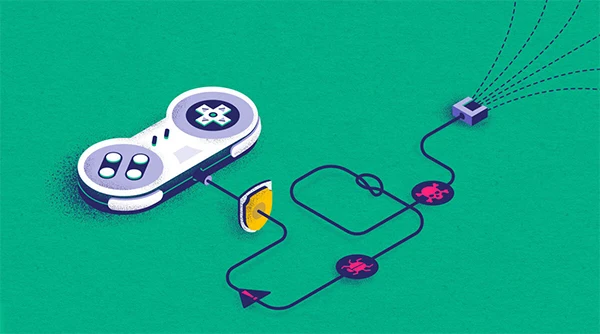
A third-party service contains an overlooked weakness. A vendor experiences an internal problem. Credentials are reused across multiple platforms. An employee approves a request that looked legitimate at the time. These incidents happen a lot more than blockbuster hacking pieces posted on news channels.
Modern game production more or less depends on cloud platforms, payment processors, communication tools, localization partners, and external contractors.
Every integration introduces both convenience and risk. Ironically, some of the largest vulnerabilities originate from systems receiving the least attention.
New features undergo extensive review. Older infrastructure goes under the radar. That imbalance creates opportunities for security weaknesses to go unnoticed.
Industry Lessons Nobody Ignored
A lot of well-known incidents forced difficult conversations across the gaming sector. In 2011, the PSN (PlayStation Network) owned by Sony experienced a huge breach that disrupted services and affected millions of account holders.
Years later, Capcom similarly reported a cyber attack that ended up exposing sensitive corporate documents and interrupting vital operations entirely. CD Projekt disclosed a ransomware incident involving internal resources and stolen materials.
Electronic Arts also faced source code theft that attracted widespread industry attention. The attacks were different, but the consequences followed the same pattern.
Legal pressure increased, public attention intensified, and recovery took months of resources. Leadership teams spent months addressing consequences that extended well beyond technical departments. These events reinforced an uncomfortable truth: digital incidents remain confined to technology teams.
Fun Fact
The developers of gaming cheats often use enterprise-grade software engineering, reverse-engineering, and cryptography. Studying these illicit tools forces studios to build resilient game engines and anti-cheat systems.
New Tools, New Challenges
Artificial intelligence has become part of modern business operations. It has also expanded the capabilities available to attackers. Fraudulent messages now appear more polished than they did. Social engineering campaigns can be customized with surprising accuracy.
Automated tools can locate vulnerabilities at a scale and speed that would have seemed unrealistic only a few years ago. Many organizations respond by investing in stronger technology. That helps, but it still doesn’t close the gap completely.
Most security issues still originate from everyday human choices in the process. A questionable request gets approved without a second thought.
Access rights stay active longer than they should. Tools and systems can cut down errors, but they can’t fully remove the risk that comes from human oversight.
The Reality Of Distributed Production
Remote collaboration brought advantages to game creation. It also introduced new operational complexities. Artists work from different countries. Writers contribute from different time zones. Localization specialists review content from entirely different regions.
External partners may interact with materials long before release. Many times this setup works just fine; however, every additional participant in the developmental process adds more coordination work.
One problem that is rarely discussed outside production teams is the strain caused by large-scale account recovery efforts. After large-scale credential-stuffing campaigns, support queues can inflate unexpectedly.
Users lose access. Purchases become disputed. Community managers find themselves answering questions they never expected to handle. None of this appears in launch trailers. All of it affects operational costs.
New Markets Add New Problems
International expansion sounds exciting because people naturally focus on growth opportunities. The complications receive less attention. Different jurisdictions have different privacy expectations. Payment ecosystems vary significantly. Compliance requirements change from region to region. Consumer expectations differ as well.
This becomes particularly relevant when organizations adopt video game localization services as part of a broader international strategy.
Localization is not simply about adapting language. It involves workflows, file transfers, testing environments, external contributors, and content reviews across multiple locations.
Every added process introduces new security and compliance considerations. Expanding into new markets without first fixing existing controls is a genuine risk most organizations underestimate.
The Cost Appears Later
A common misconception is that cybersecurity and digital resilience are cost centers with limited business value. That perspective changes after a disruption occurs.
Large-scale account recovery efforts require staffing. Customer service demand increases. Legal consultations become necessary. Product roadmaps shift unexpectedly. Planned initiatives are delayed.
What is first thought of as a technical issue soon becomes a matter of cost, workload, and reputation. At that point, prevention seems much more economical.
The Work Nobody Notices
The gaming business loves visible achievements. New graphics technology attracts attention. Massive open worlds generate excitement. Innovative mechanics dominate headlines. Permission audits don’t get celebrated. Infrastructure reviews are not discussed on social media.
Few people tune into a showcase event hoping to hear about authentication improvements. Yet these decisions shape outcomes in meaningful ways.
Most players will never know how many discussions happen behind the scenes during a game’s lifespan.
They won’t see suspicious login investigations, emergency meetings after unusual activity, or lengthy reviews of access permissions.
What players notice is whether the game remains stable, secure, and reliable. In many cases, those outcomes are shaped by decisions made long before an update reaches players.
Frequently Asked Questions
How do automated tools help in strengthening security?
How do new markets add to problems?
New markets and regions bring different guidelines, rules, and regulations to follow, making it quite difficult for smaller organizations to deal with compliance issues simultaneously.
What does modern game production depend on?
Modern game production more or less depends on cloud platforms, payment processors, communication tools, localization partners, and external contractors.
Can distributed production cause any issues?
Distributed production often helps the company complete processes on time and speed up the development of games, but it also poses a greater risk of external threats impacting the state of operations.
 Divya Kakkar
Internet Content Writer
About article
The author of this article Divya Kakkar, an Internet Content Writer at Saferloop, brings practical experience and industry knowledge to the subject.
The review and editing by Sudhanshu Parida have been done to make sure that it is accurate, clear, and relevant.
At Saferloop, we are determined to provide high-quality, well-researched, and updated content. To understand further how we produce and revise our articles, please refer to our Editorial Guidelines.
Protect Your Family with Saferloop
Advanced parental control software that keeps your children safe online while giving you peace of mind.
- Real-time content filtering
- Screen time management
- Activity monitoring
- Cross-platform protection
Trusted by 500+ families