
Word games help children build vocabulary, increase memory, recognize patterns, strengthen logical reasoning, and develop problem-solving skills through games.
×

Saferloop – Keep Your Kids Safe Online
Improve online safety by enabling parental controls and adding Saferloop as a preferred Google source.
How Do Word Games Help Parents with the Brain Development of Children?
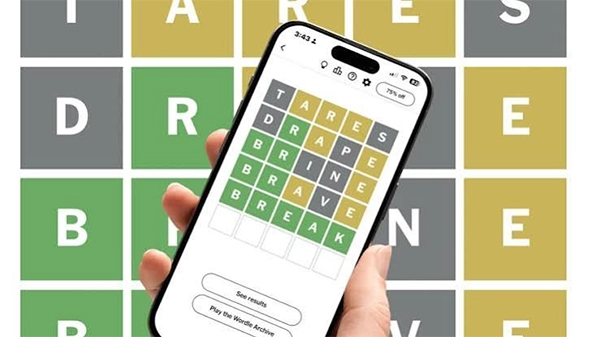
Word games are something that parents and children both enjoy while improving their vocabulary and developing their essential thinking skills. Games like Wordle, Strands, Connections, Squaredle, etc provide fun challenges, encouraging children to recognize patterns, think critically, learn from mistakes, and solve problems.
Children learn while playing games. These games give them a balanced learning routine and create opportunities for children to practice language and logical reasoning. Parents should be aware of child identity theft before entering their credentials on unfamiliar platforms.
Table of Contents:
Wordle
Wordle is a famous word puzzle game where players get six attempts to guess a hidden word. Wordle has different number selection options, so parents can choose the number of spaces for their children. Whenever you guess something, the game provides color-coded feedback. This helps you know if the letters are correct and if the positions are right.
They practice spelling, expand their vocabulary, and recognize common letter combinations. This simple format helps children to learn the language and how to use clues to make better guesses.
Parents can play Wordle with their children and discuss various possibilities, which helps children practice logical reasoning and decision-making. They can also motivate them to describe why they selected a certain word.
Wordle offers opportunities to practice vocabulary learning and attention as well. It’s helpful in improving working memory and deductive reasoning. Children learn to adjust their strategies when the initial guess doesn’t provide them with the expected outcomes.
Strands
Strands is a word search puzzle in which players find hidden words in a grid of letters. All these letters are related to each other with a common theme. Players have to find the theme and identify relevant and special words. These special words are called Spangrams, which connect to the puzzle’s theme.
This game motivates children to do more than just focus on individual words. They get a theme related to something specific that encourages them to find the names of related objects or species. They learn to understand how different ideas are connected and what they have in common.
Parents use Strands as an opportunity to help their children learn new vocabulary and discuss categories. They can also ask children to explain the relation of their word to the theme.
Strands game encourages pattern recognition, semantic reasoning, flexible thinking, and visual attention. It also helps children to practice connecting new information with concepts they already know.
Connections
Connections is also one of the famous word games. Players have to divide 16 words into four groups of four, ur with each group sharing a hidden connection. Some of the words seem to fit different categories. This thing make the puzzle more difficult than a simple word matching.
This game provides an opportunity to explore word meanings with ease. Children will be able to recognize relationships and think critically before they make a decision. A group contains types of fruit, animals, words, or anything related to a particular theme.
Parents can make it educational by explaining the word relationship to their children. They also encourage children to find alternative categories and discuss the reason for a stronger connection.
Connections offer children a way to practice making categories, verbal reasoning, and cognitive flexibility. These skills are helpful for information organization and understanding reading passages.
Squaredle
Squaredle is a word-finding game in which players search a grid of letters. In this game, players try to find valid words. They connect neighboring letters by connecting them diagonally or straight. Hence, players explore different combinations and identify words hidden within the grid.
Players can spin it to change the word’s position. This type of puzzle encourages children to be attentive. Combining different letters and patterns helps them recognize familiar prefixes, suffixes, and spelling mistakes.
Parents can see what words they find and what lengths they are going for. They can ask them to explain unfamiliar words or find a new word using a letter.
Squaredle helps to practice visual scanning, vocabulary retrieval, linguistic skills, and pattern recognition. When they search for words, they are sustaining attention and systematic exploration.
Numberle
The next game is Numberle, le which is a number-based puzzle. It is similar to the traditional word game Wordle. It fits naturally into a collection of brain training games. Numberle challenges players to find a hidden mathematical equation through a series of guesses and clues.
Parents can let their child play Numberle to help them learn calculations. Children will then be able to test possible solutions and learn why certain equations do or don’t work.
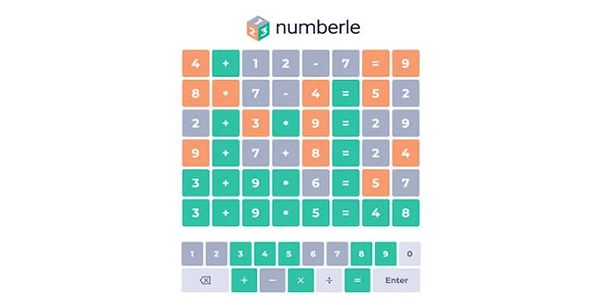
The children who enjoy numbers will find this game interesting. Numberle makes mathematical reasoning a game without becoming a classroom exercise. Players will need to consider numbers, arithmetic operators, and the structure of an equation, which depends on difficulty level and the number they choose.
Numberle provides opportunities to practice numerical reasoning, pattern recognition, and logical deduction. Children learn to approach mathematical problems through experimentation and evidence.
Pips
Pips is a domino-style logic puzzle in which players place dominoes on a grid. They have to satisfy the numerical conditions shown in different regions. These conditions involve equal values, sums, or other relationships between domino halves.
Pips doesn’t focus on vocabulary like Wordle or Strands. It complements word games by introducing a different type of thinking challenge.
Parents can solve Pips puzzles with their children and encourage them to consider where each domino will fit. Ensure that the conditions are satisfied and consider the effect of one placement on the remaining possibilities.
When children play Pips, they develop logical reasoning, spatial awareness, planning, and attention to detail. It also helps children to consider various hurdles before they make any decision regarding where they are going to fit the domino.
How Can Parents Use These Games to Support Children’s Brain Development?
Every game provides different types of mental challenges to players. Wordle focuses on word deduction, Strands focuses on different themes, Connection helps with understanding categorization, while Sqauredle encourages word recognition.
For mathematics, Numberle helps with mathematical reasoning, and Pips helps with logic and placement challenges.
Parents can use these to create a more engaging learning environment at home. They can:
- Ask children why they chose a specific answer. You shouldn’t simply tell them if that answer is correct or not.
- When a child finds an unfamiliar word, discuss its meaning and encourage them to use it in a sentence.
- Praise children for testing ideas and noticing patterns. If they make a mistake, encourage them to try a different approach.
- Start with simpler puzzles, and when they start developing skills,s then familiarize them with more challenging games.
- Solving puzzles encourages communication, cooperation, and shared learning experiences.
Besides these, you should also combine these puzzles with outdoor activities, creative play, and face-to-face conversations.
Conclusion
By introducing games like Strands, Connections, Squaredle, and Wordle with number games like Numberle and Pips, parents can help children practise different ways of thinking. Work and logic games give parents a practical and enjoyable way to encourage their children’s cognitive skills.
The real benefit comes from how children engage with these puzzles. Parents should ask questions, discuss strategies, and explain new words. This will encourage children to learn from mistakes. Thus, a simple game becomes an opportunity for meaningful learning. Consider learning online safety strategies for protecting children at home to stay stress-free about any online mishap.
Frequently Asked Questions
How do word games help with children’s brain development?
Which word games are suitable for children to play with parents?
All the games listed in this article are suitable for children to play with parents, as parental guidance can help identify patterns and solve puzzles.
How can parents make word games more educational for their children?
Parents can play with their children, ask questions about their answers, explain unfamiliar words, and encourage them to describe their reasoning.
 Aditi K
Freelance Cybersecurity Writer
About article
The author of this article Aditi K, an Freelance Cybersecurity Writer at Saferloop, brings practical experience and industry knowledge to the subject.
The review and editing by Vinithra Karunanidhi have been done to make sure that it is accurate, clear, and relevant.
At Saferloop, we are determined to provide high-quality, well-researched, and updated content. To understand further how we produce and revise our articles, please refer to our Editorial Guidelines.
Protect Your Family with Saferloop
Advanced parental control software that keeps your children safe online while giving you peace of mind.
- Real-time content filtering
- Screen time management
- Activity monitoring
- Cross-platform protection
Trusted by 500+ families