

Ans: If your child’s identity is stolen, scammers might use your child’s Social Security Number, name, address, or birth date to open a bank account. They can also claim government benefits and secure employment.
×
Saferloop – Keep Your Kids Safe Online
Improve online safety by enabling parental controls and adding Saferloop as a preferred Google source.
Child Identity Theft: How It Happens, Warning Signs & How to Protect Your Child
According to a study published by Cort Honey, roughly 10 million kids become victims of child identity theft when criminals steal their sensitive information to misuse it. It must be a major concern for parents because their innocent kids’ privacy is at risk.
That is why you need to discover ways to protect your children’s personal information. Here, you can explore how does child identity theft occurs, tips to know when information is leaked, and safety measures.
Let’s go ahead!
Quick Answer:
Child identity theft happens when a fraudster uses a child’s personal information to open a fraudulent account. In order to prevent identity theft, you should freeze your kid’s credit report.
Table of Contents:
- What is Child Identity Theft?
- How Does Child Identity Theft Occur?
- How to Know If Your Child Is a Victim of Identity Theft? 4 Warning Signs
- How to Protect Your Child From Identity Theft?
- What Should Parents Do If Their Child's Identity Is Stolen?
- How Saferloop Helps You Protect Your Children’s Identity
- Wrapping Up!
- Frequently Asked Questions
What is Child Identity Theft?
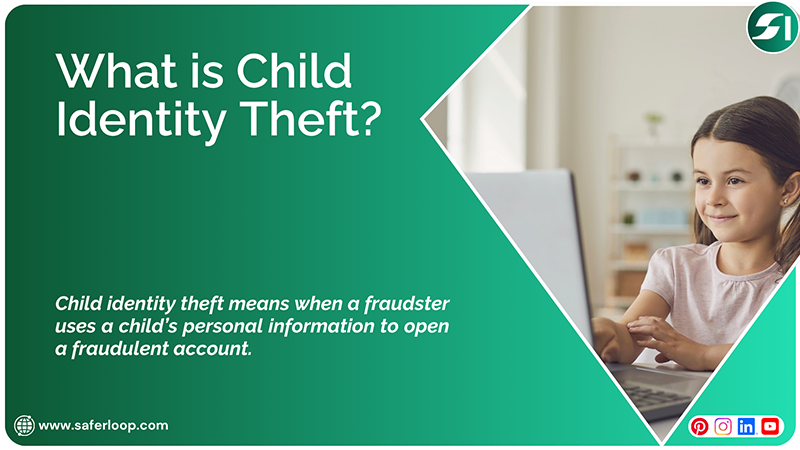
Child identity theft means that scammers steal your kids’ sensitive information for wrongdoing. It is similar to fraud with adults or younger generations.
The sensitive information includes name, home address, date of birth, Social Security Number, and credit data. If your child’s identity is stolen, it might affect their bank account opening process, applying for a student loan, or applying for a credit card.
When child identity theft happens, it also affects their government benefits and ruins their minor credit report. This also takes away the chance to build a credit score on their own terms.
How Does Child Identity Theft Occur?
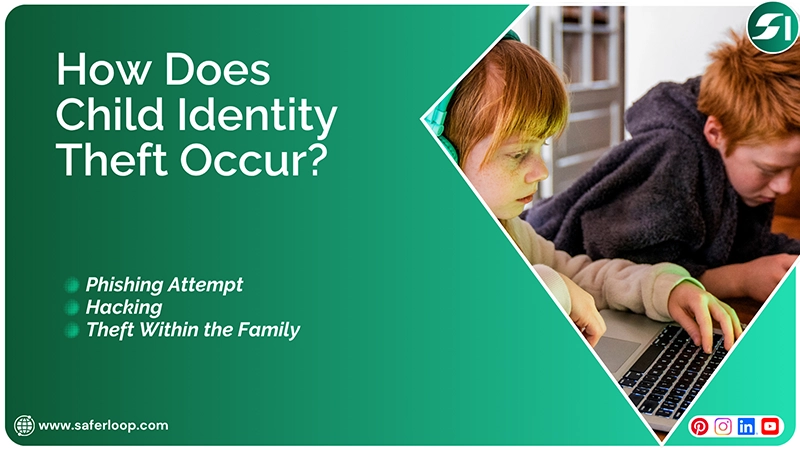
Child identity theft occurs through phishing attempts, hacking, and theft within the family.
Let’s take a look at these ways to discover how child identity theft happens.
1. Phishing Attempt
When a scammer tries to steal your children’s information from you and your kids through calls, emails, or texts, it is a phishing scam. They try to create an emergency and manipulate your mind to get the sensitive information of your kids.
2. Hacking
Hackers use hacking software or devices to steal a big or large company’s data. If your children have accounts with the hacked company, their data is stolen. On the other hand, if they browse something using unsecured Wi-Fi and unintentionally download a malware file, these ways can also lead to hacking.
3. Theft Within the Family
Sometimes, family members and friends also steal your little ones’ personal information for misuse. They can use your children’s financial details to open a bank account or for personal rivalries. That is why you need to secure your kids’ important information in a safe place or locker so it can’t be accessed by anyone.
Also Read: WhatsApp Parental Controls: Set Up Guidance and Safety Tips to Protect Kids
How to Know If Your Child Is a Victim of Identity Theft? 4 Warning Signs
Your child gets suspicious emails, has an existing bank account, is not eligible for government benefits, or has a credit report before starting it.
These warning signs are enough to know your kids are victims of a data breach.
- When your child gets suspicious emails regarding pre-approved credit cards and other financial offers in their own name, it means that their banking details have been stolen.
- If you try to open your kid’s bank account and find out that the account already exists, this can be a warning sign of child identity theft.
- When your child is not eligible for government benefits like healthcare coverage or nutrition assistance because their Social Security Number is attached to an existing account.
- Your little one has a credit report in their name before they begin to use credit. This apparently suggests that someone misused your child’s information.
How to Protect Your Child From Identity Theft?
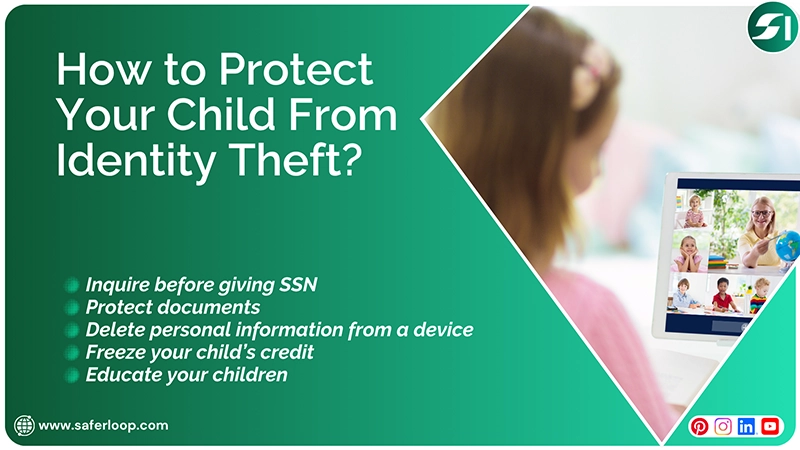
To protect your child from identity theft, you should:
- Inquire before giving Social Security Number
- Protect documents with personal information
- Delete personal information from a computer or cell phone
- Freeze your child’s credit
- Educate your children
Here are the following ways you should follow to protect your children from identity theft.
1. Inquiry Before Giving Social Security Number
If your child’s school or any other official setting asks for an SSN, you should ask:
- Why do you need it?
- How will you protect it?
- Can a different identity be helpful?
- Can you hide the Social Security Number?
These questions can limit access to your kids’ SSNs and protect them from identity theft. You should also not share their date of birth on social media because a thief can access other personal data with this information.
2. Protect Documents With Personal Information
If you have documents that include your little ones’ personal information, you have to store them in a safe place. Documents include medical bills, Social Security cards, credit cards, school report cards, etc.
When you want to dispose of them, you should shred all documents before throwing them away. It helps you prevent your information from falling into the wrong hands.
3. Delete Personal Information From a Computer or Cell Phone
It’s apparent that your digital devices have saved personal information; this might give a hacker a chance to steal your kids’ data. That is why it is the best way to delete personal information before you dispose of your laptop, smartphone, or tablet.
4. Freeze Your Child’s Credit
Parents have the right to freeze their kids’ credit reports. It helps them to prevent anyone from opening a new bank account in their name. The freezing remains same until you ask credit bureaus to remove it. You can explore these sites for specific instructions:
- Experian
- Equifax
- TransUnion
5. Educate Your Children
You should teach your children how to detect online scams and engage responsibly on digital platforms. Always tell them not to share their personal information with anyone to avoid a data breach. It helps you protect your kid’s personal information on social media and other apps.
Also Read: Top 5 Best Parental Monitoring Software to Track Children’s Activities in 2026
What Should Parents Do If Their Child’s Identity Is Stolen?
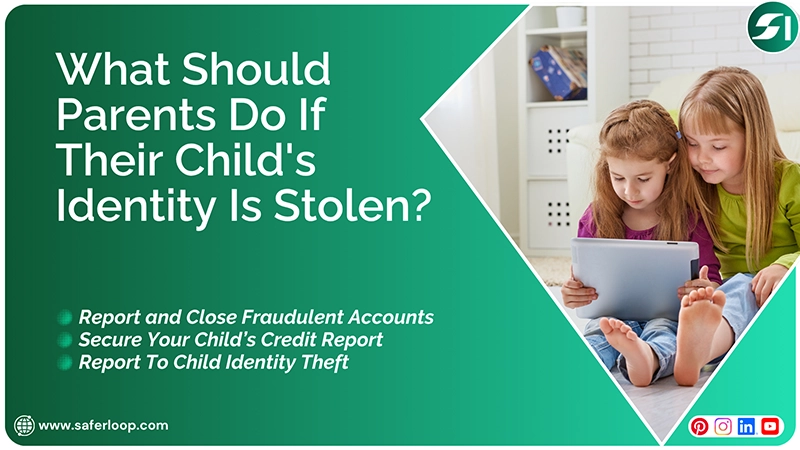
Parents should report and close fraudulent accounts, freeze their child’s credit report, and report the identity theft.
Let’s take a look at the following steps you should take if your child’s identity is stolen.
1. Report and Close Fraudulent Accounts
First, you should contact the financial institutions where a fraudulent account was opened in your child’s name. Send evidence that your child never opened the account and request that they close it. Make sure you receive a written confirmation to prevent future consequences.
2. Secure Your Child’s Credit Report
If your child’s Social Security Number is compromised or you suspect identity theft, you should freeze their credit report. As a parent, you have the right to contact all three credit bureaus to freeze their credit.
Note: Minors who are 16 or 17 have the right to remove a freeze on their own without parents’ permission.
3. Report To Child Identity Theft
You should also report that your children’s sensitive information has been stolen to the Federal Trade Commission at identitytheft.gov. The website asks for some necessary information to report your complaint.
How Saferloop Helps You Protect Your Children’s Identity
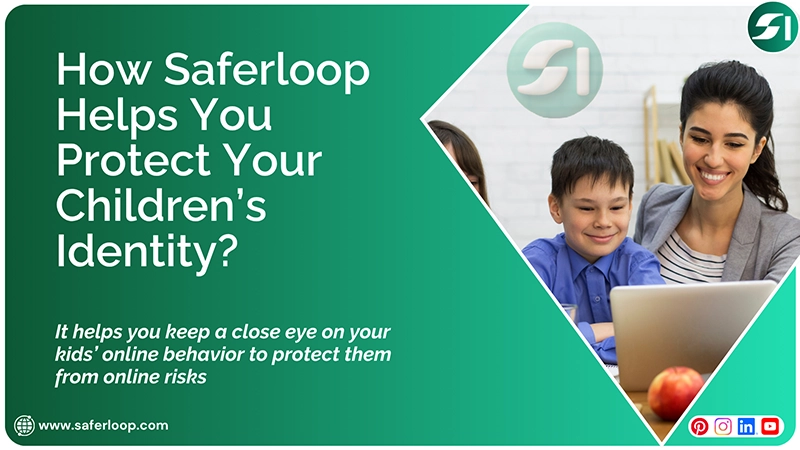
Child identity theft is a serious concern for parents because it can lead to major consequences regarding their safety and privacy. That’s why you need the safest parental control software like Saferloop.
It helps you keep a close eye on your kids’ online behavior to protect them from online risks. The software also provides various safety features, such as:
- Monitor online activities that help you know what your children are doing online.
- Set screen time limits to decrease the use of smart devices and encourage healthy habits.
- Block unsafe apps and websites to prevent your kids from downloading malware files that could hack your devices.
- Restrict inappropriate content and prevent strangers from trying to manipulate your little ones into sharing personal information.
- Track real-time location and set geofencing alerts to know about their physical presence.
- Receive reports, SOS updates, and emergency alerts if something suspicious is detected.
- Use the Saferloop safety checkup extension for Chrome to add an extra layer of security to your children’s devices.
- Use the Saferloop GPT to get answers related to digital parenting tips.
Overall, you need parental control software to protect your children and their sensitive information.
Wrapping Up!
It’s easy for scammers to manipulate innocent children online and steal their sensitive information. That is why child identity theft is a major concern for parents. To protect your child’s personal information, you should teach them safety measures, freeze their credit report, and keep documents in a safe place.
Additionally, you can install the Saferloop parental control software to protect your children’s safety and privacy. It allows you to manage your kids’ activities from your own phone without interfering with their devices.
Author’s Note:
As a cybersecurity and parental control expert, I discovered that a child’s identity was leaked due to oversharing on social media. So, I suggest that you do not share your little ones’ personal information with anyone.
You should also teach them not to reveal any confidential details in front of strangers. It helps your kids to prevent child identity theft. I also suggest you install the Saferloop parental control software to add an extra layer of security.
It provides screen time limits, location tracking, app blocking, social media monitoring, and emergency alerts. This truly helps you to protect your innocent children online.
Frequently Asked Questions
Q: What happens if your child’s identity is stolen?
Q: How do I know if someone is using my child’s SSN?
Ans: You can request a manual credit review or submit a minor inquiry form to check if someone is using your child’s SSN. The three credit bureaus can help you free of cost.
Q: Can I put a PIN or password on my child’s SSN?
Ans: Yes, you can put a PIN or password to protect your child’s Social Security Number. It prevents tax-related fraud and fraudulent bank accounts.
Q: Where should I report child identity theft?
Ans: You should report to the Federal Trade Commission at identitytheft.gov. The website asks you some questions to proceed with your complaint.
 Aditi K
Freelance Cybersecurity Writer
About article
The author of this article Aditi K, an Freelance Cybersecurity Writer at Saferloop, brings practical experience and industry knowledge to the subject.
The review and editing by Evan Patterson have been done to make sure that it is accurate, clear, and relevant.
At Saferloop, we are determined to provide high-quality, well-researched, and updated content. To understand further how we produce and revise our articles, please refer to our Editorial Guidelines.
Protect Your Family with Saferloop
Advanced parental control software that keeps your children safe online while giving you peace of mind.
- Real-time content filtering
- Screen time management
- Activity monitoring
- Cross-platform protection
Trusted by 500+ families