

Basics should be taught to them as soon as they start using internet-connected devices. Lessons can be adapted to their age and level of understanding.
×

Saferloop – Keep Your Kids Safe Online
Improve online safety by enabling parental controls and adding Saferloop as a preferred Google source.
What You Must Teach Kids About Digital Safety?

“The internet is becoming the town square for the global village of tomorrow.” — Bill Gates (Businessman)
Today, the internet is where children learn, play, socialize, and explore the world. Whether they’re watching educational videos, playing online games, or chatting with friends, digital experiences are now a normal part of growing up.
However, the online world offers more than opportunities. It also presents risks such as cyberbullying, scams, phishing attempts, and privacy threats. Since children are often less aware of these dangers, they can become easy targets for cybercriminals.
That’s why teaching kids digital safety is no longer optional. It is a life skill. In this guide, we’ll cover the most important lessons every child should learn to stay safe and confident online.
KEY TAKEAWAYS
- Digital safety is a fundamental life skill that every child should learn early.
- They should never share personal information such as addresses, phone numbers, or school details online.
- Strong passwords and cautious online behavior can prevent many common cyber threats.
- Children should learn how to identify scams, suspicious links, and fake offers.
- Safe gaming habits help protect kids from online predators, fraud, and account theft.
Table of Contents:
Why Digital Safety is Important for Kids?
Children are naturally curious and trusting, which makes them particularly vulnerable to online threats. There are too many predators online who use particular tricks to trick them into phishing and get unauthorized access to their devices and information. That is why kids need to know about e-safety so they do not fall into traps or be cyberbullied.
Having good digital safety knowledge will help them:
- Prevent exploitation
- Combat cyberbullying
- Protect their privacy online
- Promote digital well-being
E-Safety Essentials You Should Teach Kids
When it comes to digital safety, a few core principles can make a significant difference. These pillars help establish balance between tech confidence and caution. Here are the essential e-safety pillars they should know.
1. Personal Information
The first lesson every child should learn is that personal information should stay private. This includes:
- Full name
- Home address
- Phone number
- School name
- Family details
All the aforementioned should never be shared publicly online. Even if someone randomly asks for such personal information online, tell kids to say ‘No’.
Because people on the internet are not always who they say they are. Many times, those pretending to be friends online are scammers looking for a way to trap them into revealing their personal information.
2. Use Strong Passwords
Passwords keep online accounts safe. A mistake kids should avoid is using overly generic passwords that are easy to guess.
Tell them to generate strong passwords. Ones that use a mix of letters, numbers, symbols, or special characters.
Passwords that revolve around a full name or date of birth must be avoided. These are among the ones that cybercriminals target at the start and find easy to crack.
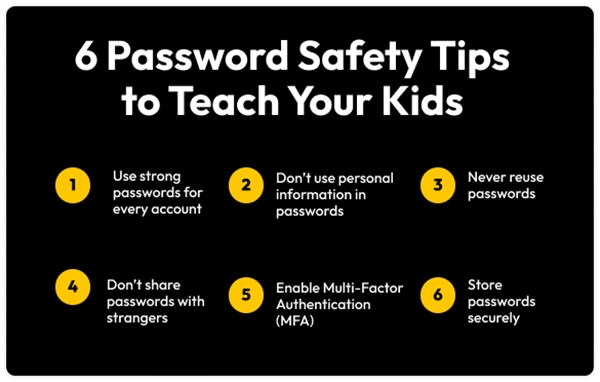
The infographic summarizes password safety tips for children:
3. Public Digital Safety
Children frequently encounter QR codes in public places, whether they’re:
- Connecting to Wi-Fi
- Accessing restaurant menus
- Downloading apps
- Following social media accounts
QR codes make things simple to access and connect with, no doubt. But many times, these codes are spoofed by cybercriminals with the intention of stealing user data. And most of it happens when kids unknowingly scan a code and instantly proceed without checking where the URL leads.
Teach them to differentiate between a legit and a spammy URL. In fact, a better approach is to tell them to scan QR codes using an online QR scanner. They usually highlight whether a QR code is spammy or dangerous.
4. Online Scams
Nowadays, a lot of scams are happening. But kids mostly fell for them unknowingly. Scammers trick little minds by offering free game coins or other rewards. Basically, they manipulate children using things they cannot ignore.
The real thing happens when kids click on their offer. At the backend are spoofed URLs that either inject malicious elements into the device or steal the device data. Or sometimes redirect them to a duplicate fake website, where, when children enter their details, their information is compromised.
Parents must teach their kids about such scams. Tell them that before clicking a strange link or opening an unknown message, children should ask a trusted adult for help.
5. Gaming Safety
Online gaming allows players all around the world to connect. Mostly played by children, these games are more interactive and enjoyable. However, games can expose children to risks.
Some players may ask personal questions. Others may try to trick children into sharing account details.
Kids should never share private information while gaming. They should also be careful about clicking links sent by other players.
Parents can help by talking with children about safe gaming habits and checking the games they play.
Bottom Line
Digitization is helpful for all, including children. The internet offers children incredible opportunities to learn, create, and connect with others. But at the same time, there are bad characters called cybercriminals who sit 24/7 online to steal people’s information and use it for their illegal benefits. Kids are usually the primary target because their innocent minds are easy to manipulate. And most of the time, they fell into the traps unknowingly. That is why parents must teach their kids about digital safety, especially the five essentials we discussed in this blog post for you.
Frequently Asked Questions
When to teach children about digital safety?
What is the biggest online risk for kids?
Some of the most common risks include cyberbullying, online scams, phishing attacks, exposure to inappropriate content, and sharing personal information with strangers.
How can parents teach digital safety effectively?
Parents can have regular conversations about online behavior, set clear internet rules, monitor younger children’s online activities, and lead by example through responsible digital habits.
Why is gaming safety important for children?
Many online games include chat features and interactions with strangers. Teaching gaming safety helps children avoid scams, protect their privacy, and recognize potentially dangerous behavior.
 Aditi K
Freelance Cybersecurity Writer
About article
The author of this article Aditi K, an Freelance Cybersecurity Writer at Saferloop, brings practical experience and industry knowledge to the subject.
The review and editing by Vinithra Karunanidhi have been done to make sure that it is accurate, clear, and relevant.
At Saferloop, we are determined to provide high-quality, well-researched, and updated content. To understand further how we produce and revise our articles, please refer to our Editorial Guidelines.
Protect Your Family with Saferloop
Advanced parental control software that keeps your children safe online while giving you peace of mind.
- Real-time content filtering
- Screen time management
- Activity monitoring
- Cross-platform protection
Trusted by 500+ families