
Cybersecurity awareness helps families to save themselves from online scams and fraud.
×
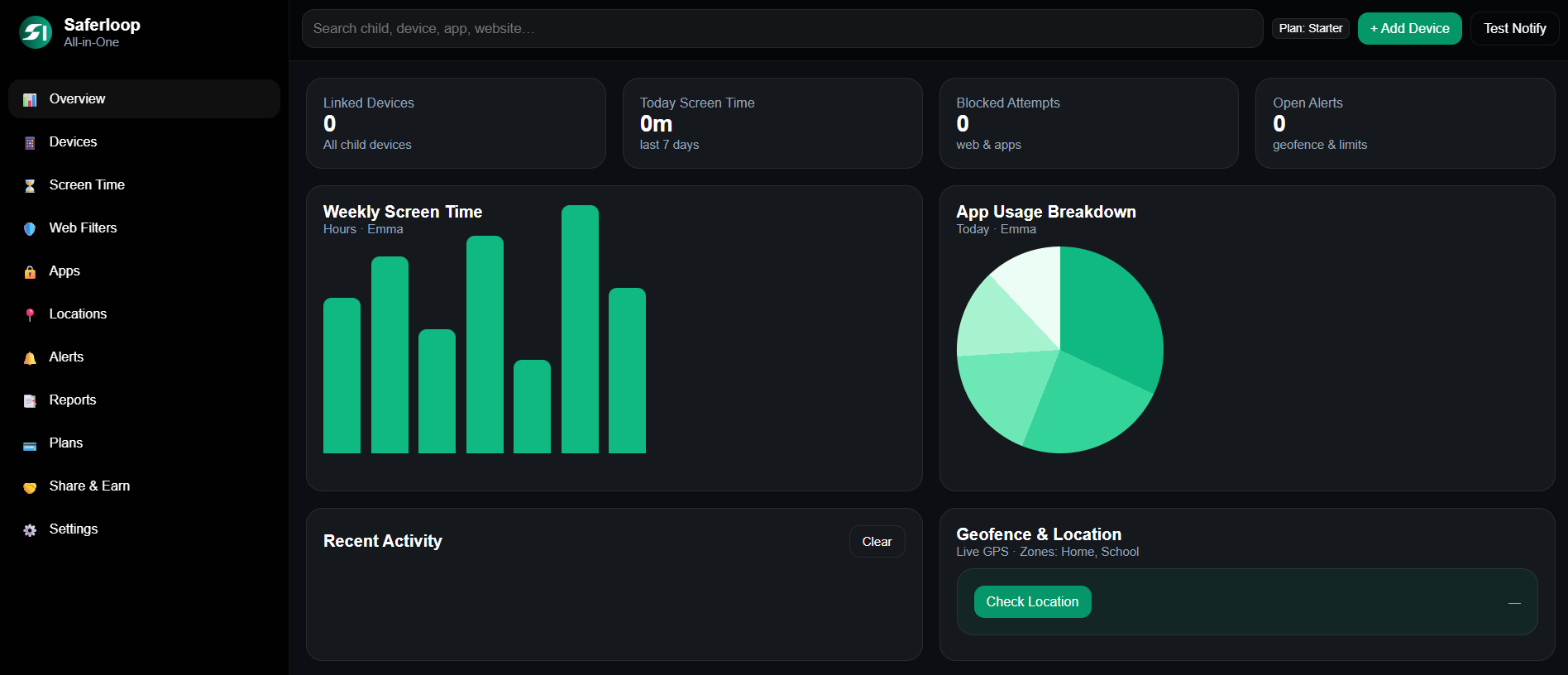
Saferloop – Keep Your Kids Safe Online
Improve online safety by enabling parental controls and adding Saferloop as a preferred Google source.
Parents, Kids, and Cybersecurity: Finding Common Ground for Strong Digital Safety Outcomes

Children nowadays have unlimited access to the internet, which can harm them. In that case, parents are the saviours of children. By limiting access, monitoring their child’s online activity, and educating them about cybersecurity, they help their children build a safe and secure social presence.
Around 86% parents have set a daily time limit on their child’s phone, while 49% parents go through their child’s phone every day. So, what should parents do to protect their child?
Because monitoring them daily doesn’t do the work alone.
To find a middle ground, parents can introduce cybersecurity to their children. As the cases against children are rising rapidly, Cybersecurity has become an essential skill that both children and parents need.
To be honest, children are an easy target for criminals; protecting your child online from cybercrime has become crucial. This article will help parents to find that common ground and build a healthy digital relationship with their child.
Table of Contents:
- Why Cybersecurity Awareness Is Essential for Families Today?
- Understanding the Digital Gap Between Parents and Kids
- Common Cybersecurity Risks Children Face Online
- How Parents Can Build Trust While Ensuring Digital Safety?
- Role of Parental Control Tools in Strengthening Cybersecurity
- Building a Balanced and Secure Digital Environment at Home
- Frequently Asked Questions
Why Cybersecurity Awareness Is Essential for Families Today?
According to the US-based National Centre of Missing and Exploited Children (NCMEC), it received 32 million reports in 2022 of suspected child exploitation. And the numbers are going higher and higher. Not just exploitation, there are so many online scams and data theft cases as well.
As the cases are rising, cybersecurity becomes essential for families. Parents are encouraging their child to learn cybersecurity, as this develops critical thinking power and offers great job opportunities if pursued as a career. Some universities and educational centres offer a cybersecurity master’s degree for children who want to pursue cybersecurity education.
Here are some reasons why Cybersecurity Awareness is important for families –
- To prevent any financial losses: Cybersecurity awareness can help us protect our banking data and personal account details from hackers.
- Protection against scams: Awareness can help us identify fraudulent websites. phishing emails and scams.
- Network and device security: We can protect our home network and devices from any unauthorised access and malware.
Understanding the Digital Gap Between Parents and Kids
In this modern age of technology, digital devices are creating a wall between kids and their parents. Parents are unable to keep up with the fast-evolving technology, and children are digital natives. This creates a big gap between children and parents.
Here are 2 main reasons why this Digital gap is evolving between them –
Differences in Tech Usage and Online Behaviour
Both of them use technology for different purposes, and this creates a tension between them.
Here are the differences in their tech usage and online behaviour –
- Safety vs. Activity – Parents are worried about online bullying, inappropriate content, and addiction. But kids use tech for online activities such as gaming and social media.
- Parental monitoring – Parents have started monitoring their children’s devices for safety purposes, but somehow, this safety concern has built a bridge between them, as children feel caged.
- Digital tutor – As kids are more tech savvy and easily adopt new technology, they often act as a tutor to their parents.
Challenges in Communication and Awareness
A study by the Centre of Sociological Research conducted in March 2016 says that 68% spanish peoples believes that digital devices have created a communication wall between parents and kids.
The parents and children often struggle to communicate properly because children think that parents won’t understand their emotional depth and needs, and parents try to control their children for their own safety and security.
- Lack of Open Communication – Parents and kids struggle to communicate properly about their needs and emotional wants because they use their devices even while sitting together.
- Privacy and Control – Children might think that their parents are more controlling and invading their privacy, and parents face the struggle to think when to intervene.
- Language Differences – Kids may use new slang memes that parents are not aware of, and this creates a language barrier between them.
Common Cybersecurity Risks Children Face Online
A 2020 survey by DQ institute shows that in children aged 8-10, every 6 out of 10 children are exposed online to cyber risks. In the US, more than 6 million children experience cyberbullying or cyber threats.
This data can vary from country to country. The chart below shows the cybersecurity risk levels of different countries.
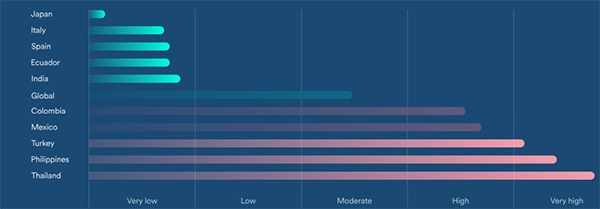
Here are some common risks a child might face online –
- Cyberbullying – More than 85% children face cyberbullying online, and 45% reported that they have bullied someone else. This is one of the highest rates globally. Cyberbullying makes kids experience anxiety, depression, low self-esteem, and sometimes suicide. WhatsApp, Instagram, and Snapchat are the most common social media platforms where kids face cyberbullying.
- Online scams and phishing – Kids are the prime target of scammers and fraudsters to gain money and Account details. They target children with free giveaways and free in-game currency. They send spammy emails or malicious links, or they can manipulate kids into sharing their personal data.
- Inappropriate content – Sexual exploitation is one of the most common risks children face online. They may see content that includes hate speech, violence, and inappropriate or sexual content. This type of content can make them violent and can lead them to risky behaviour.
- Data Privacy Violations – A few gaming and educational platforms can collect, store and use our data. This can create a long-term risk for a child’s mental health and their digital life.
How Parents Can Build Trust While Ensuring Digital Safety?
Every parent needs to be involved in their children’s online activity, as there are so many cybercrimes and risks that can harm their children.
Here are some tips on how parents can build trust –
- Safe Space – Create a Safe space where kids can openly communicate their feelings, needs, and share their uncomfortable experiences. Parents should discuss the online risks and safety with their child.
- Set Rules – Parents can set some rules about screen time, device usage, and inform the children about parental controls.
- Safety and Privacy – Parents should help their child in setting up a strong password and ensure that they don’t share it with anyone.
- Education about cybersecurity – Parents can help their children to pursue a career in cybersecurity. They can introduce the UND’s online MS in Cyber Security course to their child for better opportunities.
Role of Parental Control Tools in Strengthening Cybersecurity
Parental control tools allow us to limit the access of digital devices and help us block adult websites. It also grants permission to parents to set a time limit and a money limit that our kids can spend online. These controls are important to create a safe environment for children and to assure parents that their child is watching appropriate things online.
- Content filter: These parental tools help parents to filter the content as per their children’s age and block inappropriate or violent content.
- Application and Game control: With the help of these parental tools, parents can restrict downloading any unauthorised apps or games.
- Time management: These tools help parents set a Daily time limit on device usage, which reduces the risk of late-night browsing.
- Location Tracking: Few parental control tools provide live location tracking for parents to ensure their children’s physical safety.
Building a Balanced and Secure Digital Environment at Home
So, finding a common ground for kids and parents is not just important to build a good relationship between them; it also helps to fill the communication gap between parents and children. This article helps parents build a balanced and secure Digital environment at home.
Parents should start engaging in open communication about setting clear boundaries, limiting screen time, and implementing healthy digital habits.
Families can start creating a secure and balanced digital environment at home by using parental control apps, having open communication, and helping each other understand new technology and devices.
Frequently Asked Questions
Why is cybersecurity awareness essential for families?
How can parents ensure that their child is safe online?
Parents can set clear rules, activate safe browsing, and can use some parental control tools.
What are the uses of Parental tools?
Parental control tools help parents block inappropriate websites and content, and monitor their children’s online activity.
 Divya Kakkar
Internet Content Writer
About article
The author of this article Divya Kakkar, an Internet Content Writer at Saferloop, brings practical experience and industry knowledge to the subject.
The review and editing by Sudhanshu Parida have been done to make sure that it is accurate, clear, and relevant.
At Saferloop, we are determined to provide high-quality, well-researched, and updated content. To understand further how we produce and revise our articles, please refer to our Editorial Guidelines.
Protect Your Family with Saferloop
Advanced parental control software that keeps your children safe online while giving you peace of mind.
- Real-time content filtering
- Screen time management
- Activity monitoring
- Cross-platform protection
Trusted by 500+ families