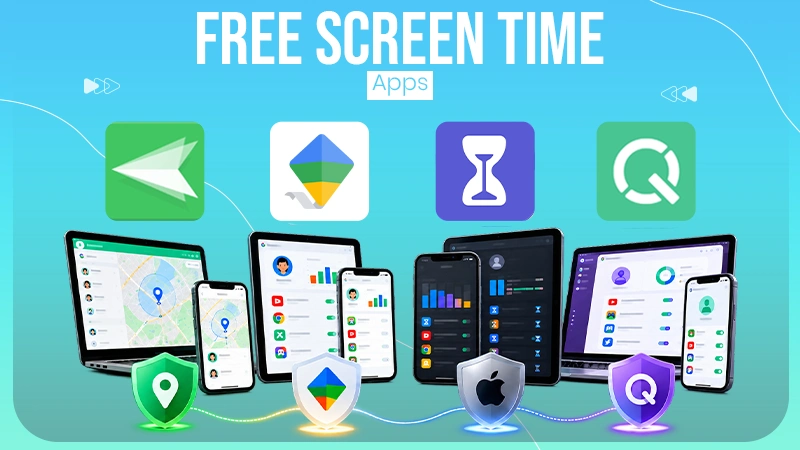

Use advanced technical tools, but also combine them with open communication, setting clear rules, and modelling healthy habits.
×
Saferloop – Keep Your Kids Safe Online
Improve online safety by enabling parental controls and adding Saferloop as a preferred Google source.
What Is Data-Driven Parenting? How Advanced Parental Control Insights Help Monitor Child Data
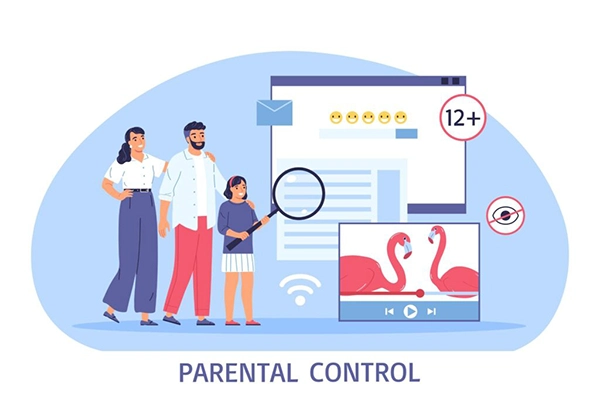
When you look back, the only individuals who have loved you unconditionally turn out to be your parents. All parents are constantly worried about their child’s safety. But they have to balance between providing for them through working and parenting properly.
Parental controls took some of the load off them, but they still had many shortcomings. With the arrival of AI came much better data-driven parenting solutions.
As per research, AI parenting models and tools can identify potential risks to your child with 94.6% accuracy.
In this article, I’ll tell you everything about data-driven parenting. The following sections explain the concept, how the tools work, their benefits, their impact on parental decision-making, and how to maintain a balance between the child’s privacy and trust.
KEY TAKEAWAYS
- Data-driven parenting involves tools that track your child’s activity and behaviour.
- The resulting insights help you make better parenting decisions.
- Never use overly intrusive tools that can endanger your child’s privacy and dent trust-building.
Table of Contents:
What Is Data-Driven Parenting
Child-rearing and related decisions have always solely relied on tradition, instincts, and anecdotal advice.
But as everything is becoming data-driven in this AI age, so is parenting. Data-informed child-rearing involves leveraging evidence-based research, statistics, and personalized data.
The earlier system left parents anxious after every choice, but this new one enables them to confidently decide things about their child’s nutrition, sleep training, etc.
How Parental Control Tools Collect and Analyze Child Data
Move over basic website filtering. There are now tools like advanced profanity filters.
Advanced parental control tools are here, which go much beyond that. Considering how they continuously collect data and give insights about children’s online and offline lives to parents, they can safely be called “digital mid-guardian”.
H3: Parental Control Capabilities
These data-driven parenting tools bestow parents with many parental control capabilities:
- Activity Tracking: The system logs in detail about which websites your child visits and how much time he/she spends on which apps.
- Content Filtering: When AI image and text analyzers detect unsuitable material on your child’s device, the system automatically filters it or alerts you.
- Digital Well-being: Automated systems monitor the digital activity of your child and set healthy screen time limits, even suggest taking breaks.
Role of AI and Analytics in Monitoring Digital Habits
Traditional monitoring tools are very basic, that used to impose static restrictions. AI monitoring is quite adaptive and predictive compared to that.
The emerging tools have embedded Natural Language Processing (NLP) and AI modules that analyze your kid’s text inputs, speech, and interactions to evaluate their emotional state.
You get to know when they’re frustrated or anxious and what’s making them that way.
Similarly, firms can get to know what feeling their customers harbour towards them using an advanced customer sentiment tool.
AI and analytics systems also learn your child’s unique digital habits. This empowers it to identify anomalies like:
- Sudden spike in screen time;
- Interaction with inappropriate content; or
- Emotional distress is indicated by communication patterns.
These machine learning models can also predict potential issues like burnout or excessive gaming before they become major problems. Proactive alerts sent to parents help them take action on time.
The future of these tools is even more unbelievable:
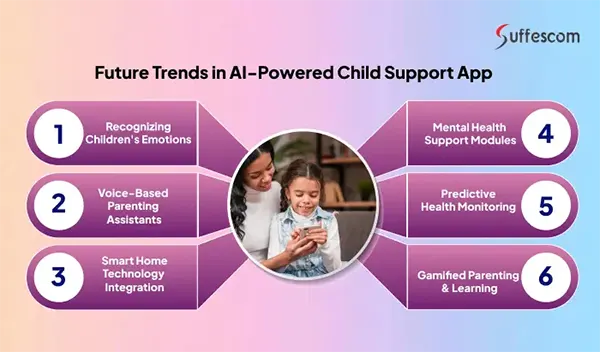
Key Benefits of Data-Driven Parenting for Modern Families
You got the “what”. Now, let’s move on to “why” you should adopt data-informed child-rearing:
- These systems are found to reduce parental stress and lead to improved mental health.
- Modern working individuals are mostly busy at work, having less time for parenting. These systems act as co-parents and take off much of the load from you by handling many major parenting tasks.
- Earlier solutions were generic in nature, treating all children the same. These new tools offer personalized services, adapting to your child’s needs and developmental state.
- Parents make confident and informed parenting decisions with all the facts and risks involved in front of them. This reduces uncertainty and fear around making wrong decisions.
- Never worry about your child’s safety and security again as you get to track their location.
- AI systems offer personalized education by analyzing your child’s learning pace, engagement patterns, and academic strengths and weaknesses.
How Insights from Parental Controls Improve Decision-Making
Earlier, parents used to make parenting decisions based on their intuition. With modern parental control tools, those are now based on objective, behaviour-based data.
Having enough information about their child’s experiences and behaviour, parents can better support and intervene when required to reduce harm to their child and promote their well-being.
Balancing Monitoring with Privacy and Trust
These technologies are really helpful in parenting, but you have to ensure not going overboard with their protection and shielding.
Research has found a strong correlation between parent over-involvement and a child’s difficulty in self-regulating. So, let them make some decisions, let them make some mistakes, it’s part of their overall development into an adult.
Also, choose the tools that are not overly intrusive to your child’s privacy. The e-commerce review data analytics can help you find the right tool to generate more sales for the software provider while ensuring the features align with your family’s needs.
Data privacy is also important. You have to be as alert to information sharing in the safeguarding solution as you are to strangers interacting with your child online.
Conclusion
Nothing gives a parent more peace than knowing their child is safe and secure.
Advanced parenting solutions bestow you with exactly that. You get insights into your child’s activity and behaviour, which helps you make better parenting decisions.
However, try keeping away from being overintrusive. Also, let your kid make some bad, harmless decisions; it’s part of their development into an adult.
You’re not just raising a child, you’re shaping a future!
Frequently Asked Questions
How can parents monitor their children’s technology use effectively?
What are parental controls, and how do they help with internet safety?
Parental controls come in various forms: full-blown software tools, convenient apps, and even just some browser settings. They help parents monitor and manage their child’s digital activity and behaviour, providing them with a safer online environment.
How to monitor children’s development using different methods?
Usually, it’s a mix of methods like active observation, developmental checklist, parental input, and standardized screening. But AI parenting tools have made all of it considerably easier.
 Aditi K
Freelance Cybersecurity Writer
About article
The author of this article Aditi K, an Freelance Cybersecurity Writer at Saferloop, brings practical experience and industry knowledge to the subject.
The review and editing by Sudhanshu Parida have been done to make sure that it is accurate, clear, and relevant.
At Saferloop, we are determined to provide high-quality, well-researched, and updated content. To understand further how we produce and revise our articles, please refer to our Editorial Guidelines.
Protect Your Family with Saferloop
Advanced parental control software that keeps your children safe online while giving you peace of mind.
- Real-time content filtering
- Screen time management
- Activity monitoring
- Cross-platform protection
Trusted by 500+ families