

WebPurify and CleanSpeak top the list of API-based content moderation tools.
×
Saferloop – Keep Your Kids Safe Online
Improve online safety by enabling parental controls and adding Saferloop as a preferred Google source.
Advanced Profanity Filter: Keeping Online Spaces Clear, Fair, and Safe
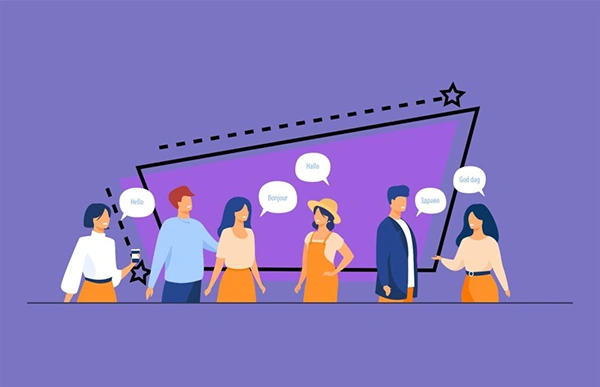
As human society civilized, it started identifying and shunning inappropriate behaviour on moral grounds.
But the internet is still a very recent phenomenon compared to the entire human history. Here, some people who actualize the troll inside them have no moral obligation to behave properly due to their facelessness.
Hence, their have been a need for digital guardrails to discourage this behaviour. And it’s becoming more and more important as 67% of the world’s population is now online (International Telecommunication Union). Many systems already exist, while many are in development. Profanity filters have been there for quite some time, but now they’re getting a little more advanced.
In this article, I’ll tell you everything about these advanced profanity filters that aim to keep online spaces safe. The following sections start the discussion from starting, with what even counts as profanity, the importance of profanity controls, their implementation and challenges, and how you can choose the right one for yourself.
KEY TAKEAWAYS
- Traditional profanity filters fail at identifying dog-whisling and even false-flag harmless banter.
- Advanced profanity filters address these shortcomings.
- Choose the right tool for your platform based on your audience, risk levels, and the human review personnel.
Table of Contents:
Why Profanity Control Matters Online
Online public platforms want as many people as possible. But when a user gets slurs or threats, they leave the platform forever. A 2023 Pew Research Center report showed that 41% of adults stopped engaging with an online community after repeated exposure to abusive language. That drop affects growth, safety, and ad value.
Profanity control also protects younger users. Schools, youth apps, and family platforms face legal and ethical duties. Clear language rules set expectations and reduce conflict between users and moderators.
What Counts as Profanity?
Profanity includes:
- Curse words
- Sexual terms used to offend
- Hate speech aimed at protected groups
- Threats or violent language
- Slurs with cultural or historical harm
Context matters. A word used in a news quote differs from the same word used as an insult. Modern systems focus on context rather than simple word lists.
How Profanity Filters Work
Traditional filters worked on keyword targeting. Users then resorted to misspellings and dog-whisling. Modern filters address these shortcomings.
Keyword Matching
This method scans text for known terms. It works fast and suits simple platforms. It struggles with sarcasm, slang, and reclaimed words.
Pattern Recognition
Pattern tools spot letter swaps and spacing tricks. They catch “l33t speak” and repeated characters. Accuracy improves, yet false flags still appear.
Machine Learning Models
In addition to keywords, machine learning systems also learn about tone, sentence structure, and context. They competently flag content that fits harmful patterns, even with new slang. They are also good at avoiding false-flagging harmless banter.
A content safety researcher, Dr. Alicia Gomez, shared this view in a 2024 interview: “Context-based models reduce both under-blocking and over-blocking. Users feel heard rather than punished.”
Where Filters Fit Into Moderation
Filters command just one layer of keeping the online space clean.
| Moderation Layer | Purpose | Example |
|---|---|---|
| Automated filter | Catch clear violations | Slurs, threats |
| Community reports | Surface edge cases | Harassment patterns |
| Human review | Final judgment | Appeals, context checks |
This mix balances speed with fairness.
Real-World Example: A Growing Forum
A hobby forum with 500,000 members started facing rising abuse. Moderators became overwhelmed with reviewing. The team decided to adopt automated filtering. The forum kept an appeal button. Users could ask for a review if a post got blocked. The reviews dropped by 38% within three months.
FUN FACT
Some profanity filters replace profanity with humorous words like “kitten” in place of asterisks (“******”).
Challenges and Limits
Language and slang change drastically with region and culture. In this case, even a human can miss coded-speech and flag harmless jokes, leave filters.
Bias also needs attention. If the training data lacks diversity, the system can treat dialects unfairly. Regular audits help catch these issues.
Privacy matters too. Text scanning must follow data rules and user consent policies.
Advanced tools are clearly needed, as it’s just a loud minority (3–7%) that indulges in toxic behaviour. These tools aim to specifically target them instead of punishing all with blanket bans.
Choosing the Right Approach
A platform can select the right tool based on:
- Who uses the platform?
- What age groups take part?
- What level of risk exists?
- How much human review capacity exists?
Clear answers guide setup choices and rule writing.
Clear Rules and Transparency
The language rules should be clear to users, leaving no room for ambiguity.
Helpful practices include:
- Public guidelines with examples
- Visible enforcement steps
- Consistent actions across users
Clear rules reduce confusion and claims of unfair treatment.
And even when the rules are broken, leading to disciplinary action, inform the concerned user clearly about the reason. It’s much better than just silently removing their content or suspending their account. Transparency lowers repeat offenses.
Some platforms share yearly safety reports. These show trends and policy changes. Trust grows when users see effort and honesty.
Education Over Punishment
Warning messages suffice if the bad behaviour isn’t worthy of punishment. Educational prompts lower repeat issues, especially among younger users.
A study from the University of Michigan found that gentle warnings reduced repeat violations by 22% in student forums.
Future Directions
The field has now moved on from text moderation to content moderation, monitoring even visuals and audio. Voice chat in games and live streams adds new layers. Speech-to-text tools help extend profanity control into these areas. Context awareness will keep improving. Systems will better understand sarcasm, quotes, and cultural use. Human oversight will still matter for fairness.
Platforms look for an advanced profanity filter that is easy to set up and flags content based on context. Layered methods can work together within a moderation plan to support healthier online spaces.
Healthy communities grow from shared respect. Profanity filtering supports that goal when used with care. It protects users without muting honest speech. Teams that pair smart tools with clear rules and human judgment see stronger engagement. Readers who want to learn more can review academic research on online moderation and follow reports from digital safety groups. These resources offer deeper views into language, behavior, and trust online.
Frequently Asked Questions
What is the best profanity filter?
How do I stop Google from censoring swear words?
Simply disable the “Block offensive words” setting from your keyboard or voice typing menu.
Is there a profanity filter for streaming services?
Of course, there are various services like Enjoy Movies Your Way, Clearplay, and VidAngel.
 Divya Kakkar
Internet Content Writer
About article
The author of this article Divya Kakkar, an Internet Content Writer at Saferloop, brings practical experience and industry knowledge to the subject.
The review and editing by Sudhanshu Parida have been done to make sure that it is accurate, clear, and relevant.
At Saferloop, we are determined to provide high-quality, well-researched, and updated content. To understand further how we produce and revise our articles, please refer to our Editorial Guidelines.
Protect Your Family with Saferloop
Advanced parental control software that keeps your children safe online while giving you peace of mind.
- Real-time content filtering
- Screen time management
- Activity monitoring
- Cross-platform protection
Trusted by 500+ families