
The logic behind it is that there is more risk of dementia in adults who do not interact with anyone. So if isolation is avoided, the chances of dementia happening automatically reduce.
×
Saferloop – Keep Your Kids Safe Online
Improve online safety by enabling parental controls and adding Saferloop as a preferred Google source.
Using Technology to Safeguard the People You Love
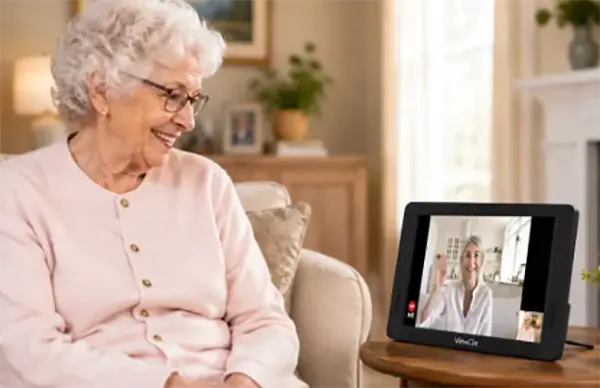
Usually, the people who notice the slightest discomfort in others’ lives are the ones who tend to ignore even the major problems of their own lives. Recently, my mother-in-law’s house had the noise coming from their smoke detector for eleven consecutive days, but no one knew.
This was because she lives alone, so no one else could tell something like this, and she herself doesn’t like to ‘burden’ others with small things like this.
But technology cannot alone or entirely fix that. It is you who has to use that technology to fix the problem altogether, though technological advancements can bridge the gap between an emergency situation occurring and someone finding out about it, and often this is what matters the most.
So here’s where that gap actually reduces and where technology fails.
Table of Contents:
The Ordinary Reason This Matters Now
In a report published by the WHO, it is clearly mentioned that one out of every six people will be 60 or older by 2030, and the population of people aged 80 and older will triple in number by the time we hit 2050. These numbers genuinely explain why the need for “keeping an eye on people living alone” is extremely important, since this question has transitioned from a topic of discussion within a few households to almost all of them.
But there was almost nothing to counter this, since checking in daily is not sustainable, and checking in every week leaves a large space for casualties occurring without us knowing.
And this gap is exactly what the newer tools target and aim to help with.
The Habit That Protects Your Family More Than People Expect
Loneliness is one of the main reasons that, when not paid attention to, can increase the risk of dementia. This is a strange fact, but the logic behind it is isolation because today, loneliness has become the reason for major mental health issues and other medical concerns like dementia.
To avoid such situations of emergency, it is advised to follow a certain set of habits like staying active through physical exercise, even if it is a 15-minute walk, eating a healthy and balanced diet, and taking adeqaute sleep. Small adjustments in your routine like these can protect your family from a significant share of that risk.
The part most people ignore is the social interactions, because this part often feels like a social experiment and not health advice, but in most cases this one matters the most. It isn’t optional. It’s on the list for a reason.
The Overlooked Sense
Another reason that increases the chances of dementia, as verified by doctors, is hearing loss. Most people find this shocking, but it is actually proven by science.
This is because a family member who has difficulty understanding words and sentences cannot listen to conversations, and so they start to avoid conversations as they feel out of place with everyone in the room. This leads to isolation, which does more damage than the hearing loss itself.
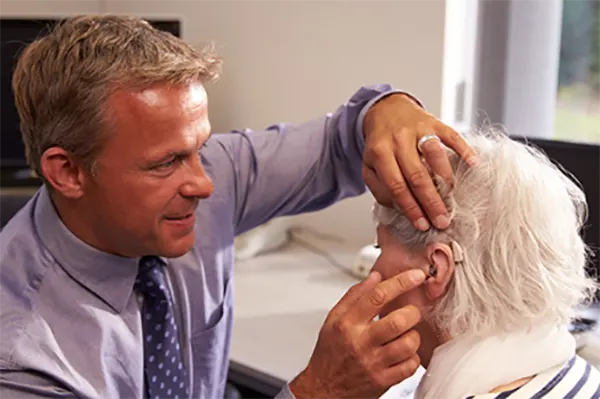
Hearing aids should fall under the category of ‘safety tech,’ but they don’t. Moreover, the majority of hearing aids are crucial parts of an older adult’s life, though they are less aesthetic and cool as a fall detection softwares which comes in the form of pendants.
What Monitoring Tech Actually Does Well
The honest answer is narrower than the marketing suggests.
See, fall detection is a good approach when it comes to healthcare features; however, it doesn’t account for actual physical care like helping someone get up, getting them dressed, and more. Some other methods, like alerting family members in case of an emergency, urging someone to make a regular phone call to ensure safety, or actually visiting them in a timely manner, have also proved useful.
Even though such systems are good at monitoring situations and calling for backup in needy times, they cannot 100% replace human presence. This isn’t just an observation, but a genuine fact which was proved by a recent piece examining assistive technology for older adults. Also, even though these systems let you call your loved ones, it provides no guarantee that those people will answer or at least call back.
That’s not a knock on the technology. It’s a boundary worth knowing before you buy anything.
Checking In Without Turning Into Surveillance
It is advised to always ensure that the person being monitored knows that they are being monitored; otherwise, ‘staying connected’ or even a matter of ‘safety’ can be perceived as an invasion of privacy.
By using apps like a shared calendar or a doorbell app that lets both houses see the person outside the gate, one can increase safety precautions for the elderly. The end intent of using such apps is to keep every generation of the family safe without making them feel uncomfortable. Although these apps and tools aren’t enough, a system of genuine check-in should be established where connection feels natural instead of the elderly just filling a form at the end of the day regarding their well-being
This is easier to achieve when, rather than deciding for the elderly yourselves, you ask them. This also helps in getting them to actually use these apps without resistance.
What to Ask a Facility Before You Trust It
There are multiple factors to consider if someone you love is moving into aged care. The visible things like the rooms and staff should be the least of your concerns because these are usually the safest spots.
The actual risks are in things hidden from the naked eye, for example, food. So always ask questions regarding everything before your family member moves in.
- Are the meals actually served hot/cold, or are they just assumed to be of the right temperature?
- Are the allergies for the elderly taken care of in a proper manner instead of them relying on memory of the staff?
- Do you provide an actual history of the adult instead of just saying ‘he/she has been taken care of’?
- To whom, and how fast, does contact happen in cases of emergencies?
Facilities running proper aged care food safety software can usually answer all four without hesitating. The ones that can’t are telling you something, even if they don’t mean to.
Final Words
Regular phone calls and checking in are one of the best approaches to ensure the safety of the elderly because no amount of technological advancements can replace the love from a genuine human, that too, a family member.
All these tools do is reduce the frequency of something going wrong and you not finding it out until it’s too late; for example, telling you about the smoke detector in your in-law’s house minutes after it occurs rather than after eleven days, by which time the risk most often decreases to negligible amounts. So, simply put, the smoke detector is just the technology, but you have to change the batteries for the technology to actually work.
So the best approach is to start small and pick up one thing to follow for an entire month because one thing done correctly outweighs multiple done only halfway.
Frequently Asked Questions
What is the logic behind social conversation reducing the risk of dementia occurring?
Is hearing loss and dementia related?
Yes, and this is because difficulty in hearing leads to avoiding conversations, which can turn into isolation. And this isn’t an emotional reason, but a real one since doctors can vouch for this.
Can monitoring technology replace in-person care?
No, it can’t because even though fall detection works, it cannot provide actual physical care for a person, like helping them get up or getting them dressed.
What’s the most important thing to ask an aged care facility?
Ask how they track food safety day to day, not just whether they’re compliant on paper. The systems behind the scenes tell you more than the tour does.
Sources
World Health Organization — WHO, Ageing and Health fact sheet, for global population aging projections
Forbes — can protect your family, by Carolyn Rosenblatt, RN-Attorney, for the lifestyle factors linked to dementia risk, including social connection
CBC The Nature of Things — a family member, tips from Dr. Howard Chertkow, Chair of Cognitive Neurology and Innovation at Baycrest’s Rotman Research Institute, for the hearing loss and dementia risk connection
BBC News — let someone call, on assistive technology and loneliness in older adults, for the distinction between monitoring/prompting technology and human presence
 Neha Sharma
Parental Control & App Safety Writer
About article
The author of this article Neha Sharma, an Parental Control & App Safety Writer at Saferloop, brings practical experience and industry knowledge to the subject.
The review and editing by Evan Patterson have been done to make sure that it is accurate, clear, and relevant.
At Saferloop, we are determined to provide high-quality, well-researched, and updated content. To understand further how we produce and revise our articles, please refer to our Editorial Guidelines.
Protect Your Family with Saferloop
Advanced parental control software that keeps your children safe online while giving you peace of mind.
- Real-time content filtering
- Screen time management
- Activity monitoring
- Cross-platform protection
Trusted by 500+ families