

Yes, AI tools can be safe if used under guidance. Parents should use kid-friendly platforms with content filters, parental controls, and privacy settings.
×
Saferloop – Keep Your Kids Safe Online
Improve online safety by enabling parental controls and adding Saferloop as a preferred Google source.
How to Teach Your Kids Writing Using AI in 2026 (Safety Precautions Included)
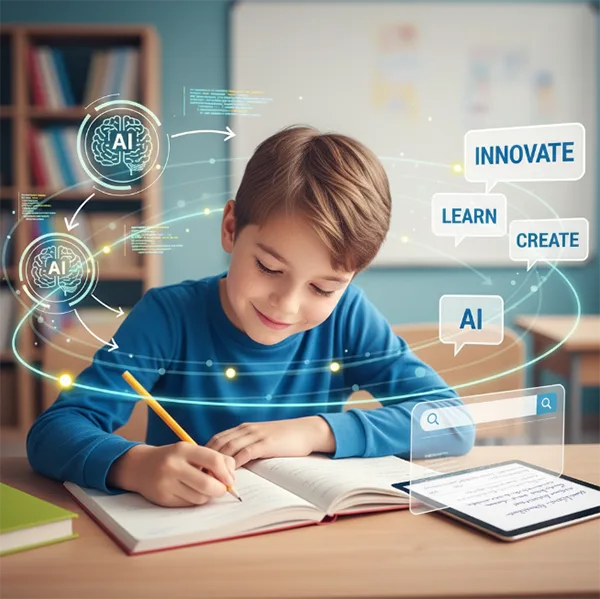
The use of artificial intelligence in schools is increasing at a rapid rate. Although not every student uses AI for schoolwork, around 54% of kids say they use AI tools to help with assignments.
AI can be interactive and helpful for children, but it also makes it harder for teachers to figure out whether they wrote papers by themselves or with AI writing tools. In addition to that, some kids are even hiding the usage of AI from their parents. A total of 64% of children in the US use AI chatbots, but only 51% parents are aware of it.
This gap raises a concern for caregivers about their child’s creativity and safety. This article helps parents to teach how young writers can write using AI tools while still being creative and safe.
Table of Contents:
Why AI Writing Tools Can Help Kids Learn Better
AI platforms not only help children with school assignments but also improve confidence, grammar, and writing efficiency. Tools like ChatGPT, Grammarly, and Claude can help children brainstorm ideas, improve clarity, and polish their writing.
These tools can help children:
- Understand and write complex topics in simple terms
- Polish their writing with grammar, punctuation, and language accuracy
- It can help kids boost their creativity and confidence
- AI writing tools provide ideas and help young writers to overcome the difficulty of starting writing tasks
Pro Tip – Use the “3-step method”. Write first, get AI suggestions, then rewrite in your own words. It keeps creativity intact while improving writing.
Choosing Safe and Kid-Friendly AI Writing Tools
There are several AI writing tools to help children craft an article or blog, and even write their homework. But are they even safe for them? Tools like ChatGPT, Claude, are not especially designed for kids; however, young learners still use them. These tools do not have child privacy or safety filters and can expose them to inappropriate content.
That’s why kid-friendly AI tools are better, as they assist in learning, give ideas, are easy to use, and provide safety filters for young writers. While choosing a safe AI writing tool, parents should keep these points in mind –
Privacy Settings and Parental Controls
Parents should choose tools with strong privacy settings and built-in parental controls. Children may sometimes share their personal details or thoughts with AI, so parents need to make sure these tools come under laws like COPPA and have parental controls, so parents can filter inappropriate content that AI can mistakenly provide.
Ad-Free and Education-Focused Platforms
The AI writing tool for young learners should be ad-free and an education-focused tool so that kids can easily use it without distractions. These platforms are designed to build core learning and help children to stay focused on the topic. They also reduce pop-ups and ads to support learning and improve young writers’ writing skills.
Tools That Encourage Learning Instead of Copying
AI writing tools are for support, not for copying the whole content without understanding it. The best tool works like a tutor or coach, so the young learners can understand complex topics while improving their critical thinking and language skills. Once a child writes a draft without copying the whole content, they can ask AI tools to fix mistakes and polish it.
Teaching Kids to Use AI as a Writing Assistant, Not a Shortcut
AI can be helpful for children who want to write, but only if they use it under parental guidance, because once they start using AI as a shortcut, they are not going to learn anything. Parents should teach kids to use it as a helper rather than as a shortcut. It should never replace their own ideas and writing capability.
- Parents can encourage children to create a draft on their own and only take help from AI when needed.
- Teach young writers to rewrite AI suggestions in their own words to improve creativity.
- Monitor their kids’ AI usage and help them understand how to use it responsibly.
- Use AI to take ideas and fix grammar and punctuation mistakes, rather than copying the whole thing.
Safety Precautions Parents Should Follow
AI writing tools can actually be very helpful if used under guidance; they can help kids gain writing skills and boost their creativity. But at the same time, children can use AI tools to complete an assignment without understanding the topic.
Problems begin when a child steals everything from AI instead of learning how to think and write independently. This can lead to plagiarism, academic dishonesty, and reduced critical thinking skills. Parents can follow some safety precautions to protect their child from relying on these tools.
Avoiding Personal Information Sharing
Parents should make sure their children are not sharing any personal information while using AI tools, as it can create some potential risks, such as data theft or misuse. With a COPPA-compliant kid AI tool, your kids’ data can’t be used for any ads or training, but if they are using an adult AI tool, their data can be compromised.
Checking AI Responses for Accuracy
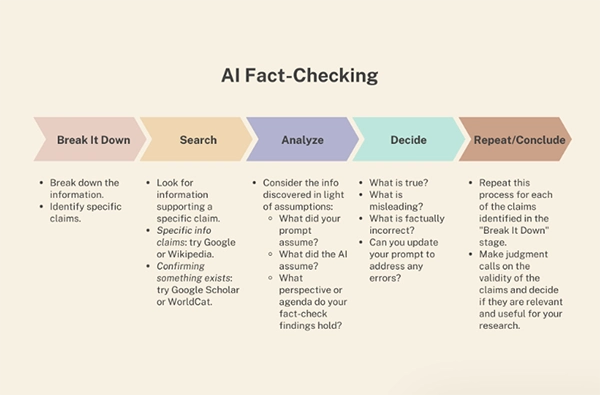
AI can make mistakes and provide incorrect or biased information, so parents should ask their kids to cross-reference information, check facts, and use different perspectives before reaching any conclusion. They can use search engines for lateral reading and check data sources.
Watching for Overdependence on AI
Some students even use tools that humanize AI text to hide overreliance on chatbots, which can reduce genuine learning. This is easier than writing by themselves, but it also creates a risk of overdependence on AI.
Balancing screen time with offline activities also helps. Simple, screen-free exercises like printable word searches can keep kids engaged with language and vocabulary without involving AI at all. Young learners should use AI just to refine the writing, not to change the original content.
The Bottom Line for Safe AI-Assisted Writing at Home
In the end, using AI writing tools is not bad, as long as children are not replacing their thinking with it.
AI writing tools can never replace critical thinking and creativity. They can indeed help to give an idea, refine content, and even polish it with grammar, language accuracy, and punctuation. But for better writing, kids should use their original thoughts and add their creativity.
The goal is not to stop children from using AI altogether, but to teach them how to use it safely, creatively, and ethically. When children combine their original thoughts with AI support, they can improve their writing skills while still developing confidence, creativity, and independent thinking.
Frequently Asked Questions
Is it safe for children to use AI writing tools?
How can parents prevent children from becoming too dependent on AI?
By setting time limits, monitoring AI usage, and encouraging children to complete drafts independently before using AI for help, parents can reduce overdependence.
Can AI writing tools provide incorrect information?
Yes, sometimes AI tools can generate incorrect or biased information. Parents should teach kids to fact-check and compare AI-generated information before trusting it fully.
 Divya Kakkar
Internet Content Writer
About article
The author of this article Divya Kakkar, an Internet Content Writer at Saferloop, brings practical experience and industry knowledge to the subject.
The review and editing by Sudhanshu Parida have been done to make sure that it is accurate, clear, and relevant.
At Saferloop, we are determined to provide high-quality, well-researched, and updated content. To understand further how we produce and revise our articles, please refer to our Editorial Guidelines.
Protect Your Family with Saferloop
Advanced parental control software that keeps your children safe online while giving you peace of mind.
- Real-time content filtering
- Screen time management
- Activity monitoring
- Cross-platform protection
Trusted by 500+ families