

Operated 24/7 by the National Center for Missing and Exploited Children, this is a hotline used as the first point of contact for help in situations related to the exploitation of a minor.
×
Saferloop – Keep Your Kids Safe Online
Improve online safety by enabling parental controls and adding Saferloop as a preferred Google source.
How Youth Organizations Are Creating Safer Digital Spaces for Kids
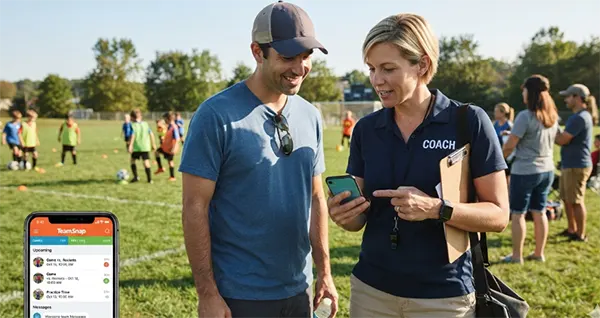
For generations, youth organizations meant physical activity, whether that be through a cheerleading team or a robotics team, but that is not the case anymore.
Now, practice messages aren’t hung up on a notice board; instead, they are sent over a group chat. Similarly, team photos aren’t a tradition anymore, it is a proof of display shared in an app that nobody approved. And most volunteers for an organization signed up on a random Tuesday without actually reading the terms.
None of this is strange because this is bound to happen when an institution built for one era never adapts to the next.
Here’s what the organizations doing this well actually have in place, and where the policy just exists for namesake.
Table of Contents:
- Two-Deep Leadership Has a Digital Version Now
- What Screening Still Misses
- The Reporting Requirement Almost Nobody Explains Clearly
- Why the Software Contract Matters More Than the App
- What Actually Motivates the Organizations That Take This Seriously
- What a Parent Can Actually Ask
- Where the General Advice Still Applies
- Final Words
- Frequently Asked Questions
- Sources
Two-Deep Leadership Has a Digital Version Now
For a good part of the decade, youth organizations established “two-deep leadership,” which basically meant that no adult is to be left alone with a child ever, with no exceptions whatsoever. Scouting was, in fact, one of the few organizations to formalize this as a policy.
Even though this policy existed for a long time, no versions of this have been made digitally to catch up with the already digitalised organisations being formed on the internet. The reason for this is that most organizations believe that there are no ‘threats’ in their teams and that good intent is enough, but actually it’s not.
In fact, organizations that finalize no one-on-one communication between an adult and a child privately have often gone through instances where the lack of such a policy becomes dangerous. So, to avoid that, the best approach is to communicate on a platform the whole team can see, with multiple adults monitoring the situation.
What Screening Still Misses
A deep background check performed on coaches before they are recruited is definitely progress.
However, this progress gets old as time passes because these checks cannot predict the future. Just because a past incident hasn’t occurred doesn’t mean that an incident cannot happen in the near future when a group chat is set up after 6 months.
- Regular checks: A background check that shows that no incident has occurred in the past can’t be a guarantee that incidents can not occur in the future.
- Communication audits. An official with a significant amount of authority and someone who doesn’t fall in the direct chain of command with the coach should regularly check what groups exist and who all is in them.
- An alternative approach path: If the perpetrator is the same person who is responsible for reporting it, then Honest reports of such cases can’t be expected. So there should be a different person or path that the parents and kids can go to in case of a problem.
I’d put the third one above the first two, honestly, and most policies get that backwards.
The Reporting Requirement Almost Nobody Explains Clearly
The CyberTipline, run by the National Center for Missing & Exploited Children, is the specific place people have to approach in case any such incident occurs. This is a 24/7 live hotline for reporting suspected child sexual exploitation.
The most obvious training gap here is that most coaches don’t even know what it is, and most organizations skip the briefing for coaches regarding this since no one ever asked for it.
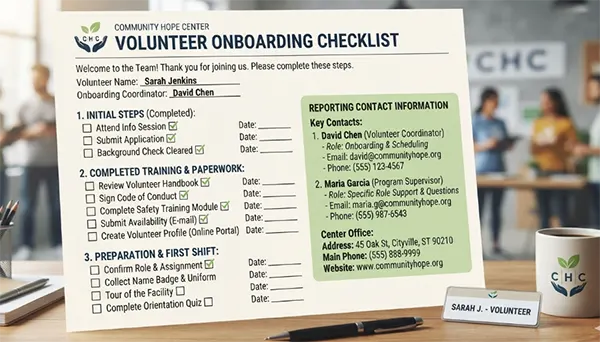
The best approach to resolve this is to add one line stating what the hotline is on the onboarding packet. Training sessions should be conducted before a season starts since it only takes fifteen minutes, and these should include the hotline’s number, how to and when to use it.
Why the Software Contract Matters More Than the App
Most youth organisations use third-party software before they can even realise what they are and what their terms are. These software tools are used as scheduling apps, payment platforms, and photo-sharing tools.
This software not only stores names and photos but, in most cases, even the addresses of a minor. This happens because, while signing up, people usually skip reading the contract on which the entire software functions.
So, whenever someone signs up on these platforms without consciously reading all the information presented, they are putting not only themselves but all the families in the group chat at risk.
How long is a child’s information kept, and who it is shared with after the program ends is a question frequently asked by parents regarding the classroom software, and most organizations should also expect such lines of questioning, except they aren’t
So always read the data retention clause before you read anything else in a vendor contract.
What Actually Motivates the Organizations That Take This Seriously
The main two reasons why organisations do this are either because it’s the right thing to do or because they have witnessed firsthand what happens when you don’t.
See, settlements for the failure of duty regarding a child’s safety can be extremely costly for educational and religious institutions, with settlements going as high as six figures.
I won’t pretend that’s a comfortable reason to fix a policy, but it’s a real one.
The legal reason behind such situations is pretty consistent because an institution with a reasonable chance to prevent harm, and didn’t take it, gets treated differently from the person who actually caused it. That’s how institutional responsibility factors into these cases, and it’s a real financial incentive sitting underneath what should be a moral one.
What a Parent Can Actually Ask
There are four basic questions to understand what a sign-up form doesn’t tell you.
- Who all can see my child’s information, and where is it stored once posted?
- Is there an enforced one-to-one messaging policy, instead of just one being written down?
- Is there an alternative reporting path that bypasses the perpetrator, and who is it informed about later?
- Who signed the software agreements, and did anyone read them?
An organization that answers these fluently has usually done the work. One that gets defensive about the first question has usually skipped it.
Where the General Advice Still Applies
The natural instincts of parents of checking an app before they let their kids use it are also applied to screens at home, where they check each and everything rather than simply accepting whatever a coach hands out.
The principles concerning digital safety of a minor apply to a youth organization in the same way as they are applied to a company. This ensures that organizations build for any group and handle sensitive information responsibly. A twelve-year-old’s data deserves at least the diligence a spreadsheet full of customer records gets.
Final Words
Nothing about this task is time taking or even difficult, for that matter. Most of it is just prevention policies that could be brief to the coaches in one meeting; the only problem with that is a lack of a person assigned exactly for this job.
And this is exactly where the gap lies. See, unless someone is assigned to ask certain questions and do a specific job, nothing will work. Because most people assume someone might’ve already done it out of the greater good.
Ask who that someone is at your kid’s next sign-up. If the honest answer is nobody, that’s the thing to fix first, before the app, before the photo policy, before any of it.
Frequently Asked Questions
What is the CYBERTIPLINE used for?
Is it okay for an adult to speak alone with a minor?
No, communication should always occur in a group chat with all the team members so that multiple adults can monitor the situation. This is called ‘two-deep leadership.’
What are the safety measures you should consider before you sign up on an app recommended by the organization?
Before signing up for an app and risking your child’s safety along with everyone in the group, always read the app’s terms and conditions. In fact, you should also check the organization’s information, like who has access to your child’s data, how long and where it’s stored.
Do background checks cover online conduct?
No. A background check is a one-time snapshot before someone joins. It says nothing about communication habits that develop afterward.
Sources
National Child Traumatic Stress Network — CyberTipline, for confirmation that NCMEC operates the CyberTipline as a 24-hour reporting hotline for suspected child sexual exploitation
 Divya Kakkar
Internet Content Writer
About article
The author of this article Divya Kakkar, an Internet Content Writer at Saferloop, brings practical experience and industry knowledge to the subject.
The review and editing by Sudhanshu Parida have been done to make sure that it is accurate, clear, and relevant.
At Saferloop, we are determined to provide high-quality, well-researched, and updated content. To understand further how we produce and revise our articles, please refer to our Editorial Guidelines.
Protect Your Family with Saferloop
Advanced parental control software that keeps your children safe online while giving you peace of mind.
- Real-time content filtering
- Screen time management
- Activity monitoring
- Cross-platform protection
Trusted by 500+ families