
Less well. IIHS research found pedestrian detection systems cut daytime injury crashes by around 30% with no measurable benefit in darkness.
×
Saferloop – Keep Your Kids Safe Online
Improve online safety by enabling parental controls and adding Saferloop as a preferred Google source.
From Collision Alerts to Peace of Mind: Smart Safety Tech for Teen Drivers
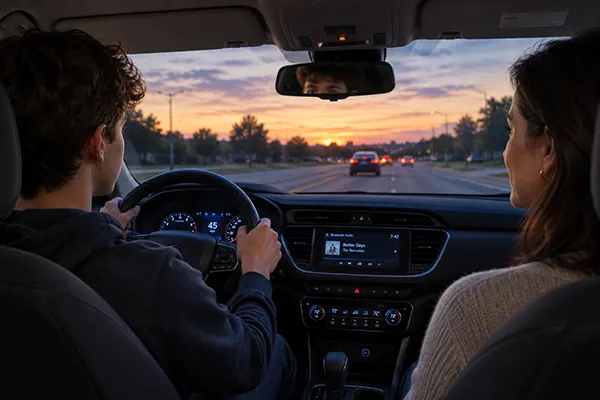
There is research by the CDC in 2020 which have found that 44% of deaths of teenagers in car crashes happen between 9 pm and 6 am.
The average age of these teenagers was recorded between 13 and 19 years. Many of these happen because of the automatic braking systems at night.
The system works best during the day, but teenagers drive at night. This is why driving after dark becomes riskier. You should know how these safety features work instead of abandoning them completely.
In this article, you will know what the modern safety tech does, how it works, the risks, and everything you need to know.
Table of Contents:
The Tech Is Weakest Where the Risk Is Highest
Most of the companies test the driver-assist safety features to ensure if it is working or not. They do not test the features specifically for teenagers or according to their lifestyle.
The 2022 IIHS study tells you that the results of pedestrian detection are working in daylight conditions, as the camera has enough light and the radar handles the distance to ensure safety, but after dark, this feature does not work efficiently and there’s a high risk of accidents.
This is the main concern because teenagers drive at night more than they drive in the daylight. The most common days for accidents are Friday, Saturday, and Sunday because teenagers prefer to go out at night to enjoy their weekends.
This can be a fault of technology, as it does not work best at night, and nobody prioritizes it when it works at its best.
What Actually Goes Wrong
Teenage is when many kids learn to drive, so we can not expect them to be perfect drivers.
This inexperience becomes dangerous sometimes; the kids can not spot danger early, they press the brakes too hard, they struggle at turning points, and more problems like these are normal but can become a threat to their lives.
And immaturity also increases this danger; teenagers love overspeeding, using mobile phones when driving, adding 6 friends in a five-seater, etc.
Teenagers crash four times more than adults due to these situations of inexperience and immaturity.
Many smart families use smart systems in their homes for their children’s safety, and adding safety systems to their teenager’s car is a good approach; they just have to know what to expect and how they work.
What These Features Genuinely Do
These are some useful features to add in your teenager’s vehicle to ensure safety:
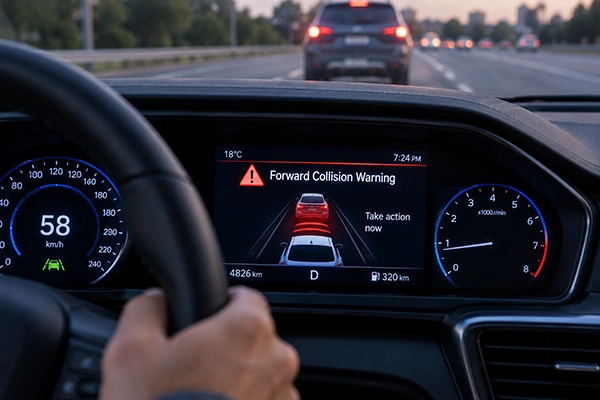
Forward collision warning and automatic braking:
Best-evidenced feature in the set for daytime rear-end crashes, which are common and often survivable.
Speed alerts and governors:
Many brands offer speed limiters that send notifications whenever the driver exceeds the set limit. Overspeeding by teenagers is the most common reason for car crashes.
Seat belt interlocks:
Seat belt interlocks are important for all age groups. It is noted that many crash include teenagers without putting the seat belt on.
Lane departure warning:
This feature is useful on highways, but it can create problems on back roads. People feel dissatisfied and don’t use this feature, but it is still helpful.
Trip reports:
This is the best feature for parents, as it lets them know the speed, braking, location, and other useful alerts.
Most of these features are lifesavers and get oversold. You have to do your part to contribute to your child’s safety when driving; once your setup is complete, you can worry less about the mishaps.
Where a Person Still Has to Decide
Many parents make mistakes by getting angry after every alert. Scolding for hard braking is not good every time;e, these things happen while driving, and they should act more calmly to know the cause once their child reaches home.
This human versus automated debate can be seen in every monitoring decision. Parents should remember that the system is to report the activities that are happening in the vehicle. They should not judge without knowing the cause.
The Rules That Beat the Hardware
The IIHS has published 5 rules for their best-practice graduated licensing models to avoid crashes by teenagers; these rules are:
- Minimum permit age should be 16
- Intermediate license should be allotted after 17
- A person should have a minimum of 70 hours of supervised driving experience
- Night driving should be restricted for teenagers after 8 pm.
- No teen passengers should join in the intermediate stage.
So many states are free of these rules, but considerations for safety are still useful.
The Record the Car Keeps
Common safety information like speed, braking force, steering input, seat belt status, throttle position, and a clip saved before accidents is very important for parents. The internet-connected safety cars record more information than this, so the safety can get the maximum attention.
The sensor data your teen’s car generates is a detailed account of what happened moments before the car’s accident.
This is helpful because sometimes accidents happen because of the other driver’s fault.
If It Goes Wrong Anyway
You should know whom to call in emergencies.
California firms like https://landverpersonalinjury.com/ work very well for crashes and support mishaps regularly.
Save this contact and website and use them when you need them.
Final Words
None of these features can promise that they will not let your vehicle crash, but the service they are offering can make the parents act sooner, and eventually they are helping somehow to provide the maximum chances of safety.
The peace of mind comes with the possibility of “if something happens, I will know at the moment”; this sentence is enough to make parents relaxed to a point.
They will still worry about accidents happening at night, or from other causes, but the tension will decrease much more than the situation where they know about the accident when it’s too late.
Frequently Asked Questions
Does automatic emergency braking work at night?
What is the single most effective thing for a new teen driver?
Supervised practice hours, followed by night and passenger restrictions. IIHS best practice is at least 70 hours before licensing.
Should I use a tracking app on my teen’s car?
It can help if the family agrees on the rules first. Used as surveillance rather than coaching, it tends to damage the honesty you need more.
Why do passengers matter so much?
Crash risk for an unsupervised teen driver rises with each additional teen passenger, which is why graduated licensing restricts them.
Sources
Insurance Institute for Highway Safety — Teenagers, compiled by senior research scientist Rebecca Weast, for the crash-rate multiples, the immaturity and inexperience framing, and the graduated licensing best-practice model
CDC — Risk Factors for Teen Drivers, for the night and weekend crash-death shares, the passenger effect, and the seat belt figure (2020 data)
Children’s Hospital of Philadelphia, Teen Driver Source — Night Driving Statistics, reporting the 2022 IIHS finding on pedestrian automatic braking in daylight versus darkness
 Aditi K
Freelance Cybersecurity Writer
About article
The author of this article Aditi K, an Freelance Cybersecurity Writer at Saferloop, brings practical experience and industry knowledge to the subject.
The review and editing by Vinithra Karunanidhi have been done to make sure that it is accurate, clear, and relevant.
At Saferloop, we are determined to provide high-quality, well-researched, and updated content. To understand further how we produce and revise our articles, please refer to our Editorial Guidelines.
Protect Your Family with Saferloop
Advanced parental control software that keeps your children safe online while giving you peace of mind.
- Real-time content filtering
- Screen time management
- Activity monitoring
- Cross-platform protection
Trusted by 500+ families