

They can. Plenty of kids use apps and videos to learn new skills, practice school subjects, or explore interests on their own.
×
Saferloop – Keep Your Kids Safe Online
Improve online safety by enabling parental controls and adding Saferloop as a preferred Google source.
Mobile Technology and Kids: Positive and Negative Lifestyle Impacts Parents Should Know

Phones and tablets are just part of daily life now. Kids use them to watch videos, chat with friends, play games, and sometimes even get their homework done.
The numbers show how common this has become. According to the Pew Research Center, 95% of U.S. teens have access to a smartphone.
The issue is not whether children should use technology or not, because they already do that. What matters is how children use technology and how much time they spend online. This article explores the positive and negative impacts of online platforms on kids and how parents can understand their role.
Table of Contents:
- Why Parents Should Understand the Role of Technology in Kids’ Lives
- Positive Ways Mobile Technology Can Support Children
- Negative Effects of Too Much Screen Time
- Building Healthy Digital Habits at Home
- Using Parental Controls to Balance Safety and Independence
- Final Considerations for Raising Digitally Balanced Kids
Table of Contents:
- Why Parents Should Understand the Role of Technology in Kids’ Lives
- Positive Ways Mobile Technology Can Support Children
- Negative Effects of Too Much Screen Time
- Building Healthy Digital Habits at Home
- Using Parental Controls to Balance Safety and Independence
- Final Considerations for Raising Digitally Balanced Kids
- Frequently Asked Questions
Why Parents Should Understand the Role of Technology in Kids’ Lives
Technology isn’t something kids use once in a while anymore. It’s woven into everyday life.
A few reasons why parents should pay attention:
- Kids use technology for much more than entertainment. It’s where they learn, communicate, and spend a lot of their free time.
- Devices like tablets and smart homes are now just another addition to our lives.
- There are many new artificial intelligence tools, apps, and trends that come out, and children tend to learn about them first.
- Keeping up with trusted sources of the latest tech news can help parents spot new digital trends and understand potential online safety concerns before they become problems.
Positive Ways Mobile Technology Can Support Children

It is easy to concentrate on the negative, but not all aspects of technology are negative. In moderation, mobile technology can be beneficial for children. Here are some advantages that digital tools offer to children.
Learning Apps and Digital Skill Building
Screen time isn’t always just scrolling or gaming.
Many children use their gadgets to study what they like. One day, it might be practicing math; another day, it could be learning a few words in a foreign language or watching a video about volcanoes. Many educational apps and Cloud platforms now provide children with access to interactive lessons, learning materials, and skill-building activities.
Communication with Family and Friends
A benefit that mobile technology provides is communication. Children can connect with people who may live far away via video chats rather than waiting for visits.
Communication with children can be beneficial for parents as well. A simple text or telephone call can keep this communication alive throughout the day. Of course, this will not substitute real-time communication, but it will help to connect with one’s children regardless of physical distance between them.
Creativity and Problem-Solving
Children don’t use their devices only for watching videos or scrolling through social media. They engage in activities such as drawing, writing, and creating videos that help develop their creativity and skills. The fact that these activities utilize screens does not mean that they cannot enable children to develop skills through creativity and experimentation.
Here is when technology can come into play. Children need opportunities to become creators rather than mere consumers of their gadgets.
Fun Fact – Most kids often discover new apps and digital trends before adults do.
Negative Effects of Too Much Screen Time

The benefits are real, but so are the challenges. Mostly, problems arise when screen time becomes excessive or starts replacing other activities and things in life.
Some negative effects of too much screen time are –
Sleep Disruption and Reduced Physical Activity
Children who are constantly on their devices until bedtime might experience difficulty falling asleep since their minds would still be thinking about notifications, videos, games, and interactions with friends. More screen time doesn’t just affect sleeping; it also affects physical activities.
The more they use the device, the less they do physical activities. They can spend some time playing outside or doing some physical activity rather than sitting with a device. So, more screen time does affect physical activity and sleep time in the long run.
Shorter Attention Span and Mood Changes
Modern apps are designed to hold attention and keep kids busy. They are designed to keep users engaged for longer periods than they may realize. This can make kids feel that slow activities are less interesting.
Some parents also realize that the changes in their children’s behavior occur when access to devices is limited. All kids differ from one another, but excessive internet usage may affect the ability to concentrate on difficult activities.
Over time, excessive digital use may also influence a child’s Mental wellness, particularly when it affects sleep, social interactions, or daily routines.
Social Pressure, Comparison, and Online Distraction
The fact that as kids get older, they get increasingly involved in social media sites and other online communities poses yet another challenge. It can make children feel inadequate about themselves based on comparison to what they see online. Constant exposure to curated online content can also influence how children develop their personal identity and self-image.
Furthermore, there is the constant distraction posed by messages, notifications, videos, and games. Therefore, it becomes increasingly difficult for kids to know whether or not technology occupies too much of their lives without proper guidance.
Building Healthy Digital Habits at Home
There is no need to have an extensive set of guidelines to ensure that children establish healthy relationships with technology.
These simple tips should be sufficient for you:
- No mobile devices or iPads are allowed on the dining room table.
- Maintain some gadget-free moments prior to bed.
- Foster outdoor time and other engagements that don’t require gadgets to be used.
- Talk about Internet activity regularly and prevent problems by addressing them ahead of time.
Using Parental Controls to Balance Safety and Independence
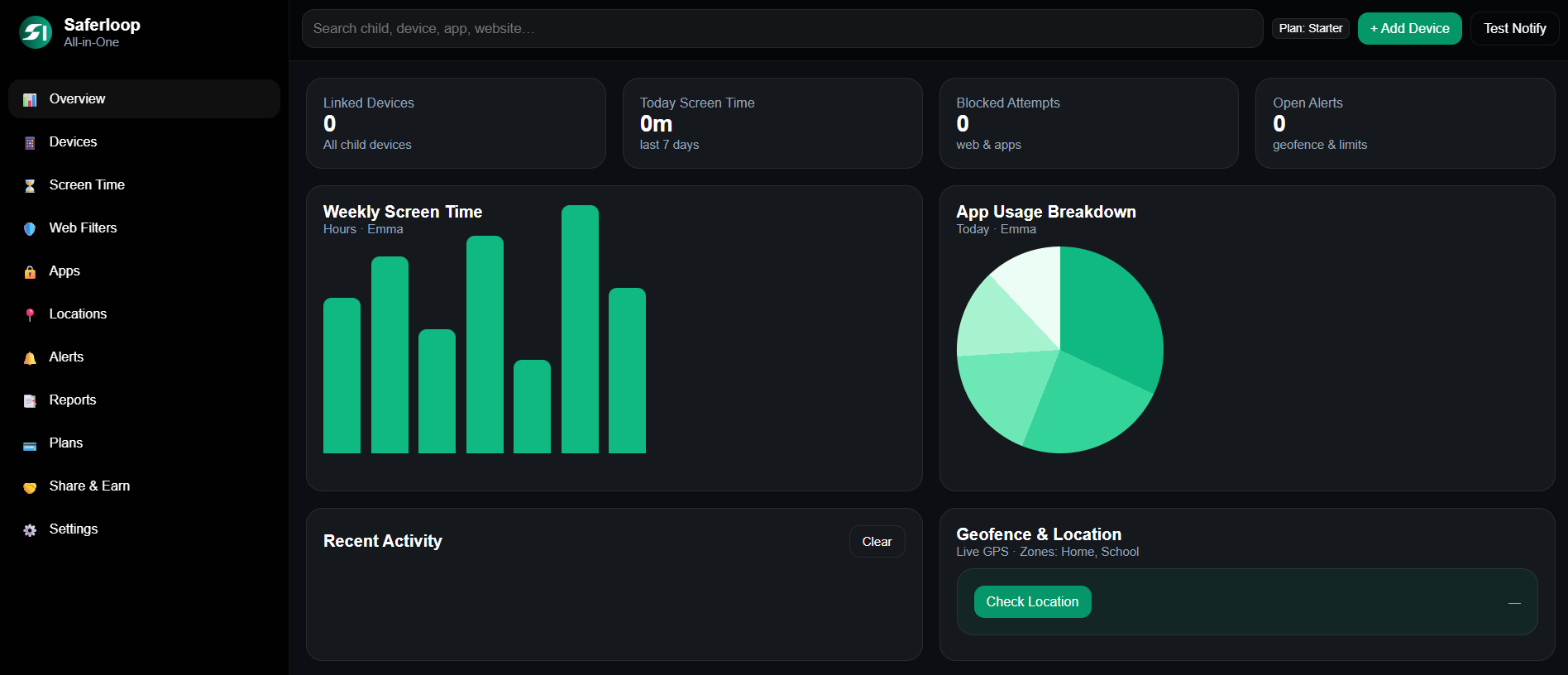
Parental controls like SaferLoop can definitely help, especially when kids are younger and still figuring out how to navigate the online world.
Most devices now come with tools that let parents:
- Set screen time limits
- Block content that’s not age-appropriate
- Manage app downloads
- Adjust privacy and location settings
These tools are helpful, but they do not offer a foolproof approach. This is why discussions are just as important as the environment and limitations put in place. Children must be able to have a dialogue regarding their online activities and decision-making.
Final Considerations for Raising Digitally Balanced Kids
Technology is here to stay. For today’s generation, things like cell phones, iPads, apps, and social media are all just a natural part of their daily lives.
And really, that is not the problem.
The key is ensuring that digital tools do not gradually become all there is. Children need to get enough rest. They need time outside, talking to people, doing activities, and living life without looking at a screen.
Finally, the goal is not to raise children without technology or digital devices. The objective should be to help them develop a balanced relationship with technology – an attitude that ensures that online platforms become their tool rather than dominating their lives.
Frequently Asked Questions
Can phones and tablets help children learn?
What are some signs a child may be getting too much screen time?
Trouble sleeping, less interest in outdoor activities, difficulty focusing, or getting upset when screen time ends can all be signs.
Are parental controls enough to keep kids safe online?
They help, but they’re not a complete solution. Regular conversations about online habits matter just as much.
How can parents encourage healthier screen habits?
Start small, screen-free meals, no devices before bed, and making time for offline activities can go a long way.
 Divya Kakkar
Internet Content Writer
About article
The author of this article Divya Kakkar, an Internet Content Writer at Saferloop, brings practical experience and industry knowledge to the subject.
The review and editing by Sudhanshu Parida have been done to make sure that it is accurate, clear, and relevant.
At Saferloop, we are determined to provide high-quality, well-researched, and updated content. To understand further how we produce and revise our articles, please refer to our Editorial Guidelines.
Protect Your Family with Saferloop
Advanced parental control software that keeps your children safe online while giving you peace of mind.
- Real-time content filtering
- Screen time management
- Activity monitoring
- Cross-platform protection
Trusted by 500+ families