

Scrum focuses on fast delivery, flexibility, and adaptability.
×
Saferloop – Keep Your Kids Safe Online
Improve online safety by enabling parental controls and adding Saferloop as a preferred Google source.
How To Become A Better Scrum Master In 5 Easy Steps
A good Scrum Master will close the gap on a Scrum team if there is a lack of understanding of how the team works together. The Scrum Master is actually a leadership role; it’s not about being an admin or chasing or booking meetings.
The Scrum Guide explains that the accountability of the Scrum Master is for the team’s effectiveness. A good Scrum Master builds the team’s understanding of the Scrum Framework and helps the team practice Scrum, instead of being prescriptive and authoritarian. If you want to start Scrum Master Certification course, you can do so here.
Table of Contents:
- Step 1: Strengthen Your Understanding of Scrum Principles
- Step 2: Develop Servant Leadership and Coaching Skills
- Step 3: Improve Communication and Facilitation Skills
- Step 4: Become Proactive in Removing Impediments
- Step 5: Encourage Continuous Improvement and Adaptability
- Conclusion
- Frequently Asked Questions
Step 1: Strengthen Your Understanding of Scrum Principles
The Scrum Guide contains three accountabilities, five events, and three key elements, with each key element associated with a commitment, for example, the Sprint Goal or Definition of Done. To focus on the Scrum values and principles rather than Scrum’s rules, understanding the rationale behind each element is important. Read the Scrum Guide every few months, as there are new nuggets to uncover.
Step 2: Develop Servant Leadership and Coaching Skills
- In Scrum, one does so by serving the team. In servant leadership, one is successful by the extent to which the team is able to self-manage. From a project management background, it’s second nature to step in and take control.
- In the case where a developer finishes a task and is seeking the next task to work on, a good servant leader will answer with a question. “What tasks get us closer to the Sprint Goal?”
- To cultivate servant leadership, focus on the following:
- Avoid giving an answer until/unless absolutely necessary.
- Focus on self-ownership and self-control.
- Avoid stepping in if the team is about to go off course.
Step 3: Improve Communication and Facilitation Skills
Continuous improvement and effective interaction with all stakeholders are important to your success. The level of collaboration within your team workflow will increase the level of trust within your team.
Listen First, Then Respond
To understand the issue behind the words, and then how to best address it. “The estimates are useless” could mean “I feel rushed”. When trouble arises, bring it out in the open as immediately as possible, keeping the focus on the work, not the person, and offering honest, constructive feedback.
Run Scrum Events People Find Useful
Maintain the aim of each of the Scrum events:
- The Developers’ 15-minute check-in on the Sprint objective during the Daily Scrum.
- Determining why the Sprint is essential, what work can be done in the Sprint, and how during Sprint Planning.
- Reviewing and showing the work (and perhaps a demo) with the stakeholders during the Sprint Review.
- Reflecting on how the work was done during the Sprint Retrospective and making changes to the way work is done for the next Sprint.
Think about a planning session where the Product Owner wants two new features, and the Developers want time to work on a module that is breaking the team. Rather than choosing a side, you have both options listed on the board and help the team decide what it means for the Sprint goal. The team reaches an agreement it can stand behind.
Step 4: Become Proactive in Removing Impediments
Continuously check the Daily Scrum for issues. A common sign is an “almost done” item that has been in the same state for many days.
You can’t fix every obstacle on your own. If your team can solve an issue, you shouldn’t waste time trying to do the same. Concentrate your hard work on the things outside your team’s control.
For a team that was wasting two to three days each Sprint while waiting on a security check, a proactive Scrum Master set up a meeting with the security lead to coordinate a review at the beginning of the team’s Sprint. Waiting on security review was then no longer an obstacle for the team. A simple impediment backlog also shows problems that continually come up and need to be escalated.
Step 5: Encourage Continuous Improvement and Adaptability
Always keep in mind the lessons of continuous improvement for yourself and for the team. If retrospective complaints are repeated every Sprint, then it could mean there’s an issue in the way retrospective meetings are run.
Turn Retrospectives into Real Change
Make sure there’s a list of improvements for each Sprint. It’s better to go for one or two major changes, because putting it on the next Sprint backlog significantly enhances the chances that change will occur. Each change should be viewed as an experiment, and the outcome will be shown in the next retrospective meeting.
Adapt Your Approach and Keep Learning
New teams may need you to teach, while more experienced teams require you to ask sharper questions and maybe facilitate less. Your facilitation style can also be checked through feedback. The positive aspect of this profession is that you have multiple feedback sources.
If you work with multiple teams on the same product, the SSM Certification Training teaches the Scrum Master role in SAFe, with a focus on the coordination of work across teams. There is also ongoing professional development in Scrum Mastery and practice groups.
Conclusion
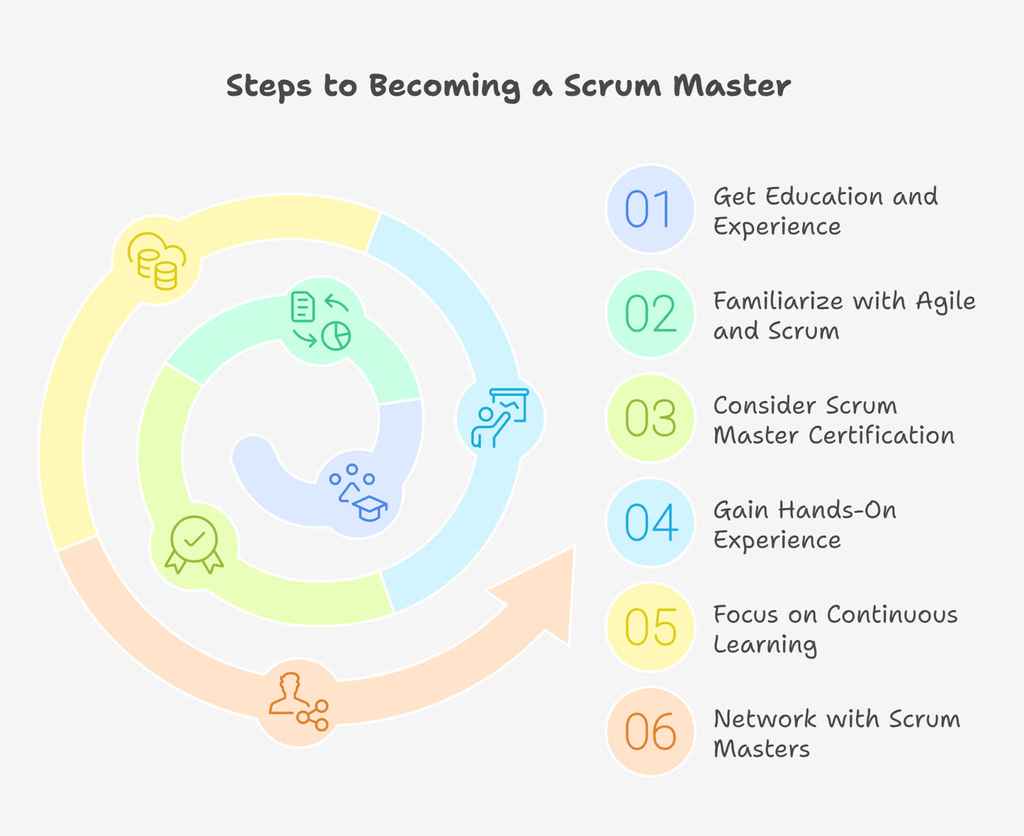
Enhancing your Scrum Mastery is actually made up of five behaviors. The first is to thoroughly understand Scrum. Next is to offer the team support and lead by example. Continuously improve and remove impediments, and lastly, communicate and facilitate with care. While CSM certification is a good starting point, actual experience with teams helps sharpen these skills.
A Scrum Master career is made up of a series of tiny changes and enhancements, oftentimes hard to see and feel, but that is the nature of the career. Which of the behaviors above do you think you can change and test within your next Sprint?
Frequently Asked Questions
What’s the main goal of Scrum?
Why is continuous improvement in communication required?
Continuous improvement and effective interaction with all stakeholders are important to your success. The level of collaboration within your team will increase the level of trust within your team.
What does the Scrum Guide contain?
The Scrum Guide contains three accountabilities, five events, and three key elements, with each key element associated with a commitment, for instance, the Sprint Goal or Definition of Done.
 Aditi K
Freelance Cybersecurity Writer
About article
The author of this article Aditi K, an Freelance Cybersecurity Writer at Saferloop, brings practical experience and industry knowledge to the subject.
The review and editing by Vinithra Karunanidhi have been done to make sure that it is accurate, clear, and relevant.
At Saferloop, we are determined to provide high-quality, well-researched, and updated content. To understand further how we produce and revise our articles, please refer to our Editorial Guidelines.
Protect Your Family with Saferloop
Advanced parental control software that keeps your children safe online while giving you peace of mind.
- Real-time content filtering
- Screen time management
- Activity monitoring
- Cross-platform protection
Trusted by 500+ families