

Some are, some aren’t. It really comes down to the safety features, privacy protections, and how closely parents stay involved.
×
Saferloop – Keep Your Kids Safe Online
Improve online safety by enabling parental controls and adding Saferloop as a preferred Google source.
AI Chatbots for Kids: What Parents Should Review Before Letting Children Use Them
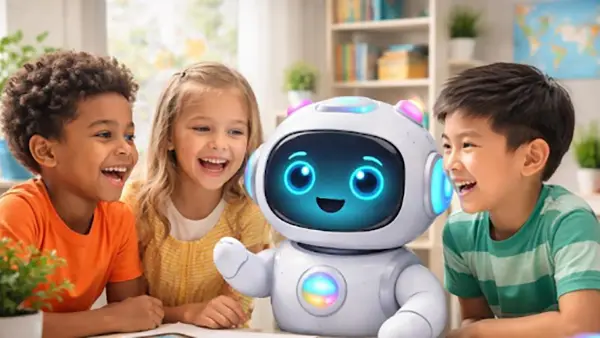
A few years back, parents were mainly worried about social media. Now, AI chatbots have become a part of their concerns too.
A 2025 Pew Research Center survey found that 64% of teens use AI chatbots, with nearly 3 in 10 using them daily.
Usually, chatbot conversations seem harmless. But not all AI tools are good for kids. Some come with safety features, and others are made mostly for adults. Pew also found that 12% of teen chatbot users use them for emotional support.
This article helps parents in reviewing AI chatbots before they let their children use them.
Table of Contents:
- What are AI Chatbots?
- What Makes an AI Chatbot Safe or Unsafe for Children
- Key Features to Check in Kid-Friendly AI Chatbots
- Common Risks Kids May Face When Using AI Chatbots
- How Parents Can Set Rules for Safe AI Chatbot Use
- Final Considerations Before Choosing an AI Chatbot for Kids
- Conclusion
- Frequently Asked Questions
What are AI Chatbots?
AI Chatbots are tools that use AI to answer questions and chat. So instead of surfing sites and wasting time, kids can just type in what they want to know and get it quickly.
Many kids use these chatbots to assist with schoolwork or when coming up with ideas for projects or reports. Plus, they hit them up for fun stuff, just because they’re curious. These bots make learning feel like a real conversation, unlike cold search engines. Similar technology is also used in AI in customer experience, where chatbots help answer questions and guide users through online services.
But here’s the thing – chatbots might goof up. They could get the facts wrong, or misunderstand what you’re asking, and still sound totally sure of themselves. Many chatbot systems are designed to provide seamless navigation by helping users find information faster through natural conversations.
And some businesses also use chatbot tools such as Magento 2 ChatGPT AI Extension to automate customer interactions and improve the business’s efficiency. Because of this, kids should use chatbots to give guidance, but always double-check the info somewhere else.
What Makes an AI Chatbot Safe or Unsafe for Children
Not all AI chatbots are for kids. Some cater to kids, while others are geared toward adults. This could expose youngsters to stuff they shouldn’t see.
So, before picking a chatbot, look past just its popularity or features. The coolest-looking tool might not handle safety well when issues arise.
A few things that can make a chatbot safer for children include:
- Age-appropriate content filters
- Strong privacy and data protection settings
- Parental controls or supervision features
- Easy ways to report harmful or inappropriate content
On the other hand, chatbots with weak moderation aren’t safe. Unclear privacy policies add unnecessary risk. But avoiding AI isn’t the answer. We just need chat tools that have some safeguards for kids.
Key Features to Check in Kid-Friendly AI Chatbots
Chatbots might advertise as being family-safe, but let’s dig a little deeper first. See if the chatbot uses content filters; while no filter is foolproof, some sort of system ought to exist to shield kids from inappropriate stuff.
Also, consider privacy issues. Not all chatbots handle your info the same way, and many parents don’t know conversations might get logged for improving the service. Many modern AI tools offer highly personalized responses, which can be useful for learning but also make privacy settings worth reviewing.
A few things worth checking:
- Content moderation and safety filters
- Privacy settings and data collection practices
- Parental controls, if available
- Age recommendations
- Ways to report problematic responses
Common Risks Kids May Face When Using AI Chatbots
AI chatbots are helpful but come with too many risks, especially for kids. Conversations feel so natural that kids interact differently than they would with a search engine. That can sometimes lead to problems they don’t see coming.
A few risks are worth keeping in mind.
Sharing Personal Information
Children get comfortable while having a conversation very quickly. They don’t think much about it, and sometimes share their full name, school, location, or other personal details.
Most chatbots don’t need that information to answer questions. So kids should keep personal details private, even when the conversation feels friendly.
Believing Inaccurate or Harmful Answers
AI can be super confident even when it’s totally wrong. Like, a chatbot could misunderstand a question, jumble facts around, or spit out info that isn’t right for kids. The problem is, its answers usually sound really convincing. So, children might not realize anything is actually wrong.
Emotional Dependence on AI Conversations
Some children enjoy chatting with AI because it’s available whenever they want. No waiting, no interruptions, just instant responses.
The issue is when those conversations start replacing real ones. If a child begins turning to a chatbot for comfort, advice, or emotional support all the time, it can become unhealthy. AI can keep a conversation going, but that’s not the same thing as understanding someone.
How Parents Can Set Rules for Safe AI Chatbot Use
Kids don’t need a long list of strict rules to use AI chatbots safely. In fact, keeping it simple usually works best; just a few clear guidelines can go a long way.
Some good ground rules include:
- Never share personal details like your full name, address, school, or phone number.
- Double-check important information instead of trusting it blindly.
- Ask a parent before downloading anything or trying a new chatbot.
- Speak up if something an AI says feels confusing, upsetting, or not right.
- Use chatbots for learning and creativity—not as a replacement for parents, teachers, or friends.
Final Considerations Before Choosing an AI Chatbot for Kids
Kids ask a lot of questions. Sometimes it’s homework-related. Sometimes it’s something completely random. AI chatbots can be useful for both. But not every chatbot is built for younger users, and the level of protection can vary quite a bit.
Before choosing one, spend a few minutes checking its privacy practices, safety tools, and age recommendations. If those details are difficult to find or explained vaguely, that’s something to take seriously.
Honestly, no chatbot is perfect. They can make mistakes, provide inaccurate information, or respond in ways that aren’t always appropriate for children. While many companies use chatbots to improve business efficiency, parents should focus on the safety features designed for younger users
Picking the safest chatbot isn’t just about choosing one with the most features. It’s still super important for kids to talk to parents, teachers, or other trustworthy adults if something’s off.
Conclusion
AI chatbots are everywhere in kids’ lives now. They assist with homework, clarify confusing stuff, and even inspire story ideas. Sometimes they just answer a child’s random questions to satisfy their curiosity.
But they’re still tools, not experts.
However, chatbots can mess up, misunderstand questions, or give info that’s not kid-appropriate. Because of that, it’s worth paying attention to the basics. Check the safety features, look at the privacy settings, and make sure the chatbot is right for your child’s age. The growing use of AI tools reflects broader Automation Trends Shaping Magento Stores in 2026 and other industries where conversational AI is becoming more common.
But above all, make sure to talk about it with your kids. When children know both the pros and cons of AI, they’re way better at using these tools wisely. As tech evolves, having that critical thinking and those good online habits is what really counts.
Frequently Asked Questions
Are AI chatbots safe for kids?
Can AI chatbots help with homework?
They can be useful for explanations and ideas, but they can also get things wrong. It’s always worth double-checking important information.
Should kids share personal information with chatbots?
No. Things like full names, addresses, school details, and phone numbers should stay private.
Can AI chatbots give incorrect answers?
Yes, and sometimes they sound very confident when they do. That’s one reason kids shouldn’t treat every response as a fact.
How can parents make AI chatbot use safer?
Set a few simple rules, talk openly about online safety, and encourage kids to ask questions when something doesn’t seem right.
 Divya Kakkar
Internet Content Writer
About article
The author of this article Divya Kakkar, an Internet Content Writer at Saferloop, brings practical experience and industry knowledge to the subject.
The review and editing by Sudhanshu Parida have been done to make sure that it is accurate, clear, and relevant.
At Saferloop, we are determined to provide high-quality, well-researched, and updated content. To understand further how we produce and revise our articles, please refer to our Editorial Guidelines.
Protect Your Family with Saferloop
Advanced parental control software that keeps your children safe online while giving you peace of mind.
- Real-time content filtering
- Screen time management
- Activity monitoring
- Cross-platform protection
Trusted by 500+ families