

JDE (JD Edwards Enterprises) is a cloud-based ERP software that provides tools for HR, Finance, and consumer goods.
×
Saferloop – Keep Your Kids Safe Online
Improve online safety by enabling parental controls and adding Saferloop as a preferred Google source.
Understanding JDE Parent-Child Controls Release: An Oracle Application Guide for Secure Access Management
“Security is not a product, but a process.”
— Bruce Schneier, Computer security professional
In this modern environment, managing access and maintaining security is essential. Most of the organisations rely on Enterprise Resource Planning (ERP) platforms to manage and edit business data. However, managing data is not as easy today; it includes the risk of leaks, misuse, and fraud.
That’s where an Oracle release steps in. As Oracle improves its system from time to time, the JD Edwards EnterpriseOne (JDE) also gets updated. JDE is a cloud-based software that helps companies manage business statistics. It has a parent-child control with a Tree on the left and a grid on the right. And in this article, we will find out how it ensures secure access management.
Table of Contents:
- What are JDE Parent-Child Controls in Oracle Applications
- Why Parent-Child Controls Matter in Enterprise Systems?
- Key Features of JDE Parent-Child Controls Release
- How JDE Parent-Child Controls Improve Data Security and Business Operations
- Implementation Considerations for JDE Controls
- Best Practices for Secure and Efficient Access Management
- Conclusion
- Frequently Asked Questions
What are JDE Parent-Child Controls in Oracle Applications
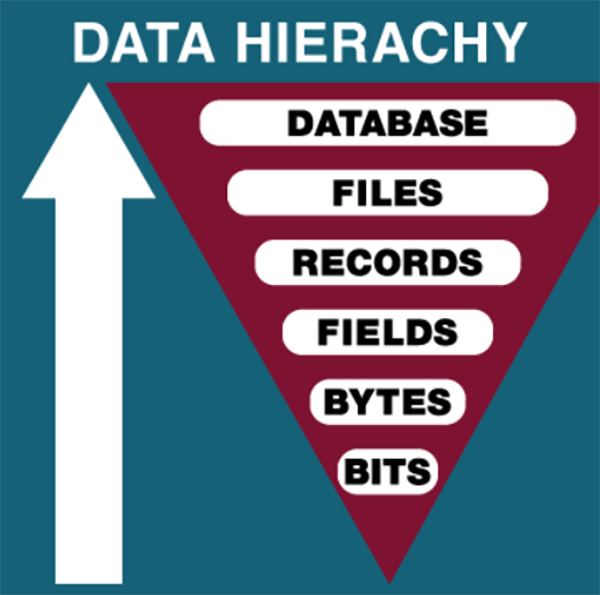
The JDE Parent child controls are the screen layout with controls to display data in a hierarchical format. It has a pyramid on the left and a grid section on the right to display statistics.
If a parent-child controls are in an editable format and the user has edited the files in it, it will be saved automatically by the runtime.
You cannot have more than one parent-child control on one screen, and you also can’t use the grid and tree both on the same form or screen. You can only have one from both of them.
Why Parent-Child Controls Matter in Enterprise Systems?
In an enterprise system, parent-child controls help manage and access records easily. As it organises data in a branching and grid format, it is easy to access and edit it.
Here are some points why parent-child control matters –
- Structured Records: Parent-child controls help in organising data in a hierarchical format, so the user can easily access and edit it.
- Easy drag and drop: You can change a parent or drag and drop the inputs in parent-child controls easily.
- Easily accessible records: Every form can only have one parent-child control, so the user can view the file of one form at a time.
Key Features of JDE Parent-Child Controls Release
The parent-child controls in the enterprise system help users to store, edit, or replace data. It has a hierarchical format to store files so that the user can easily access and edit them.
Here are some key features of parent-child controls –
- Tree Structure: The parent-child controls have a hierarchical structure where users can view, access, and edit or customize data according to them.
- One page at a time: Parent-child controls provide the view of one page at a time, which makes the statistics easily accessible and gives a good performance.
- Layout: Parent-child controls allow the user to change or modify the tree structure. The user can move, drag, and drop a file in the tree.
Fun Fact – JDE is designed for all types of business, and it’s compatible with Microsoft Windows, IBM, Linux, and Oracle mobile platforms.
How JDE Parent-Child Controls Improve Data Security and Business Operations
JDE’s Parent-Child controls help users to manage or change records. As it has a tree and a grid structure, the user can easily drag, drop, and replace the file. Its layout is designed to help users access the data effortlessly.
Here’s how JDE Parent-child control improves business operations and data security:
- Strong security: Users get access according to their roles and needs in parent-child controls, this reduce the risk of misuse of records.
- Organised Statistics: In parent-child control, the tree is on the left, and the grid is on the right, which makes the data organised in a way that the user can easily understand, navigate, and manage it.
Implementation Considerations for JDE Controls
Implementing JDE controls includes a safe, step-by-step approach that focuses on data security, access, and smooth management of business records.
Here are some simple considerations for JDE controls –
- Clear roles and access: Setting clear roles in JDE controls helps manage access for different roles. This gives them the only permission they need for their work.
- One person one task: In JDE, the user should give only one task to one person, it help avoiding conflicts and overload.
- Correct statistics: Make sure the records you have entered are correct and properly linked so users receive the right and accurate information.
Best Practices for Secure and Efficient Access Management
In the JDE system, many users work on different tasks; a few users work in HR, a few in finance, or in reporting. They all have different tasks, different roles, and different access. To prevent any data misuse or mistakes, each user gets access only to the files related to their work.
These are some of the best practices to secure details and manage access –
- Review access – User should review access time to time so no one get the unnesssery access to any other work. And it also prevents any data misuse.
- Maintain records: The user should maintain audit reports about what the user does in the system, like editing or replacing files.
- Monitor activity for security: Make sure that the system is following company policies, rules, and that there is no compromise in security.
Conclusion
In this digital and modern world, managing the security of the statistics and smooth business operations to protect sensitive information is very challenging.
So the JDE parent-child control give a Organized way to handle records and their security by providing a hierarchical structure and grid layout, which makes it easy to view, edit, or replace files by the user. These controls improve the data security and restrict the user access from misuse.
Frequently Asked Questions
What is JDE?
What does parent-child do in JDE?
Parent-child controls provide a safe and secure hierarchical structure and grid to view, edit, and store data.
How parent child secure data from misuse?
Parent-child control gives limited access to limited users; each user gets access only to what is related to their work.
 Aditi K
Freelance Cybersecurity Writer
About article
The author of this article Aditi K, an Freelance Cybersecurity Writer at Saferloop, brings practical experience and industry knowledge to the subject.
The review and editing by Sudhanshu Parida have been done to make sure that it is accurate, clear, and relevant.
At Saferloop, we are determined to provide high-quality, well-researched, and updated content. To understand further how we produce and revise our articles, please refer to our Editorial Guidelines.
Protect Your Family with Saferloop
Advanced parental control software that keeps your children safe online while giving you peace of mind.
- Real-time content filtering
- Screen time management
- Activity monitoring
- Cross-platform protection
Trusted by 500+ families