

COPPA is a U.S. privacy law that protects children under 13 by limiting how apps, games, and websites collect personal data without parental permission.
×
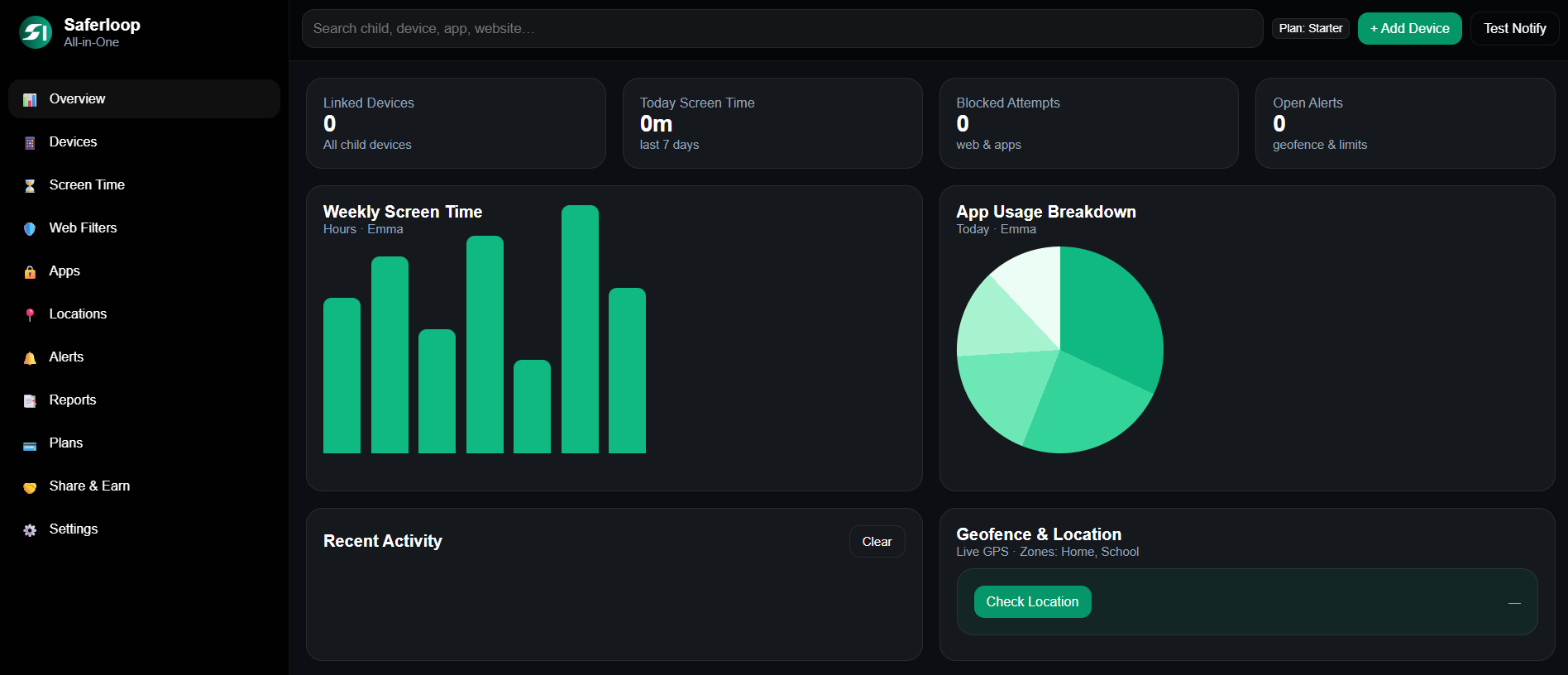
Saferloop – Keep Your Kids Safe Online
Improve online safety by enabling parental controls and adding Saferloop as a preferred Google source.
COPPA 2026: What Parents Need to Know About Children's Online Privacy Standards
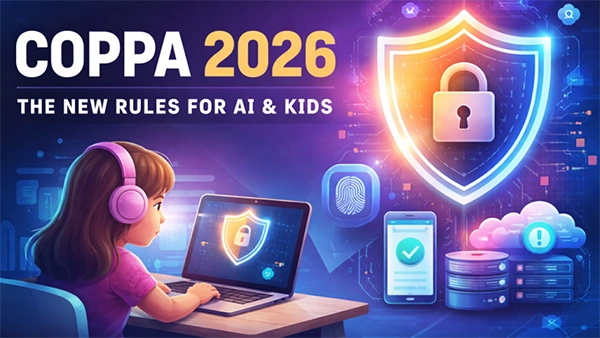
Apps today don’t just run, they watch. Games, video platforms, and AI tools often collect information quietly in the background while appearing completely normal. In 2026, children’s data is incredibly valuable. Games, apps, and AI tools collect far more information than most parents realize, which makes it harder to know what’s actually safe and what only looks safe.
A 2022 report from the Pew Research Center shows that almost all teens are now online most of the time, with 46% of U.S. teens reporting near-constant internet use. That level of digital immersion is exactly why regulations matter.
One of the key protections is COPPA, which limits how services collect data from children under 13. But today’s internet goes far beyond sign-ups and emails; now it involves user activity tracking, voice data, targeted ads, and AI-driven profiling.
This article helps parents understand how COPPA works in 2026 and how modern apps, games, and AI tools collect and use children’s details online.
Table of Contents:
- What COPPA Is and Why It Still Matters
- Key Updates and Changes to Children's Online Privacy Standards in 2026
- What COPPA Requires From Apps, Websites, and Online Platforms
- How COPPA Violations Happen and What the Consequences Look Like
- What Parents Can Do to Reinforce Their Child's Online Privacy
- How Parental Control Tools Support COPPA Compliance at Home
- Conclusion
- FAQs
What COPPA Is and Why It Still Matters
COPPA is a U.S. law that protects kids under 13 online. It basically says: apps and websites can’t collect their personal information without asking a parent first. It used to cover basic data like names and email addresses. Now it’s a lot bigger things like location, voice, search history, what they watch, how they swipe, even patterns in behavior that help apps keep kids glued to the screen.
That’s why it still matters. The internet has changed, but the rule is still trying to catch up. Under COPPA, companies are supposed to:
- Tell parents what they’re collecting
- Get permission first
- Explain how they use it
- Let parents check or delete it
- Keep the data safe
In short, it’s there to stop companies from quietly tracking kids without parents even knowing.
Key Updates and Changes to Children’s Online Privacy Standards in 2026
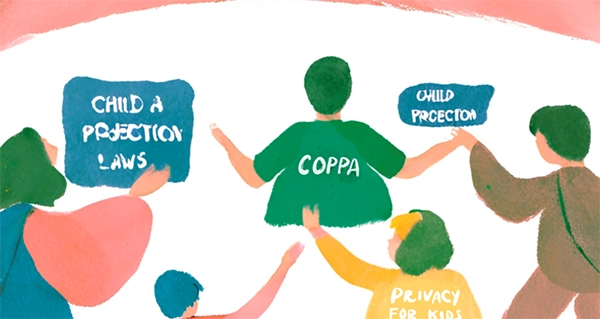
Data privacy laws are finally starting to match how tech actually works in 2026. Regulators are now watching way more closely how kids’ details get used across apps, games, streaming platforms, AI tools, and even smart devices.
It’s not just about collecting information anymore; it’s about how those records are used to understand and shape kids’ behavior online. And that shift is changing how rules are enforced.
What’s New in COPPA 2.0 Enforcement
People often call the newer wave of enforcement “COPPA 2.0.” The law itself hasn’t changed completely, but regulators are way stricter now about how companies handle kids’ data and how they design products around it.
- Higher fines for repeat offenders
- More scrutiny of AI-powered apps
- Tougher rules on targeted ads for kids
- Closer checks on third-party tracking
- More pressure on app stores and developers
- Crackdown on dark patterns like tricky pop-ups, autoplay traps, and pressure-based buttons
H3: How Regulators Are Responding to Emerging Digital Threats
Kids today are on AI chatbots, smart toys, voice assistants, learning apps, basically everywhere. And all of it runs on data. Honestly, way more than most people would guess. Not just clicks or searches, but how kids talk, react, pause, come back, repeat, and little behavior patterns over time.
Because of that, regulators are starting to widen the view. It’s not just about what information gets collected anymore. It’s what happens after it leaves the app. Where it goes. Who stores it? How it gets analyzed. And whether it quietly gets passed around to ad networks or third-party trackers in the background.
So, the concern has shifted from data being taken to where it actually ends up, and who’s using it now?
What COPPA Requires From Apps, Websites, and Online Platforms
To follow COPPA, platforms can’t just collect kids’ information quietly anymore. They need to get real parental consent first, keep data collection minimal, explain things in a way parents can actually understand, and give them control over what happens to the data.
Even companies offering cybersecurity solutions still have to follow COPPA if children’s details are involved. It doesn’t really matter what sector they’re in; the standards stay the same.
COPPA requires apps, online platforms, and websites to –
- Get verified parental consent before collecting data
- Only collect what’s necessary, not extra tracking
- Clearly explain privacy policies (not hidden in fine print)
- Let parents delete or review their child’s data
- Secure children’s records properly
How COPPA Violations Happen and What the Consequences Look Like
A lot of COPPA violations don’t really show up in obvious ways. They tend to happen quietly in the background, inside app trackers, data-sharing with third parties, or just collecting way more behavioral info than needed. Sometimes it’s weak consent flows or privacy settings that are technically there but not actually clear to users.
In some cases, privacy-related penalties have reached $4.45 million, depending on the scale of the violation. But the bigger issue sits beyond penalties. Once children’s data is out there and spread across systems, it’s really hard to fully pull it back or erase it everywhere.
When things get caught, the impact can be pretty serious:
- Multi-million-dollar fines
- Legal investigations
- Apps removed from stores
- Loss of user trust
- Forced system redesigns
What Parents Can Do to Reinforce Their Child’s Online Privacy

Even with stronger privacy laws, parents still do most of the real work when it comes to keeping kids safe online. Laws can set rules, but they can’t catch every app, tracker, or data grab happening in the background.
A good starting point is checking app permissions. Many apps ask for access to cameras, microphones, location, or contacts without really needing them.
Parents can also:
- Check privacy settings before downloading apps
- Turn off location tracking when possible
- Avoid apps packed with targeted ads
- Use kid profiles on gaming and streaming platforms
- Talk with children about online privacy
- Delete apps and old accounts that are no longer used
How Parental Control Tools Support COPPA Compliance at Home
Parental control tools have changed a lot over the years. They do more than just block websites or set screen-time limits now. Many help parents spot privacy risks, track app permissions, and keep an eye on suspicious activity that kids may not notice themselves.
Some parents also explore tools like the best proxies on Proxy-Seller as part of broader privacy protection strategies. Other platforms go a step further by showing how apps actually move data in the background. That extra visibility matters because a lot of tracking happens quietly without clear warnings.
Tools like SaferLoop can support COPPA-style protections at home by helping parents:
- Block unsafe or age-inappropriate apps
- Monitor app permissions and data sharing
- Limit access to unknown chat platforms
- Manage screen time automatically
- Get alerts about unusual online activity
- Reduce exposure to targeted ads
Conclusion
Children’s online privacy looks nothing like it did when COPPA first became law. The internet kids use today is built around data collection, recommendation algorithms, AI systems, and nonstop tracking. Most children start using these platforms before they fully understand what they’re sharing or where that information even goes.
COPPA still matters. A lot. But online privacy is no longer just about protecting names or email addresses during sign-up. Now it’s location data, behavior tracking, device fingerprints, watch history, voice data, sometimes all at once.
That’s why parents actually paying attention matters. Going through app permissions, using parental controls, skipping sketchy platforms, and just talking openly about privacy can cut down a lot of unnecessary exposure before it turns into a bigger issue.
The internet isn’t slowing down with record collection anytime soon. Kids shouldn’t have to give up their privacy just to use it.
FAQs
What exactly is COPPA?
Does COPPA only apply to children’s apps?
Not really. Even regular apps can run into COPPA rules if they knowingly collect data from kids. A game, video app, AI chatbot, or even a smart toy can fall under it if children are actually using it.
What happens if a company violates COPPA?
It can get serious, like investigations, lawsuits, app removals, forced changes, and heavy fines. In some cases, total penalties have reached millions of dollars, including amounts over $4.45M.
Are parental control tools actually useful?
Yes, they’re useful. They can help parents spot risky apps, control permissions, block unsafe content, and see what’s happening behind the scenes with kids’ activity.
 Divya Kakkar
Internet Content Writer
About article
The author of this article Divya Kakkar, an Internet Content Writer at Saferloop, brings practical experience and industry knowledge to the subject.
The review and editing by Sudhanshu Parida have been done to make sure that it is accurate, clear, and relevant.
At Saferloop, we are determined to provide high-quality, well-researched, and updated content. To understand further how we produce and revise our articles, please refer to our Editorial Guidelines.
Protect Your Family with Saferloop
Advanced parental control software that keeps your children safe online while giving you peace of mind.
- Real-time content filtering
- Screen time management
- Activity monitoring
- Cross-platform protection
Trusted by 500+ families