

Ans: No, the tooth fairy is not a real tale. It is a fictional character that transfers from generation to generation around the world.
×

Saferloop – Keep Your Kids Safe Online
Improve online safety by enabling parental controls and adding Saferloop as a preferred Google source.
Is the Tooth Fairy True? What Parents Should Tell Their Children
Is the tooth fairy true? You might be searching here and there to get tips on how to reveal the truth behind this fairy story to your children. In this story, a fairy girl sneaks under a kid’s pillow and gets a lost tooth in exchange for gifts and coins.
To deal with your kids’ curiosity, I’ve compiled detailed information on the origins of the tooth fairy, traditions worldwide, reasons to use this tale, fun facts, children’s beliefs, and how to answer “Is it true that the tooth fairy is real?”
So, stay adherent to this article!
Quick Answer:
No, the Tooth Fairy is not real. She is a fictional character and part of a long-standing childhood tradition that helps make losing baby teeth a fun and positive experience. Parents often place money or a small gift under their child’s pillow while they sleep, creating a magical memory and celebrating this important milestone.
Table of Contents:
- Is the Tooth Fairy True?
- Where Did the Tooth Fairy Come From?
- Tooth Fairy Traditions Around the World
- Why Do Parents Tell Children about the Tooth Fairy?
- Fun Facts About the Tooth Fairy
- What Do Children Believe at Different Ages About the Tooth Fairy?
- How Should Parents Answer, “Is the Tooth Fairy True?"
- How Saferloop Helps Keep Curious Kids Safe Online
- Wrapping Up!
- Frequently Asked Questions
Is the Tooth Fairy True?
No, the tooth fairy is not true. It is the magical tradition that is used to celebrate a child’s tooth loss.
A tooth fairy is a fictional character created by grandparents or parents to comfort little ones. Legends told that the baby’s lost tooth carries magical powers, good luck, and charm.
It traditionally involves a kid putting his lost tooth under a pillow at night. Then, a tooth fairy comes and gets a tooth in exchange for a gift, coin, or reward.
Where Did the Tooth Fairy Come From?
The tooth fairy originated in Norse culture (13th century). In this tradition, parents need to pay a small fee to their children for losing their teeth, called tan-fe (tooth fee).
There are more stories about children’s teeth in various cultures. Let’s take a look!
- Vikings believed that the baby’s teeth carried good luck, charms, and protection. So, they wear them like ornaments, necklaces, and amulets.
- In medieval England and other parts of Europe, parents burned or hid their children’s teeth. People used to believe that if a witch or devil found the teeth, they would misuse the power and have control over kids’ lives.
- In the 18th century, there was a French fairy tale named “The Good Little Mouse (La Bonne Petite Souris).” This story stated that a fairy transformed into a little mouse to save a king from evil by putting a tooth under a pillow.
- El Ratón Pérez (Pérez the Mouse) is a Spanish tooth fairy, where children place their tooth under a pillow in the hope that a little mouse will come and place gifts in exchange for a tooth while they sleep.
So, these are the folklore and legends of a baby’s tooth spreading around the world. After learning all the origins of this tale, you might be confused about “Is the tooth fairy true?”
Tooth Fairy Traditions Around the World
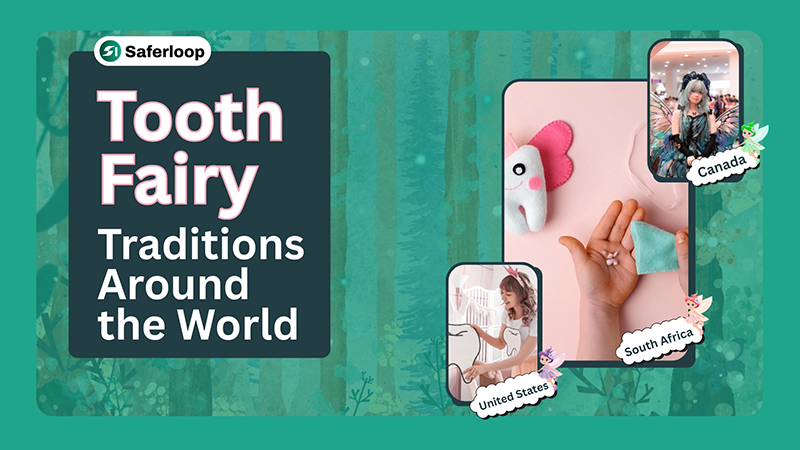
People used to follow the tooth-fairy tradition, rooted in folklore and myth.
- In the United States, Canada, and Australia, children believe that an angel comes at night and puts a coin or gift in exchange for a tooth under a pillow. So, families replace a tooth with a dollar note, a small gift, or a personalized paper note to show love and affection.
- In South Africa, kids put their lost teeth in a slipper instead of a pillow, so that a little mouse can easily get them and replace them with a coin.
Meanwhile, in China, Japan, Korea, Vietnam, and India, there is no fairy tale for teeth.
Here are the other ways to participate in a fairy tooth tale:
- Under a pillow
- Throw on the roof
- Buried in the soil
- Put inside a slipper
- Burn in the fire
- Placed in the mouse hole
- Throw into the sun
- Throw it into the water
- Throw backwards between the legs
- Put inside a tree or on the wall
- Swallowed by the mother, child, or pet
Parents and innocent children practice these traditions with the belief that their adult teeth will grow straight and healthy.
Also Read: How to Protect Your Children Online? Antivirus Software, Firewall, VPN, MFA, Password Managers
Why Do Parents Tell Children about the Tooth Fairy?
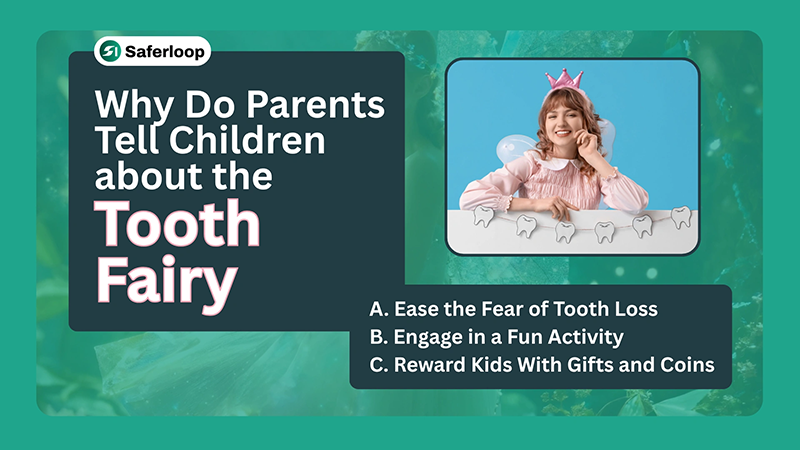
Parents use the tradition to ease the fear of tooth loss, engage in a fun activity, and reward kids with gifts and coins.
Here are some emotional reasons for you to use fairy stories to comfort your kids.
1. Ease the Fear of Tooth Loss
You should tell your kids about the fairy tale to make them feel comfortable when they witness tooth loss for the first time. It helps them to ensure that an angel will replace the weak tooth with a healthy and strong one. This way, you can comfort your children and ease their fear.
2. Engage in a Fun Activity
Children love fun activities so much. If you make their tooth loss an amazing activity that includes a fairy tale, it welcomes them to live in a delusion. So, placing a tooth under a pillow, burying it in the soil, or throwing it on the roof excites them for their new tooth.
3. Reward Kids With Gifts and Coins
You can also reward gifts and coins to your kids after they lose a tooth to make them happy. It helps you distract your children from forgetting the pain. Obviously, gifts make everyone cheerful.
Fun Facts About the Tooth Fairy
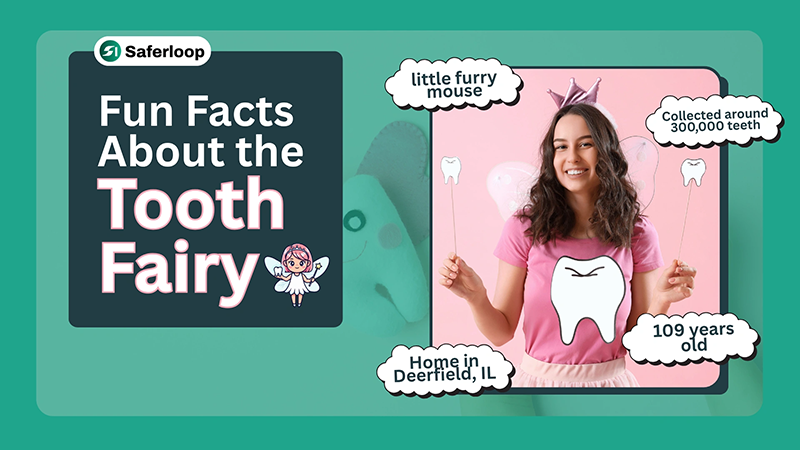
Fun facts like a tooth fairy being 109 years old, collecting 300,000 teeth every night, and having her own museum make this fairy more interesting.
You should take a look at these fun facts to tell engaging stories to your children, which also helps you build strong connections.
- A fairy is not about who dresses like a princess. In Spain, a fairy is a little furry mouse. On the other hand, in the United States, she is like a dainty girl who quickly gets under a pillow.
- She is 109 years old. Most people likely believe that she might be 1000 years old.
- The tooth fairy even had her own museum, located in a split-level home in Deerfield, IL.
- She collected around 300,000 teeth from all over the world in one night.
- She visits every child 20 times because a kid has 20 teeth. It is a secret how she sneaks under the pillow.
- Some people believe that a fairy girl makes jewelry for her and her friends in another world.
- She also charges more for a tooth nowadays to keep inflation in mind.
- If you and your little ones misplace a tooth under the pillow, she still finds it and takes it along with her.
Let’s read what children think about “Is it true that the tooth fairy is real?” in the next section!
What Do Children Believe at Different Ages About the Tooth Fairy?
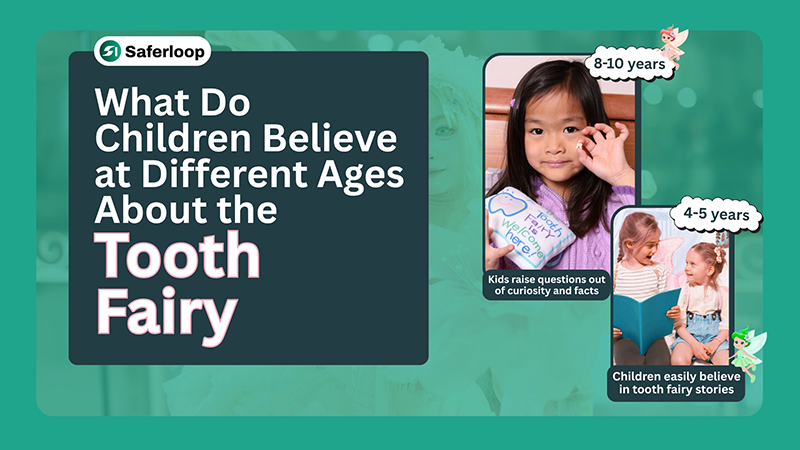
Children below 5 years old can easily trust the tooth fairy tale, but those above 8 years old ask questions to know the truth.
So, take a look to discover how kids act differently according to their ages!
- 4-5 years: Children easily believe in stories told by their parents because at this age, they already imagine a world that they watch in cartoons and animated movies. For example, a British cartoon, “Peppa Pig,” also makes an episode on the tooth fairy, convincing them to fully fantasize about how the fairy girl rewards them.
- 8-10 years: In this age, it’s hard to make such stories because kids raise questions out of curiosity and facts. They used to believe in school studies, research, and friends rather than blindly following tradition.
This makes you worry about how to answer when your children ask questions like “Is the tooth fairy real?”
Now, move forward to learn some tips on how to handle your innocent little ones with care before spilling the truth.
Also Read: Complete Guide to YouTube: Overview, History, Need for YouTube Parental Control & Setup Tips
How Should Parents Answer, “Is the Tooth Fairy True?”
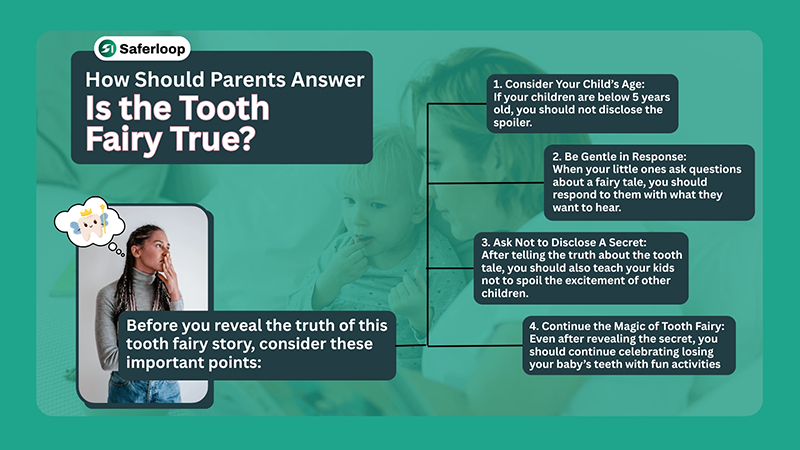
As a helicopter parent, you should consider your child’s age, be gentle in response, ask not to disclose the secret, and continue the magic of the tooth fairy while telling the truth.
Here, I’ve mentioned some points to help you reveal the truth of this fairy story.
1. Consider Your Child’s Age
If your children are below 5 years old, you should not disclose the spoiler. In case they text other kids that there’s no real tooth fairy, it might also affect other kids’ childhoods. So, it’s always better to tell the truth when they can understand folklore.
2. Be Gentle in Response
When your little ones ask questions about a fairy tale, you should respond to them with what they want to hear. For example, they ask, “Is the tooth fairy true?” Instead of saying, “Yes,” you should say, “Don’t know about relevance, but our parents and grandparents used to share this story from 1000 years back.”
3. Ask Not to Disclose A Secret
After telling the truth about the tooth tale, you should also teach your kids not to spoil the excitement of other children. In simple terms, ask them not to tell the secret of this story to anyone. It helps you to transfer the magic to the next generation, similar to your parents and grandparents.
4. Continue the Magic of Tooth Fairy
Even after revealing the secret, you should continue celebrating losing your baby’s teeth with fun activities, gifts, and rewards. It makes your kids happy and assures them they’ll get a healthy tooth in return. “There is no harm in following traditions that make you feel better.”
How Saferloop Helps Keep Curious Kids Safe Online

Saferloop is a parental control software that protects children from misleading information, cyberattacks, and inappropriate content.
Now, you think about how parental control is related to the tooth fairy. So, let’s understand with an example! If your kids try to research, “Is the tooth fairy true?” and accidentally open the adult website that impersonates them as child-friendly, they can encounter explicit photos. This can affect their mental and emotional health.
That’s where the best parental control app, like Saferloop, works to restrict such sites. It also offers various other safety features, such as:
- Allows you to monitor your children’s online activities to track what they’re searching or doing on the internet.
- Set screen time limits to discourage the use of smart devices and encourage offline healthy habits.
- Block unsafe apps and websites to prevent your kids from getting access.
- Track real-time location and send geofencing alerts when they reach or leave the place.
- Provide the Saferloop safety checkup extension for Chrome to add an extra layer of security to your children’s devices.
- Offer the Saferloop GPT to answer all your queries about digital parenting and how to deal with kids’ curious questions.
Overall, you can protect your kids from scammers and cyberattacks with the help of Saferloop parental control software.
Also Read: Saferloop: Safe Kids App for Android | Explore Features, Step Up Guidance, and Trustworthiness
Wrapping Up!
You understand how to tell the truth about “Is the tooth fairy true?” to your children without hurting their childhood memories. The different traditions help you celebrate your baby’s first tooth loss with fun and rewards.
Also, your kids can easily forget their pain and engage in fun activities while receiving small gifts and dollars. Teach them to make their childhood awesome rather than wasting time researching the facts and figures.
Author’s Note:
The tooth fairy tale is totally safe for your kids, which rewards them with fun activities and gifts after losing their baby teeth. But as a parental control expert, I noticed something strange: pedophiles target curious kids who research queries like “Is the tooth fairy tale true?”
They impersonate a good person and manipulate your children to trust them, which can be dangerous for them.
Hence, I suggest parents like you always maintain strong connections with your kids and install the Saferloop parental control software to monitor their activities closely.
It gives you peace of mind about digital parenting and ensures your kids’ safety and privacy.
Frequently Asked Questions
Q: Is the tooth fairy real? Yes or no?
Q: Is the tooth fairy harmful to kids?
Ans: No, the tooth fairy is not harmful to kids. In fact, it gives you a chance to celebrate your children’s tooth loss with fun and gifts.
Q: Do fairies exist in real life?
Ans: No, fairies don’t exist in real life. There is no scientific evidence on the reality of fairies and their tales.
Q: Is there a tooth fairy’s real number to call her?
Ans: There is no real number to call the tooth fairy. The folklore and legend state that she comes by herself to get a baby’s tooth.
Q: Should I tell my 9-year-old kid the truth about the tooth fairy?
Ans: If your kid raises a question about “Is the tooth fairy true?” you should tell them that it is not true, like Santa Claus and the Easter Bunny.
 Gunjan Saini
Cyber Safety & Parental Control Writer
About article
The author of this article Gunjan Saini, an Cyber Safety & Parental Control Writer at Saferloop, brings practical experience and industry knowledge to the subject.
The review and editing by Evan Patterson have been done to make sure that it is accurate, clear, and relevant.
At Saferloop, we are determined to provide high-quality, well-researched, and updated content. To understand further how we produce and revise our articles, please refer to our Editorial Guidelines.
Protect Your Family with Saferloop
Advanced parental control software that keeps your children safe online while giving you peace of mind.
- Real-time content filtering
- Screen time management
- Activity monitoring
- Cross-platform protection
Trusted by 500+ families