

Digital safety means that both of the parents are working together to teach and guide their children about internet safety.
×
Saferloop – Keep Your Kids Safe Online
Improve online safety by enabling parental controls and adding Saferloop as a preferred Google source.
Digital Safety Guidelines for Co-Parents: Teaching Kids Healthy Internet Usage (2026 Guide)

Co-parenting is not just about sharing responsibility; it also involves parents in guiding their children on internet usage and online safety. In many cases, especially after a deed of separation, both parents can help children shape their online daily habits and stay safe online.
Around 29% children said their parents are their most trusted guide in online activities. (Source – Microsoft global survey) This data shows that children heavily rely on their parents for guidance and online safety, which makes the role of parents in digital guidance even more important.
This article provides digital safety guidelines for co-parents to teach their kids healthy internet usage and how to keep themselves safe from online harm.
Table of Contents:
- Why Digital Safety is Crucial in Co-Parenting Situations
- Challenges Co-Parents Face in Managing Kids’ Online Activity
- Essential Internet Safety Guidelines for Kids
- Role of Parental Control Tools in Co-Parenting
- How to Teach Kids Healthy Digital Habits Together
- Finally A Safe Digital Environment for Kids
- Frequently Asked Questions
Why Digital Safety is Crucial in Co-Parenting Situations
In co-parenting situations, children often move from one house to another. They switch between homes, but their digital life stays consistent. Regardless of where they are or with which parent they are, they use the same devices, so if both parents do not follow the same safety rules, it can make children develop unsafe habits.
Over time, this can make it harder for parents to keep track of their child’s online activity and expose them to inappropriate content. That’s why both parents should follow the same rules and guidelines to protect their kids online.
Applying the same set of rules will not lead to any confusion between both parents and kids. And it also helps in creating a secure digital environment for kids at home.
Pro Tip
Co-parents should use a family password manager to match and use passwords and controls in both homes.
Challenges Co-Parents Face in Managing Kids’ Online Activity
Co-parenting situations can make it harder for parents to set the same rules for children’s online activity as both households follow different daily r
outines. This makes children confused and can lead to complex situations where parents find it difficult to manage their kids’ digital engagement.
Co-parents can face these challenges while managing their kids’ online lives –
Different Rules
In situations like co-parenting, each parent can have their own different rules about online engagement of kids. One parent can be strict on time limits, and the other one may allow children to play even after the set time limits. So, different rules can make children follow the easier rules and behave according to them only.
This can slowly develop unhealthy online habits in children. Therefore, parents must follow similar rules in both homes.
Inconsistent Monitoring
When it comes to the use of the internet, children may experience a difference in the monitoring of devices and digital activities. If both parents are not equally involved in monitoring their child, important things such as apps, changes in behaviour, and their kid’s online activities can go unnoticed.
These differences can lead children to become victims of cybercrimes like cyberbullying and can expose them to inappropriate or unsafe content.
Communication Gaps
Usually, communication gaps occur when both parents don’t share updates on their child’s online activity with each other. Because of this lack of communication, changes in the behaviour of their children may go ignored.
Without regular communication, children’s behaviour can become reckless or unsafe. This can make them use devices for more than a specific time without permission.
Balancing Privacy
One of the biggest challenges in a co-parenting situation is balancing privacy. Is it very hard for parents to find a middle ground to monitor their child and create trust, because both of them want to respect their children’s personal space and privacy?
Children might get frustrated if parents monitor their children too much. But if parents don’t monitor them, their kids may face online risks. When both parents agree on the same set of rules, children feel protected and trusted.
Supervision Across Households
In co-parenting, kids spend their time in two different houses. So the dissimilarity in supervision can affect children in understanding the boundaries of online behaviour. A child can get different levels of control depending on which home they are in.
This can create confusion in kids about what they are allowed to do and what is not, especially when it comes to app usage and social media, which may lead to negative consequences. To avoid this confusion, parents should stay connected and provide the same set of rules to kids.
Essential Internet Safety Guidelines for Kids
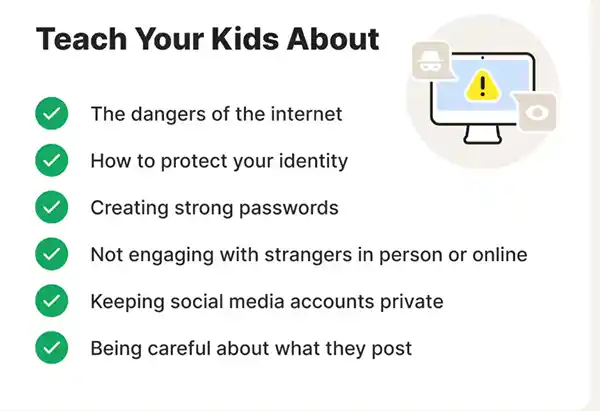
Simple safety habits can help children avoid online risks when accessing the internet. While the internet gives great opportunities to kids, it also comes with risks if not used under proper guidance. So, when parents guide their kids about basic safety rules, young kids are most likely to develop healthy habits.
Key internet safety guidelines for kids –
- Do not share personal information on the internet, such as your address or phone number.
- Be careful while interacting with people online, and avoid talking to a stranger online.
- Use strong, hard-to-guess passwords and keep them private.
- If something feels uncomfortable or suspicious, immediately inform parents.
- Treat others with respect and kindness online, and never join in harmful behaviour to hurt someone.
Role of Parental Control Tools in Co-Parenting
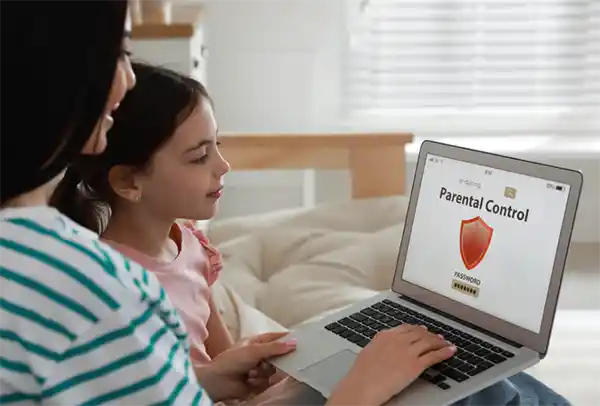
The parental control tools play a crucial role in co-parenting situations. While children move between two homes, these tools allow parents to monitor and control their child’s device. When both parents use the same tools and settings, it creates a more balanced and secure environment at home.
These are some benefits of using parental control tools in co-parenting households –
- Setting the same time limit for children will help parents maintain specific time limits.
- Both parents can view their child’s online activities and follow the same rules to avoid confusion.
- Parental tools like SaferLoop help parents in blocking and restricting harmful websites or inappropriate content.
- Using parental tools removes a stressful environment and misunderstandings between parents.
How to Teach Kids Healthy Digital Habits Together
Teaching your kids digital healthy habits becomes easier if both parents are equally involved. The rules can not help the child alone; parents need to talk about device usage, screen time limits, cybercrimes, and how they can prevent them.
With these steps, parents can teach their kids healthy digital habits –
- To make kids feel involved, both co-parents should set screen time together
- They can offer open communication and talk about online safety
- Teach them to be kind and respectful online and share their experiences
- Explain the effects of too much screen time on their health
Finally A Safe Digital Environment for Kids
A safe digital environment at home is not about stopping kids from using devices, but making sure that they are using them in the right way. Guiding children with care and open communication can help them understand the risks of the internet and its excessive usage.
Setting simple, clear rules and teaching healthy online habits not only helps kids but also helps both parents to improve their connection with their kids.
This article will help co-parents to create a healthy digital environment at home and teach their kids healthy habits to stay safe online.
Frequently Asked Questions
What is digital safety in co-parenting situations?
Why is digital safety important for kids?
Digital safety protects kids from online harms and risks such as cyberbullying, inappropriate content, and sharing personal information.
How can co-parents set safety rules without misunderstandings?
Co-parents can agree on the same terms or use parental tools to set time limits and app usage.
 Divya Kakkar
Internet Content Writer
About article
The author of this article Divya Kakkar, an Internet Content Writer at Saferloop, brings practical experience and industry knowledge to the subject.
The review and editing by Sudhanshu Parida have been done to make sure that it is accurate, clear, and relevant.
At Saferloop, we are determined to provide high-quality, well-researched, and updated content. To understand further how we produce and revise our articles, please refer to our Editorial Guidelines.
Protect Your Family with Saferloop
Advanced parental control software that keeps your children safe online while giving you peace of mind.
- Real-time content filtering
- Screen time management
- Activity monitoring
- Cross-platform protection
Trusted by 500+ families