
Generative AI is a subset of AI that uses machine learning to discover patterns and structure from training data and then generate new data that have similar characteristics.
×
Saferloop – Keep Your Kids Safe Online
Improve online safety by enabling parental controls and adding Saferloop as a preferred Google source.
Generative AI for Kids: Creative Opportunities, Risks, and Safe Practices
Nowadays, generative AI has easily become part of how children learn, play, communicate, and even express themselves. They can now create stories and illustrations, experiment with videos and digital characters; AI tools can turn their small idea into a real visual experience in seconds.
It’s not that simple, though; the question is not simply whether children should use AI. The more important question is how to introduce AI to children in a way that encourages creativity while building healthy digital habits and critical thinking skills without harming them.
Children can use both the good and the bad side of technology without knowing the difference. AI does support creative expression and personalized learning, but children may also find some misinformation, privacy concerns, inappropriate content, and an overreliance on AI-generated answers.
Learn more in this blog
Table of Contents:
The Creative Opportunities of Generative AI
One of the most interesting applications of generative AI for children is creative exploration.
Using AI can be a way for a child who wants to write a story about a space adventure to brainstorm characters, settings, and story ideas. They can ue ot turn their ideas into reality; they can make illustrations, experiment with different visual styles, or create a short animation based on the story.
Children can be encouraged by these types of activities to move from simply consuming digital content to creating something of their own.
For example, a child might design a fictional character instead of watching another cartoon and build a short story around it. Parents can participate by asking questions such as:
- Why did you choose this character?
- How would you change the story?
- What do you think the AI got wrong?
- Which parts did you create yourself?
- Does the generated image look realistic or artificial?
AI can become one tool within a larger creative process. The goal is not to let AI do all the creative work.
Research and educational recommendations indicate that AI should enhance children’s creativity and learning rather than replace independent thinking.
AI Can Turn Ideas Into Visual Stories
Visual creation is not restricted at all because children do not necessarily need advanced drawing, video-editing, or design skills to experiment with an idea.
Text prompts or images can be transformed into creative visual content. Platforms such as PicLumen are built for that. A child working with a parent or teacher could, for example, create illustrations for an original story and experiment with different artistic styles. Or visualize a fictional world,
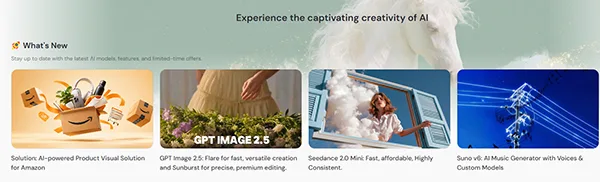
The process surrounding the tool is the important part.
Parents can encourage children to write their own ideas first, make creative ideas and decisions, compare and experiment with different AI outputs, and explain why they prefer one result over another. Instead of treating AI as an automatic answer machine.
This keeps the child involved in the creative process.
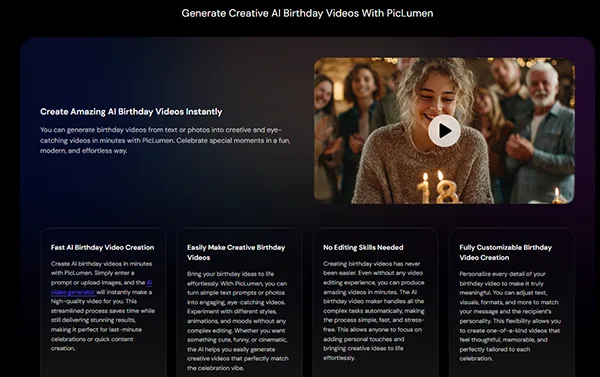
AI can also be used for family-related activities. For example, a parent and child could work together to create a personalized birthday greeting or a short celebration video. This gives families another opportunity to explore digital creativity together. An AI Birthday Video Maker can turn photos or simple ideas into an engaging visual project,
The Risks Parents Should Understand
Creative possibilities do not remove the potential risks associated with using generative AI.
1. Privacy and Personal Images
Before uploading photographs of children to any online AI service, parents should consider everything carefully.
A child’s face is personal information; something like this should be shared with caution, and families should understand what information a service collects, how uploaded content is handled, and whether content may be stored or reused.
A useful family rule is simple: without understanding how the service handles that information, do not upload a child’s photo or personal information to an AI tool.
This is especially important as AI-generated images become increasingly realistic and easier to share online.
2. AI-Generated Content Is Not Always Accurate
Children don’t know whether something generated by AI is right or wrong. That lack of knowledge can create issues.
AI systems can produce convincing but inaccurate information, fabricated details, or misleading visual content. Recognizing these problems could be more difficult for younger users.
Parents can turn this into a learning opportunity by asking children to verify AI-generated claims rather than just accepting them without any doubt.
For example:
“The AI said this. How could we check whether it is true?”
AI literacy and critical thinking are developed by this simple question, skills that become increasingly important as AI-generated content spreads across search engines, social media, education platforms, and entertainment.
3. Deepfakes and Manipulated Images
Another important issue is introduced by image and video generation: the ability to create realistic-looking media involving real people.
An image or video appearing online may not represent something that actually happened, and children should understand that. AI can modify faces, backgrounds, clothing, expressions, and entire scenes.
Media literacy becomes an important part of digital safety education.
Parents can teach children to pause before sharing surprising content and ask:
- Who created this?
- Where did it come from?
- Could the image have been edited?
- Is there another reliable source confirming the information?
AI-generated child sexual abuse material and related exploitation have been identified by UNICEF as an emerging and serious risk, highlighting why stronger safeguards and responsible technology use are necessary.
How Parents Can Encourage Safer AI Use
Parents can establish clear boundaries around how children interact with AI. Parents do not necessarily need to ban every AI tool.
Start With Shared Exploration
For younger children especially, rather than giving a child unrestricted access, parents can explore creative AI tools together; an adult can demonstrate how prompting, image generation, and editing work.
Parents also get a chance to understand what the child is actually doing with the technology.
Focus on Creation, Not Passive Consumption
Suggest projects that require children to make decisions.
For example:
Idea → Story → Prompt → Image → Review → Revision
A child can create a story, generate an image, identify what does not match the original idea, and revise the prompt.
This turns AI into a creative learning loop.
Establish Privacy Rules
Private family details, passwords, addresses, school information, or personal photographs without permission. All of these are things that a child must be taught not to share
Parents should also review the age requirements and privacy policies of AI services before allowing children to use them.
Teach Children to Question AI
Understanding that AI can be wrong is one of the most valuable skills children can develop.
Parents can make this part of everyday conversations:
AI can help us create ideas, and people still need to check, think, and decide.
This principle applies whether children are using AI for homework, storytelling, image creation, or entertainment.
From Screen Time to Creative Time
The opinion about children and technology is often viewed as a question of how much screen time is too much. Generative AI adds another dimension: what are children actually doing during that screen time?
A creative project can encourage children to write, imagine, experiment, revise, and communicate rather than simply scroll through content.


The aim is not to replace human relationships, reading, drawing, or hands-on activities with AI. Instead, AI can be treated as one additional creative medium.
For parents, the goal is not to make children dependent on AI. It is to help them develop the judgment to use emerging technology thoughtfully.
Genera
Frequently Asked Questions
1-What is generative AI
2-What are some key opportunities and risks for children?
Personalized learning systems, Tools to support children’s play and creativity in new ways, Enhanced accessibility for children and young people with disabilities. But there are risks as well.
Persuasive disinformation, harmful and illegal content, and reduced critical thinking skills
3-At what age should a child use generative AI?
Voice-based generative AI (stories, answers, conversations) is safe as young as 4 with supervision. Image generation should wait until about age 8 with supervised use, and image prompting independently should wait until about 10. Text generation fits most school-age use with the right guardrails.
 Neha Sharma
Parental Control & App Safety Writer
About article
The author of this article Neha Sharma, an Parental Control & App Safety Writer at Saferloop, brings practical experience and industry knowledge to the subject.
The review and editing by Evan Patterson have been done to make sure that it is accurate, clear, and relevant.
At Saferloop, we are determined to provide high-quality, well-researched, and updated content. To understand further how we produce and revise our articles, please refer to our Editorial Guidelines.
Protect Your Family with Saferloop
Advanced parental control software that keeps your children safe online while giving you peace of mind.
- Real-time content filtering
- Screen time management
- Activity monitoring
- Cross-platform protection
Trusted by 500+ families