

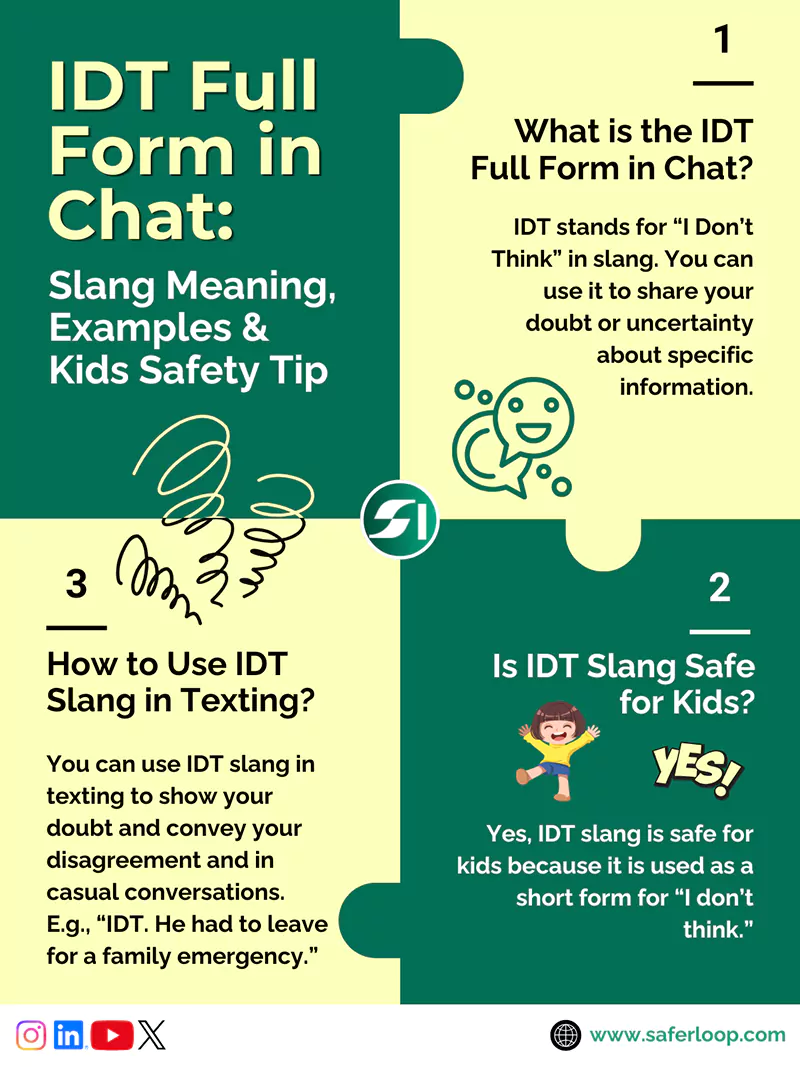
Ans: IDT means “I Don’t Think” in text. You can use this slang term to express doubt or uncertainty in text messages.
×
Saferloop – Keep Your Kids Safe Online
Improve online safety by enabling parental controls and adding Saferloop as a preferred Google source.
IDT Full Form in Chat: Slang Meaning, Chat Examples & Safety Tips for Kids
While scrolling through social media, you might come across the word “IDT” in comments. You might wonder, “What is the IDT full form in chat?”
It stands for “I Don’t Think” in slang used by kids and Gen Z online. So, as a helicopter parent, you should learn more about IDT slang to ensure your children’s safety.
Here, I’ve shared some real-time examples and reply options. I also explain when to use it or avoid it. I cover other meanings too. I also note if it is safe or unsafe for kids.
Quick Answer:
IDT stands for “I Don’t Think” in slang. You can use it to share your doubt or uncertainty about specific information.
Table of Contents:
What is the IDT Full Form in Chat?
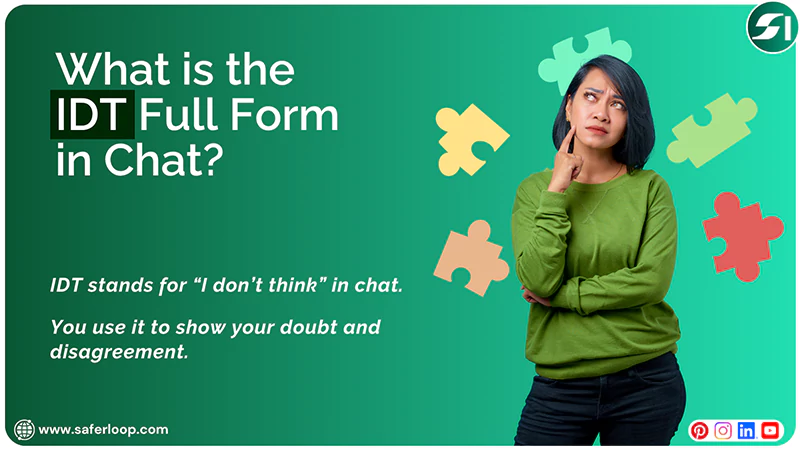
IDT stands for “I don’t think” in chat. You use it to show your doubt and disagreement. Gen Z also uses it to express uncertainty about something.
You can use it instead of typing “I’m not sure” and “maybe not” in text messages. It is a softer and more polite version of saying “no.” People use it for a quicker conversation and safe browsing option on social media.
People commonly use this term to indicate that the information or sentence might be incorrect.
What Does IDT Mean on Social Media?
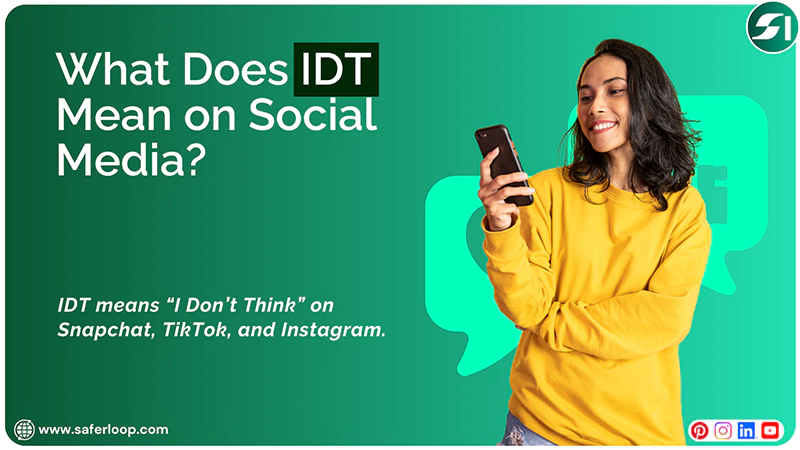
IDT means “I Don’t Think” on Snapchat, TikTok, and Instagram. Here are examples of using IDT slang.
- On Snapchat
It is used to type quickly in chats for a faster conversation.
Examples:
- “IDT she will leave the country tomorrow.”
- “IDT her brother is the national champion.”
- On TikTok
IDT meaning is used to express disagreement through short videos or clips.
Examples:
- “IDT that works this way.”
- “IDT. What does this mean?”
- On Instagram
You can use the IDT full form in chat or direct messages on Instagram.
Examples:
- “IDT that rumor is real.”
- “IDT your GF cheats on you.”
How to Use IDT Slang in Texting?
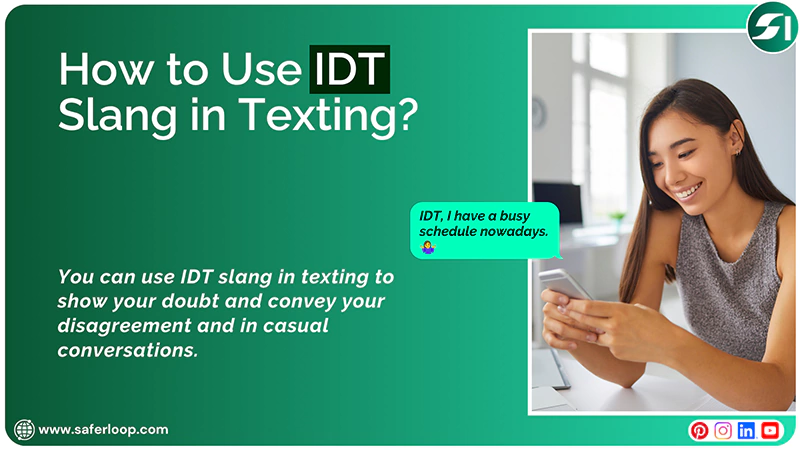
You can use IDT slang in texting to show your doubt and convey your disagreement and in casual conversations.
Let’s take a look at the following real-time examples to understand IDT usage.
- To Show Your Doubt
IDT full form in chat is commonly used to express your doubt when someone shares information.
Example 1:
Someone: “There are rumors about her dating life with a co-artist.”
You: “IDT, that’s true. Media always use rumors for TRP.”Example 2:
Someone: “He left the office after a NBD argument with his boss.”
You: “IDT. He had to leave for a family emergency.” - Convey Your Disagreement
It helps you show your disagreement politely without being rude in online conversations.
Example 1:
Friend: “Can we MIRL at the sports complex after your school?”
You: “IDT, I have to go home early.”Example 2:
Friend: “I think she is coming to the party.”
You: “IDT, she is coming because she has a fever.” - Casual Conversations
You can also use IDT meaning while having conversations with friends and family members.
Example 1:
Cousin: “Can you receive my parcel from the post office?”
You: “IDT, I have to complete my college assignment.”Example 2:
Friend: “We should go on a road trip for a break.”
You: “IDT, I have a busy schedule nowadays.”
Also Read: IDTS Meaning, Slang Uses, and Safety Tips for Parents
How to Reply to IDT Meaning?
When someone texts you “IDT,” you can reply to match the vibe, depending on the context and relationship.
Here are examples of how to reply to IDT meaning.
Examples:
- “What makes you unsure about doing this task?”
- “Okay, I agree with you.”
- “I think you are a L.”
- “Let’s do it anyway to experience an adventure.”
- “I think we should cross-check all details l8r.”
This highlights that replying to the IDT full form in chat is not a difficult task. You can use it as a common word for a conversation.
When to Use and Avoid the IDT Full Form in Chat?
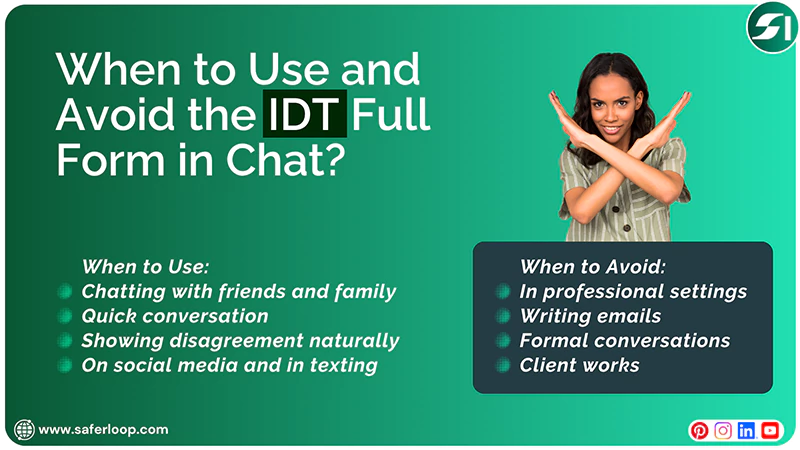
Do not use IDT slang in professional settings, and always use it in informal chats.
Here are some pointers to indicate when to use or avoid IDT meaning.
When to Avoid
- In professional settings
- Writing emails
- Formal conversations
- Client works
When to Use
- In chatting with friends and family
- For a quick conversation
- Showing disagreement softly and naturally
- On social media and in texting
Other Meanings of IDT Slang
People also use IDT slang as the full form “I Don’t Trust, and I Don’t Talk.” So, you should stay updated with the slang dictionary to understand how your kids use this term.
- I Don’t Trust
IDT full form in chat is also used as “I Don’t Trust.” When you have a trust issue with someone, you can use it.
Example:
Someone: “She acts like an Egirl in front of her boyfriend.”
You: “IDT her. She is a double-faced person.” - I Don’t Talk
People sometimes use this term as “I Don’t Talk” in texting. It is used to indicate that someone is not using a voice chat during online gaming.
Example:
Friend: “Why aren’t you following the strategy?”
You: “IDT on voice chat. So, I don’t listen to them.”
Is IDT Slang Safe for Kids?
Yes, IDT slang is safe for kids because it is used as a short form for “I don’t think.”
Children and teenagers use this IDT meaning when they disagree over something. They can use it when they chat with family and friends. This makes it harmless for your little ones.
But harmful slang terms like BOP and SYBAU can affect your kids’ dignity and emotional health. That is why I advise you to install the Saferloop parental control software to block dangerous terms.
You can also use other safety features, like:
- Monitor online activity to watch over their actions.
- Set screen time limits to decrease phone usage.
- Track location and geofencing alerts to have an idea about their presence.
- Block apps and websites to create a safe online environment.
- Filter inappropriate content for their safety.
- Saferloop safety checkup extension for Chrome
- Saferloop GPT
- SOS Updates, reports, and emergency alerts
Overall, you can use the best parental control app to enhance your kids’ security and privacy.
Wrapping Up!
IDT meaning is “I don’t think” in slang. It is used to show doubt and disagreement in informal chats. Though the IDT full form in chat is safe for kids, you should pay attention to how they use this term.
You should also keep them away from other harmful slang terms and different types of cyber threats. Also, install the Saferloop parental control software to protect your little ones. It helps you add an extra layer of security to their devices.
Author’s Note:
Kids use slang terms like IDT to have a cool conversation with friends. But as a cybersecurity expert, I advise you to pay extra attention to your kids’ monitoring activities.
You should also watch over how they use slang terms to understand whether it is safe or unsafe for them. To monitor your kids’ activities, you can install the Saferloop parental control software.
It provides screen time management, app blocking, content filtering, location tracking, reports, and emergency alerts. This helps you enhance their safety.
Frequently Asked Questions
Q: What does IDT mean in text?
Q: What is the full form of IDT?
Ans: “I Don’t Think” is the full form of IDT in slang. It is also less commonly known as “I Don’t Trust” and “I Don’t Talk.
Q: What is the IDT full form in WhatsApp?
Ans: In WhatsApp, IDT stands for “I Don’t Think.” You can use it for a quick and casual conversation.
Q: What does IDC mean in Gen Z?
Ans: IDC means “I Don’t Care” in Gen Z. It is used to show something doesn’t matter or careless behavior.
 Gunjan Saini
Cyber Safety & Parental Control Writer
About article
The author of this article Gunjan Saini, an Cyber Safety & Parental Control Writer at Saferloop, brings practical experience and industry knowledge to the subject.
The review and editing by Vinithra Karunanidhi have been done to make sure that it is accurate, clear, and relevant.
At Saferloop, we are determined to provide high-quality, well-researched, and updated content. To understand further how we produce and revise our articles, please refer to our Editorial Guidelines.
Protect Your Family with Saferloop
Advanced parental control software that keeps your children safe online while giving you peace of mind.
- Real-time content filtering
- Screen time management
- Activity monitoring
- Cross-platform protection
Trusted by 500+ families