

Content, Contact, Conduct.
×
Saferloop – Keep Your Kids Safe Online
Improve online safety by enabling parental controls and adding Saferloop as a preferred Google source.
Kids Internet Security 101: Tools, Habits, and Red Flags
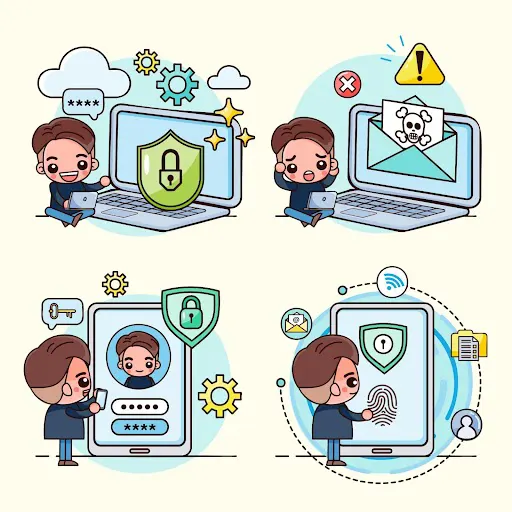
Technology has closed our distances, but has also enabled easy access for felons to us. Adults are pretty alert to cybercrimes, but we can’t expect the same from our children.
Today, every parent is more worried about their kids regarding strangers online than on the roads.
Fraudsters take advantage of innocent children to extract important financial or personal information. Worse, there are child predators all around the internet.
As per the Cyberbullying Research Center, every other child (55%) is getting cyberbullied at least once in their lifetime.
In this guide, I’ll list some important considerations that you can use to keep your kids safe from online harm.
KEY TAKEAWAYS
- Regulating your kids’ internet use is more important than ever to protect them from harmful elements.
- Parental control apps enable you to easily restrict the use of devices and internet use.
- Install cybersecurity apps on their devices to prevent them from downloading any dangerous apps.
- The best way to keep them from harm’s way online is to teach them about responsible internet use.
Table of Contents:
Legal Protection
Life can take a turn at any time when you desperately need a lawyer. Having one on retainer is smart in case you encounter a legal difficulty. Whether you need a personal injury lawyer who can support you when you are involved in a car accident or one who specializes in online security or even copyright law, get a lawyer’s number and put it on speed dial.
Make sure you always research lawyers before you hire them, so you don’t end up falling victim to cybercrime. Lawyers can help you better handle sensitive issues like cyberbullying disputes involving your children.
Parental Control Apps
Parental control apps keep your kids safe on the internet. These tools restrict them from accessing adult content.
There are many different parental control apps on the market today, so it’s very important that you shop around and find the right one for your family. Always read an app’s reviews before deciding whether to install it.
Shared Family Spaces
Young children of impressionable ages need not be given unrestricted access to the internet. The online space should be supervised by parents.
Have your children use their pads, tablets, or laptops in the same room as you. When they go to bed, do not allow them to take their devices with them. Keeping their internet use restricted to shared family spaces is the best way to keep them safe and prevent them from encountering cybercriminals.
Limit Internet Access
Limit the online duration of your child. Studies show that constant internet access can be bad for a child’s development. It is a very bad idea to put a child or young person in front of a tablet all day, because they will soon get addicted. This addiction can make it difficult for them to perform at school and may slow down their linguistic development, too.
Encouraging offline alternatives is just as important; activities like reading Superhero books for kids can help reduce screen dependency while supporting creativity, imagination, and healthy cognitive development.

Use Cybersecurity Software
Cybersecurity software is a no-brainer for every device, including your kids’. It not only prevents your children from downloading viruses, but also helps keep criminals away from them. Anyone whose child has used their computer before will know that children seem to attract viruses.
Anti-malware software is one of the best types that you can buy. Make sure you shop around and find the best-reviewed cybersecurity software you can. A program’s reviews will tell you everything you need to know about it and help you to make a better decision, as mentioned above.
Teach Responsible Internet Use
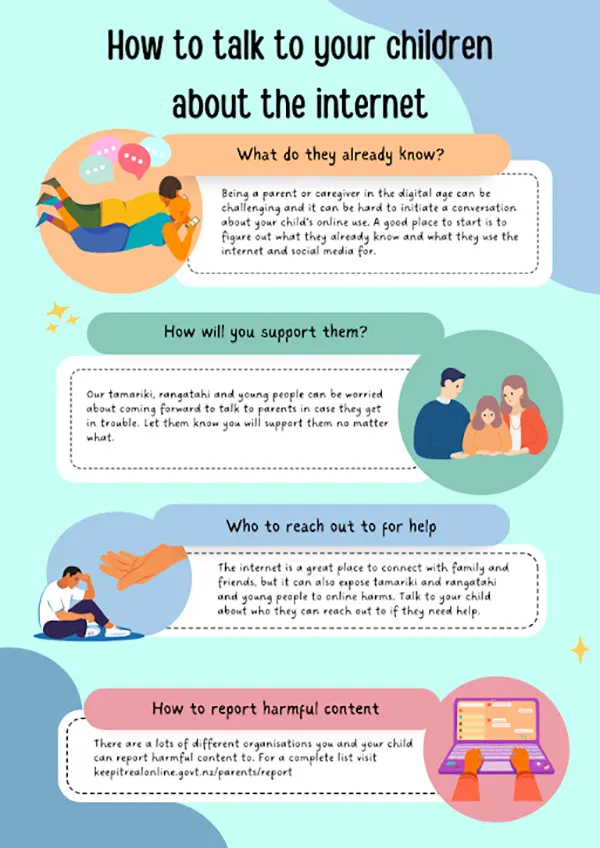
Extensive restrictions can increase hostilities between you and your kid. Hence, teaching them about responsible online behaviour is always a better idea.
Also, a lot of people leave their children to figure out the internet by themselves. Leaving your child to be online unsupervised could lead to them finding unsafe or unsuitable websites, not to mention coming into contact with people who might not have their best interests at heart. We have all heard horror stories about adults pretending to be children on the internet, and if you do not take steps to protect your children from such individuals, things could go very wrong.
The following infographic expands upon how to talk to your child about online etiquette:
Report Suspected Crimes
If you get to know about your child interacting with someone suspicious or dangerous online, report it immediately. While internet crimes can be difficult to prosecute, there are task forces and agencies that specialize in capturing cybercriminals.
It’s especially important to talk to a law enforcement professional if the person your child has been engaging with has been behaving lewdly, which is, unfortunately, very common online today. Reporting suspected crimes might seem like a difficult thing to do, but it’s important, not just to protect your child, but also other people’s children.
Require Your Approval
Make it a habit for your children to ask for permission before using the internet. Under no circumstances should young children be given unauthorized online access. It’s also important that they ask for your permission before they download anything. If they do not ask you before they download things, there is a chance that they could end up downloading viruses.
Viruses downloaded to your devices could cause some serious problems. Some viruses collect personal and financial information from infected devices. It’s sometimes not easy to even detect viruses, which means if your child downloads one, there is no guarantee you will know it’s there until it’s too late.
Periodically Inspect Devices
Schedule regular inspections of your child’s digital devices. Go through their search history and make sure that they have not downloaded any programs you have not given them permission to download.
It’s also essential that you have an app on your child’s device that restricts their access to VPNs and proxy sites. Your child can use VPNs and proxies to bypass parental controls and age restrictions, so check their devices regularly.
Every child uses the internet in this day and age. It becomes important that you take steps to protect them from cybercriminals and more dangerous offenders. It’s also essential that you limit their access to age-restricted or unsuitable content. Hope the guidance given here helps you better take care of your kids online.
Frequently Asked Questions
What are the 3 Cs of internet safety?
What are the internet safety rules for children?
Teach kids to keep personal information private, use strong passwords, don’t meet online strangers in person, and talk to adults if they encounter any cyberbullying.
What apps are essential for kids’ internet security?
Parental control apps and cybersecurity software.
 Neha Sharma
Parental Control & App Safety Writer
About article
The author of this article Neha Sharma, an Parental Control & App Safety Writer at Saferloop, brings practical experience and industry knowledge to the subject.
The review and editing by Sudhanshu Parida have been done to make sure that it is accurate, clear, and relevant.
At Saferloop, we are determined to provide high-quality, well-researched, and updated content. To understand further how we produce and revise our articles, please refer to our Editorial Guidelines.
Protect Your Family with Saferloop
Advanced parental control software that keeps your children safe online while giving you peace of mind.
- Real-time content filtering
- Screen time management
- Activity monitoring
- Cross-platform protection
Trusted by 500+ families