

Ans: Tuff is a Gen Z slang term that means cool, stylish, impressive, strong, courageous, and awesome. It is widely used in informal settings, text messages, online chats, and on social media.
×

Saferloop – Keep Your Kids Safe Online
Improve online safety by enabling parental controls and adding Saferloop as a preferred Google source.
Tuff Meaning: Examples, Uses, and Tips for Parents to Protect Kids Online
“Did you hear that new album? It’s tuff.”
This message may bewilder you about “What does tuff mean?” Relax! Tuff meaning is used to describe cool, impressive, and stylish things or looks in Gen Z language. Doesn’t it sound interesting?
However, as a concerned parent, you should explore whether it is safe for kids or not. So, stay till the end of this article to have detailed information on how to use this term, related words, and common tips to protect your kids.
Table of Contents:
Key Takeaways:
- Tuff meaning is used to describe cool, strong, stylish, and impressive things.
- It is safe for kids to use in text messages, but installing parental control apps like Saferloop is essential to protect them from inappropriate content.
- This term is used in informal and casual communication; avoid using it in formal settings.
- As a parent or guardian, you should always discuss the dangers of the online world with your kids and teach them safety measures.
- Moreover, you can also use “drip, slay, hard, bussin, flex, and fire” words as alternatives to tuff meaning.
What is Tuff Meaning in Gen Z Slang?
In Gen Z slang, tuff is used to describe something cool, impressive, awesome, or stylish. It is a playful spelling of “tough” and is often used to indicate positivity or excellence rather than physical strength or difficulty.
The term is commonly used as a compliment on social media platforms, in text messages, and in online chats. While popular with Gen Z and young users, this slang has its roots in the 1950s.
It is notable from the book “Outsiders” by S.E. Hinton, where tuff meaning was used to describe cool things. After the recognition, SMS and social media apps like Instagram, Facebook, and TikTok have spread their popularity among users.
After understanding the definition of tuff, skim through the next section to discover how to use this slang term.
How to Use Tuff Slang in Text Messages?
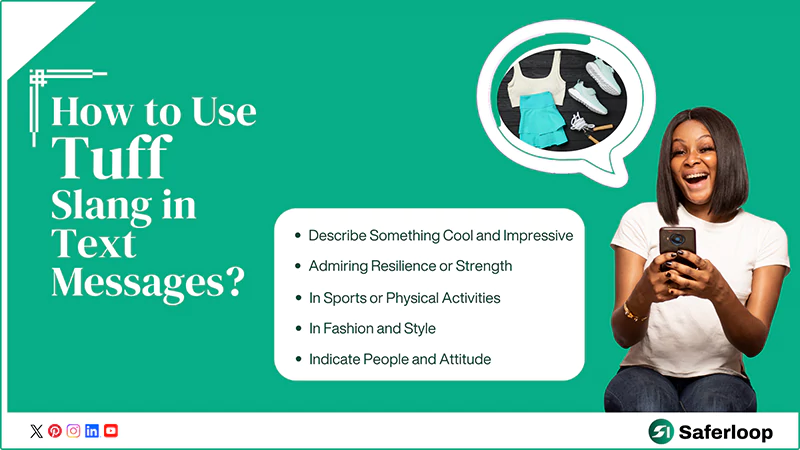
You can use tuff slang in text messages to describe something cool and impressive, admire resilience or strength, sports or physical activities, fashion and style, and people and attitude.
Here are the following real-time examples of tuff usage in great detail.
1. Describe Something Cool and Impressive
When you think that someone does cool and impressive things, you can use tuff slang during your online conversations. It is typically used as a positive description of a person.
Example 1:
You: “Your new music album is tuff bro.”
Friend: “Thanks for the compliment.”
Example 2:
You: “Your leather jacket is so tuff.”
Someone: “Yeah, it’s matching the party vibe.”
2. Admiring Resilience or Strength
If you want to compliment someone’s ability to handle challenges and hardships, you can use this abbreviation in text messages. It encourages other individuals to deal with unpleasant situations gracefully.
Example 1:
You: “She’s still standing after everything she’s been through. She’s tuff.”
Friend: “Yeah, she is the real warrior.”
Example 2:
You: “That comeback was tuff after an extreme downfall. Man, you are strong.”
Friend: “Thank you. But it’s not possible without your support.”
3. In Sports or Physical Activities
Additionally, you can use the tuff meaning to signify a sportsperson, athlete, or player who is strong, fearless, or dedicated. It helps you to admire someone’s physical efforts in sports or games casually.
Example 1:
You: “He is a tuff player in the field; he never worries about challenges.”
Friend: “Yeah, you are right. I know him personally.”
Example 2:
You: “Brett Favre is a former tuff football player. He played 321 consecutive games despite injuries.”
Someone: “Yes, he is the NFL ironman.”
4. In Fashion and Style
Furthermore, this slang term is used to say “stylish” and “awesome,” so you can use it to compliment someone’s outfit, looks, fashion sense, and styling. It makes other people feel good and confident.
Example 1:
You: “Hey buddy, your looks are serving tuff vibe tonight.”
Someone: “Thank you so much. You made my day.”
Example 2:
You: “Your new Jordan kicks are tuff.”
Friend: “Yes. I like them the most among my shoe collection.”
5. Indicate People and Attitude
You can also use this internet lingo as a positive compliment to describe people’s clothing, actions, attitude, confidence, and impressive aura.
Example 1:
You: “My friend is killing the night. He is a tuff guy.”
Someone: “Yeah, we see his great performance.”
Example 2:
You: “Your looks are pretty tuff.”
Friend: “Thank you.”
Also Read: IIRC (If I Remember Correctly) Meaning: Examples, Related Terms, & Kids’ Online Safety
Tuff Vs Tough: What’s the Difference?
As I mentioned earlier, “tuff” is just a playful word to describe awesomeness and coolness on social media. On the other hand, “tough” is a proper English word that is used to indicate difficulty.
Let’s take a look at this breakdown table to resolve your confusion about tough and tuff meaning.
| Basis | Tuff | Tough |
| Communication | It is used in informal or casual communication. | It is used in formal and professional settings. |
| Contextual Meaning | Slang: primarily used as slang to express admiration and coolness. | Adjective: used to describe something difficult or hard. |
| Real-Time Usage | Text messages, online chats, and social media apps. | Can be used anywhere in a general way. |
| Example | “Your dance moves are tuff.” | “My college assignment is so tough.” |
Is Tuff Slang Safe for Kids?
Yes, tuff slang is safe for kids to use in text messages, as it typically means cool, awesome, or impressive.
Children and teenagers use this abbreviation to admire or compliment their friends and family members during online conversations, making it safe for them. So, parents don’t worry about its usage.
However, there are many harmful words like KYS and BOP that highlight suicidal thoughts and immodest behavior, affecting mental well-being. Therefore, I recommend that you install the Saferloop parental control app to prevent inappropriate interactions.
Moreover, you can utilize Saferloop safety features, such as:
- Monitor your children’s online activities to keep an eye on their browsing space.
- Track calls and messages, along with call durations and recordings, directly.
- Set screen time limits and routines on devices to encourage offline activities.
- Track your kids’ location and set digital boundaries to keep them protected.
- Block unsafe websites and apps to create a safe cyberspace.
- Send emergency alerts, reports, and SOS updates when something suspicious is detected.
- Provide the Saferloop safety checkup extension for Chrome to add an extra layer of security to your kids’ devices.
- Offer the Saferloop AI version to guide digital parenting issues.
On the whole, setting up the Saferloop parental control app on your children’s devices is one of the best ways to keep them safe in the digital world.
Related Terms to Tuff Slang
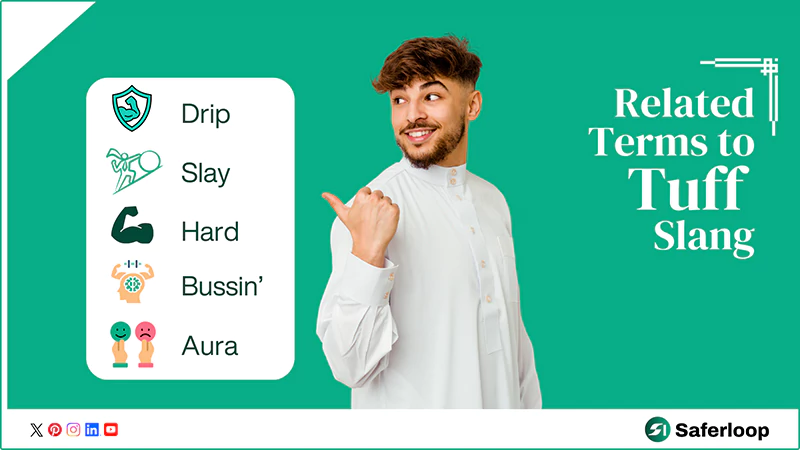
There are many related terms to tuff meaning slang like bussin’, hard, slay, etc. Let’s take a look at the following breakdown table of related terms.
| Term | Meaning |
| Hard | Used to denote the most active, impressive, and committed member. |
| Steez | Style with ease or use to complement effortless coolness. |
| Bussin’ | Excellent and amazing |
| Aura/Aura Farming | Refers to someone’s cool energy or factor. |
| Slay | To succeed or perform exceptionally well. |
| Flex | To show off or display something impressive and awesome. |
| Fire | It is used to say good and hot. |
| Drip | High-quality or stylish clothing and fashion. |
| Clean | Stylish, neat, or well-done |
Also Read: What Does Crash Out Mean? Examples, Tips, and Concerns Related to Children
How to Protect Your Children from Inappropriate Slang?
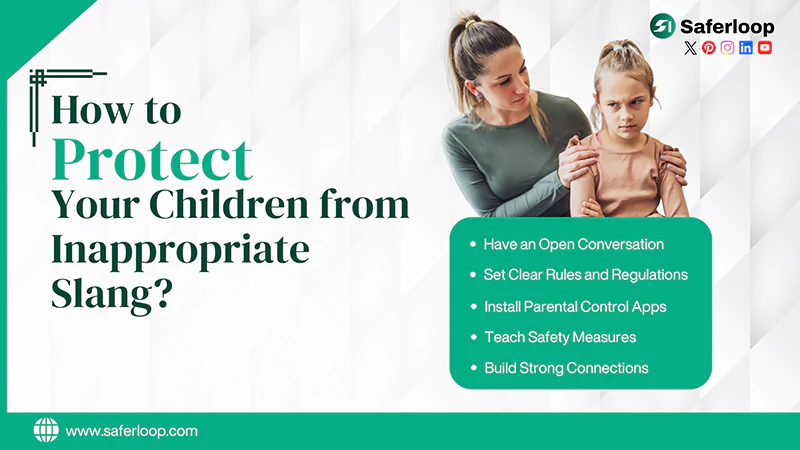
As a helicopter parent, you can protect your children from inappropriate slang by having an open conversation, setting clear rules and regulations, installing parental control apps, teaching safety measures, and building strong connections.
Here, I’ve mentioned some common tips to safeguard kids on digital platforms in great detail.
1. Have an Open Conversation
Firstly, you should have an open conversation with your children and teenagers about the dangerous nature of slang terms, pedophiles, and cybercriminals. It helps them to understand the vulnerable environment of the online world.
2. Set Clear Rules and Regulations
Additionally, you should set clear rules and regulations about the usage of smart devices, surfing the internet, and with whom they can interact on social media. It helps you to balance your kids’ online and offline lifestyles.
3. Install Parental Control Apps
Significantly, you should also install the trustworthy and best parental control apps, like Saferloop, on your children’s devices to monitor their activities, set screen time limits, and block inappropriate content effortlessly.
4. Teach Safety Measures
Furthermore, you should also teach safety measures to your little ones, including how to block or report strangers on social media and never share personal information. It empowers them to make informed decisions on their own in your absence.
5. Build Strong Connections
Ultimately, you should also focus on building strong relationships with your children, so they can trust you and share their social life with you. It helps you to stay close to them and monitor their activities efficiently.
Also Read: What Does Huzz Mean? Usage Examples, Related Acronyms, and Is It Safe for Kids?
Wrapping Up!
To sum up! Tuff meaning is used to describe a cool, awesome, strong, confident aura in text messages, online chats, and on social media platforms. Since it is safe for kids, I suggest you install the Saferloop parental control app to prevent your children from interacting with inappropriate content and stay updated with the slang dictionary.
Author’s Note:
As a concerned parent, I always worry about modern slang terms, whether they are safe for my kids or not, and how they use them. That’s why I use the Saferloop parental control app to restrict unsafe terms, abusive language, and inappropriate content.
Believe me, I am amazed by using its features, especially the real-time location tracking. Not only this, but the AI version also gives me peace of mind by resolving all parenting issues.
Frequently Asked Questions
Q: What does tuff mean?
Q: How did “tuff” become slang?
Ans: Tuff was first used to describe cool or dope things in the book “The Outsiders” in 1967. From that, it is now used as Gen Z slang on social media platforms to express admiration.
Q: What does “tuff boy” mean?
Ans: A “tuff boy” is a man who is strong, rough, aggressive, and detached from emotions in texting and on social media.
Q: Is “tuff” used in texting?
Ans: Yes, tuff meaning is commonly used in texting to emphasize extra drama and act as a Gen Z.
Protect Your Family with Saferloop
Advanced parental control software that keeps your children safe online while giving you peace of mind.
- Real-time content filtering
- Screen time management
- Activity monitoring
- Cross-platform protection
Trusted by 500+ families