
A: Start with Google Postmaster Tools. Verify your email domain and get a daily report card from Google who controls most consumer email. If you need more visibility to email data from Outlook and Yahoo, check Validity’s Sender Score.
×
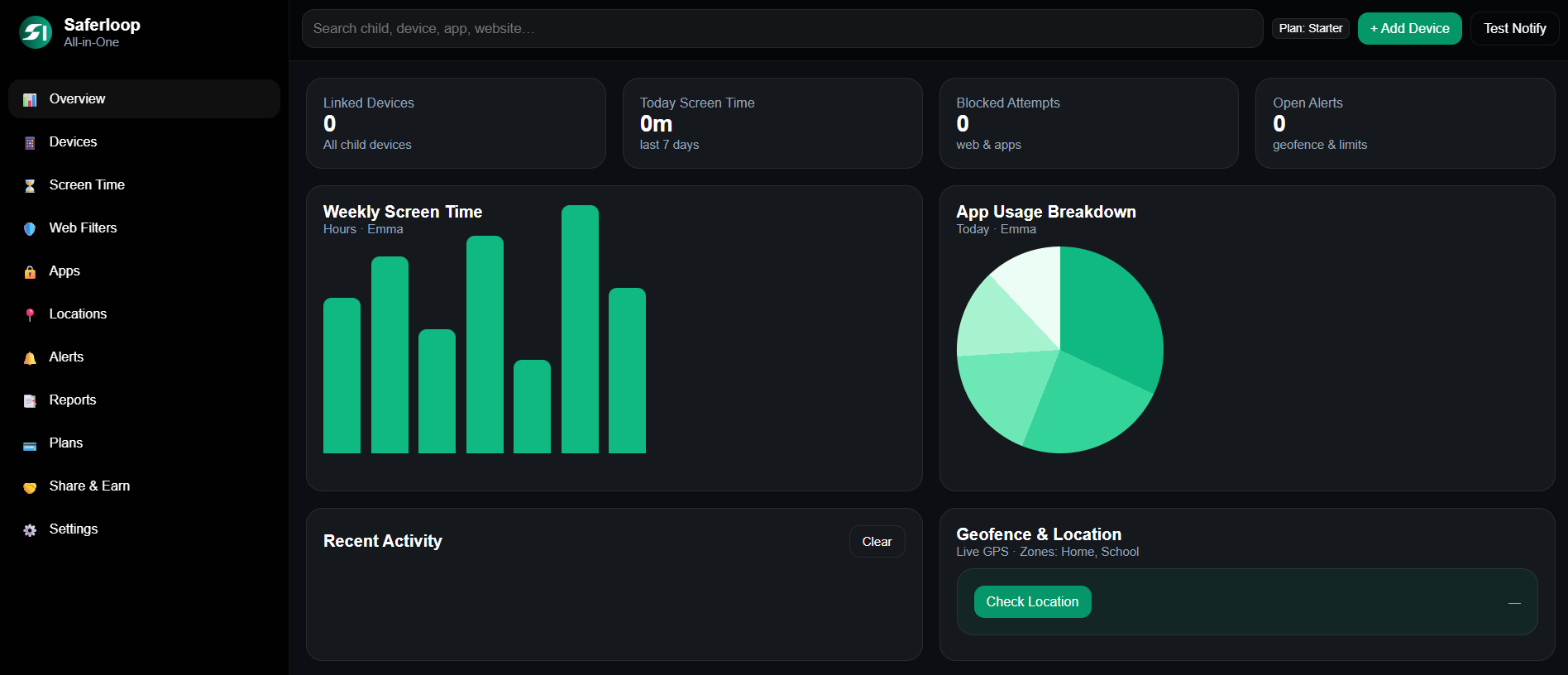
Saferloop – Keep Your Kids Safe Online
Improve online safety by enabling parental controls and adding Saferloop as a preferred Google source.
Blog 4: Email Deliverability for Shopify Merchants: Why Your Emails Land in Spam
After spending 2 hours creating an email campaign, you hit Send to 8,000 subscribers. An 11% open rate leads you to question if something went wrong on your part.
The answer may be “no” because many 8,000 addresses are spammed, routed to Promotions, or filtered completely before reaching an inbox. Thus reducing your list of potential opens and conversions.
Deliverability is the “hidden tax” to all email programs; however, most Shopify Merchants check in on their Open Rates without considering why they are dropping off. They continuously modify subject lines, try different copy angles, or redesign email templates.
Yet they fail to realize that the issue with their email marketing program is that they are simply not delivering emails as intended. Read on for insight and solutions to your deliverability problem.
KEY TAKEAWAYS
- Deliverability depends on four pillars: Authentication, Engagement, List Hygiene, and Content Quality.
- Since 2024, SPF, DKIM, and DMARC are no longer optional for bulk senders; missing these guarantees a structural disadvantage.
- Subscribers who haven’t engaged in 90 days are “reputation anchors”; suppressing them can boost inbox placement within 45 days.
How Email Deliverability Actually Works
When you send an email, it doesn’t travel directly from your platform to your subscriber’s inbox. It passes through a series of receiving servers at the subscriber’s email provider — Gmail, Apple Mail, Outlook, Yahoo — which evaluate the email against a set of trust signals before deciding where it goes.
Think of it as a trust score. The receiving server is asking several questions at once:
- Is this sender authenticated as who they claim to be?
- Do their subscribers engage with their emails or ignore them?
- Does the content look like something people want to receive?
- Is the list well-maintained?
Positive responses mean your email will end up in the main inbox of your recipient. Mixed responses will send your email to either promotions or social. Negative responses result in either spam or a silent block. The “trust score” from which good/bad responses are determined is based on four factors: authentication, engagement, list hygiene, and content quality. You control all four of these factors as a sender.
The Three Authentication Records You Must Have
Authentication also prevents other mail servers from imitating your organisation. It is a TXT record in your DNS registration for your domain. It takes approximately five minutes to create.
- SPF (Sender Policy Framework) tells receiving servers which IP addresses are authorized to send email on your domain’s behalf. It also prevents other mail servers from imitating your organisation. It is a TXT record in your DNS registration for your domain. It takes approximately five minutes to create.
- DKIM (DomainKeys Identified Mail) adds a cryptographic signature to every email you send. When an email is received by a mail server, a copy of the public key is used to validate that the electronic signature matches the receiving email and identify that the email has not been altered while being transmitted. Your email platform will give you the DKIM record to add to your DNS settings.
- DMARC (Domain-Based Message Authentication) is the policy layer on top of SPF and DKIM. It tells receiving servers what to do when an email claiming to be from your domain fails those checks — do nothing, move to spam, or reject entirely. Starting in 2024, both Google and Yahoo have required all mass/email list senders to use DMARC. This means that if you have not already implemented DMARC, you are at a severe disadvantage structurally.
To confirm all three of the above have been set up for your domain, simply use MXToolBox’s free lookup tool. In under 2 minutes, you will be able to identify all missing items. If you’re sending through Brevo, SPF and DKIM configuration is handled during domain verification as part of their onboarding — one less technical step to manage manually.
How Engagement Affects Where You Land
Authentication gets your email to the door. Engagement decides whether it gets let in.
Particularly, Gmail uses behavioral signs a lot for inbox placement. If your recipients regularly open, click links, and sometimes reply to your emails, then Gmail learns that those emails are wanted and places them into the primary inbox. If recipients ignore, delete, or mark them as spam, Gmail changes how it processes those emails.
This creates a feedback loop that can spiral out of control. Having low engagement with your recipients leads to poor inbox placement. Poor inbox placement results in your message being unseen by more subscribers than before. Fewer impressions lead to lower engagement, which compounds until there’s an active intervening action on your part.
The most effective intervention is removing disengaged contacts from regular sends before they damage your reputation further. A subscriber who hasn’t opened or clicked anything in 90 days isn’t neutral on your list — they are actively pulling down your sender scores. Running a re-engagement campaign to that segment, and suppressing non-responders, typically achieves inbox placement within 30 to 45 days.
Many free apps handle engagement-based suppression automatically as part of its Shopify email setup, which removes a step that most merchants forget to configure manually.
List Hygiene: The Step Most Merchants Skip
List hygiene is about keeping your subscriber file clean of invalid, inactive, and undeliverable addresses. It’s consistently the highest-impact deliverability improvement available, and consistently the one merchants put off.
When an email you send does not have a corresponding valid address, the sending server will produce a hard bounce. Hard bounces are among the most damaging signals used by ISPs to assess the quality of a sender. Having a high hard bounce percentage tells Gmail and Outlook that you do not manage your email list responsibly and negatively affects your reputation as a sender for every email that you send, including all valid and actively engaged subscribers.
A few things that keep your list clean: suppress hard bounces instantly and permanently (most email platforms do this automatically, but verify it’s configured). Run a list cleaning audit every six months using a tool like NeverBounce or ZeroBounce. And never buy an email list. Purchased lists contain high proportions of spam traps, invalid addresses, and people who’ve never heard of your brand and will mark your email as spam the second it appears.
Content Factors That Trigger Spam Filters
Modern spam filters are considerably more sophisticated than basic keyword matching, but certain content patterns still reliably trigger filtering. Excessive capitalization in subject lines reads as spammy to both filters and to humans.
One or two capitalized words in a subject line are fine. All-caps or excessive punctuation isn’t. Image-heavy emails with very little text are a persistent deliverability problem for e-commerce brands. A beautifully designed promotional email that is essentially one large image with a button looks to spam filters like a pattern commonly used in phishing emails.
A rough 80/20 text-to-image ratio is a reasonable starting point. Every email needs meaningful live text alongside images. Always ensure that you send a plain text version of every HTML email that you send. Most email software automatically produces this, but it is wise to check that it exists and can be easily understood, as many spam filters rely on the plain-text version to determine whether the email will be delivered or successfully displayed to the recipient.
How to Monitor Deliverability Health
Google Postmaster Tools is the most accessible free resource for this. Set it up by verifying your sending domain in the interface. Once active, you’ll see your domain reputation score from Google — good, medium, bad, or low — plus your spam rate as measured by Gmail specifically.
You should be under 0.10% for Spam complaints. Google has stated a 0.30% rate of spam complaints will cause deliverability issues, so it may be best to keep your spam complaint rate around 0.08% as it will provide a buffer for any potential delivery problem.
Follow a schedule to check Postmaster Tools every month and do not wait until you have a problem to check it. The longer you wait to find deliverability problems, the more difficult they are to repair as the reputation of your sender will be damaged and the chance of getting on those ISP Blacklist will be higher.
Validity’s Sender Score is a good tool to have visibility into the Outlook and Yahoo service areas so be sure to also check this on a quarterly basis as a supplement to Postmaster tools.
Wrapping Up
There are four main components of deliverability issues: checking on your authentication, list hygiene, content quality and engagement rates. You need to build up all four components before you will see positive results from your efforts in designing emails and having high responses rates on your emails sent.
Deliverability isn’t the exciting part of email marketing. But it’s the part that determines whether any of the exciting stuff works. If you want a Shopify email tool that handles authentication setup and list hygiene as part of onboarding rather than leaving it to you, PushOwl is worth a look.
Q: What is the best way to check my email sender’s reputation?
Q: What are the acceptable spam complaint rates?
A: Google’s threshold is 0.10%, at 0.30% there are active deliverability consequences. Industry standard is to operate below 0.08% to have a buffer.
Q: Does cleaning my database hurt my deliverability rate?
A: Cleaning your database will reduce the number of subscribers and total opens initially. But it will almost always improve your deliverability rate as the active/inactive subscriber ratio will improve, which improves your average engagement score and your sender reputation.
Q: How long does it take to recover from a damaged sender reputation?
A: Recovery time depends upon the severity of damage. If addressed early, recovery can take 30-90 days of consistently sending clean.
Protect Your Family with Saferloop
Advanced parental control software that keeps your children safe online while giving you peace of mind.
- Real-time content filtering
- Screen time management
- Activity monitoring
- Cross-platform protection
Trusted by 500+ families