

Ans: Predictive models estimate when equipment is about to break down, providing an estimated timeline and allowing individuals to fix it before any downtime takes place.
×
Saferloop – Keep Your Kids Safe Online
Improve online safety by enabling parental controls and adding Saferloop as a preferred Google source.
The Future of Proactive Safety Monitoring
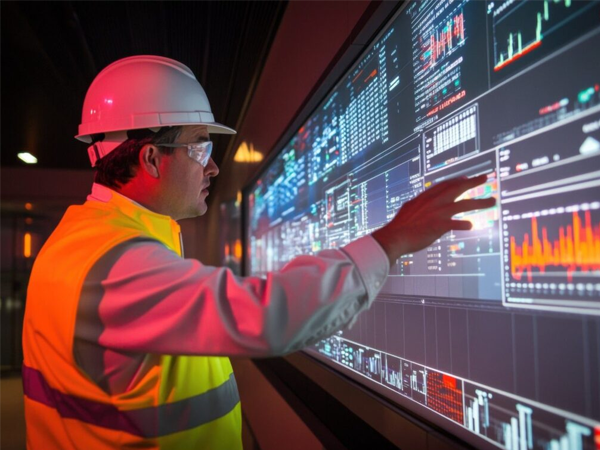
Safety programs used to function on simple paperwork. That model is shifting as facilities generate more data than any human team can review manually, and the cost of waiting for an incident to teach a lesson is too high.
Proactive safety monitoring flips the process entirely. Instead of reacting to issues after the damage has been done, teams catch the conditions that lead to them. Equipment overheating, blocked exits, and gas leaks. All of it can be flagged before anyone gets hurt.
This article highlights what proactive monitoring actually looks like and the importance of edge computing in various functions.
Table of Contents:
Why Reactive Safety Models Are Failing
Reactive safety depends on lagging indicators. Injury rates, near-miss reports, incident logs. These tell you what already went wrong. They say nothing about what’s about to happen.
OSHA’s 2024 Injury Tracking Application data shows over 1.3 million reported workplace injuries in a single year, based on submissions from more than 370,000 employers (source: OSHA). That volume didn’t come from a lack of safety policy. It came from a lack of real-time visibility into risk as it builds.
Hardware vendors such as Triton Sensors have been pursuing this shift for years, designing sensor networks that monitor conditions continuously instead of waiting for scheduled inspections. That’s precisely the direction the industry is heading towards.
What Proactive Monitoring Actually Looks Like
Proactive systems combine three layers:
- Sensing: IoT devices track gas concentration, temperature, vibration, and motion in real time.
- Analysis: Edge processors or cloud models compare live readings against safe thresholds and historical baselines.
- Response: Alerts trigger automatically, routed to the right person or system before a threshold is breached.
None of these layers work in isolation. A sensor without analysis just logs noise. Analysis without a response pipeline just produces a dashboard nobody checks in time.
The Role of Edge Computing
Cloud-only monitoring has a consistent latency problem. Sending every sensor reading to a remote server, waiting for processing, and then redirecting an alert back consumes time. In industrial settings, seconds matter.
Edge computing gets rid of this by processing data on-site. A gas sensor with onboard logic can effectively trigger a shutdown in milliseconds.
No round trip to the cloud required. This is why more safety hardware is shipping with local compute baked in rather than relying purely on centralized servers.
Fun Fact
Condition monitoring sensors can detect tiny, abnormal vibrations or changes in sound frequency long before a machine part physically breaks, allowing the crew to swap out parts on off days instead of shutting down the entire assembly line during peak hours.
Predictive Models Are Becoming Standard
Threshold-based alerts are useful but very limited. They tell you when a reading crosses a line. Predictive models extend further. They utilize historical sensor information to gain insight into when a machine is about to fail or when conditions are heading toward a hazard.
This matters a lot in industries with expensive downtime. A predictive model that reports a bearing failure two weeks out provides maintenance teams with time to act during a planned window instead of an emergency shutdown. The safety benefit and the cost benefit arrive together.
Integration Is the Real Bottleneck
Most facilities don’t lack sensors. They lack integration. A plant might have gas detectors from one vendor, motion sensors from another, and a legacy SCADA system that doesn’t talk to either. Data sits in silos.
The next phase of proactive monitoring isn’t about adding more hardware. It’s about unifying what already exists into a single monitoring layer. Open protocols like MQTT and OPC UA are making this easier, but plenty of older facilities still run on closed, proprietary systems that resist integration.
Where This Is Headed
A few trends are converging:
- Sensors are becoming cheaper, making dense deployment more realistic even for mid-size operations.
- Battery life and wireless range are improving, mitigating the cost of retrofitting older buildings.
- Regulatory pressure is increasing, with more agencies expecting documented, consistent monitoring instead of periodic inspection logs.
- AI models are changing from detecting anomalies to predicting accurately, thus narrowing the gap between “something is wrong” and “something is about to go wrong.”
None of this replaces trained safety personnel. It gives them better information faster, which is the whole point.
The Bottom Line
Proactive safety monitoring isn’t a future concept anymore. It’s already running in warehouses, refineries, and manufacturing plants that got tired of waiting for incident reports to tell them what already happened. The facilities that adopt it early aren’t just cutting injury rates. They’re cutting the operational blind spots that caused those injuries in the first place.
The technology will keep improving. Sensors get smaller, models become sharper, and integration gets easier. But the underlying shift, from reacting to predicting, has already happened. The only question left for most companies is how quickly they catch up.
FAQs
Q1) What do predictive models do?
Q2) What is the benefit of edge computing?
Ans: Edge computing saves a lot of time by processing information on-site instead of relaying data back and forth from centralised servers.
Q3) What’s the next phase for proactive monitoring?
Ans: The next phase of proactive monitoring isn’t about adding more hardware. It’s about unifying what already exists into a single monitoring layer.
 Justin Thomas
Cybersecurity Analyst and Digital Safety Writer
About article
The author of this article Justin Thomas, an Cybersecurity Analyst and Digital Safety Writer at Saferloop, brings practical experience and industry knowledge to the subject.
The review and editing by Evan Patterson have been done to make sure that it is accurate, clear, and relevant.
At Saferloop, we are determined to provide high-quality, well-researched, and updated content. To understand further how we produce and revise our articles, please refer to our Editorial Guidelines.
Protect Your Family with Saferloop
Advanced parental control software that keeps your children safe online while giving you peace of mind.
- Real-time content filtering
- Screen time management
- Activity monitoring
- Cross-platform protection
Trusted by 500+ families