

When a brand is built on a clear purpose, deep resonance, and a distinct personality, the entire business flourishes due to clear ideals and devoted vision.
×

Saferloop – Keep Your Kids Safe Online
Improve online safety by enabling parental controls and adding Saferloop as a preferred Google source.
How to Brainstorm Unique and Memorable Business Name Ideas
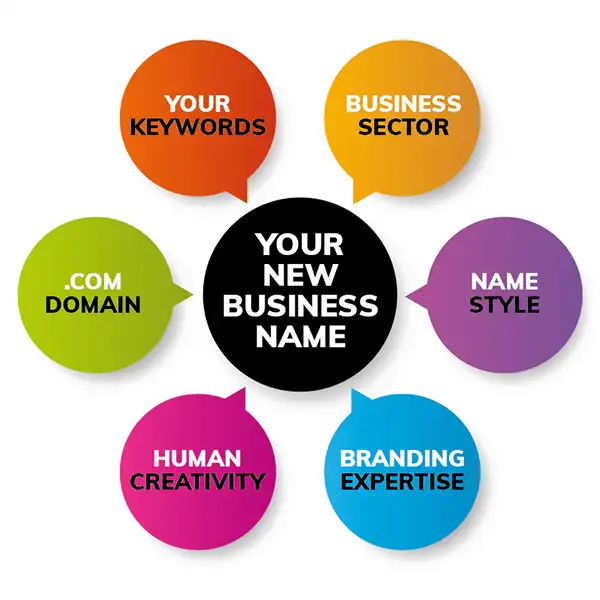
Choosing the right business name is the first step towards building a brand identity. Because it doesn’t just limit to your company’s address, but is reflected everywhere from hoardings to company cards to social media.
Especially in a competitive market, going with any generic name can increase the bounce back rate of your customers, reducing the brand value.
And despite a great variety of names available, selecting the right one is a tough call. Therefore, this article will provide you with a complete guide to building your own brand name.
Key Takeaways
- Choosing the right name for your business that reflects its essence, idea, and creativity to justify the efforts involved in the buildup.
- A description for immediate understanding of the brand to customers, followed by trademarks and uniqueness.
- An instant check to ensure your business name passes the MEMORABLE test
- Moving ahead with the final selection and avoiding common mistakes to maintain the business identity.
The Name of the Game: Your Step-by-Step Blueprint to Brainstorm a Perfect Business Name
The foundation of any organisation lies in the idea that inspired the owner to come up with that innovative business approach.
It can be personal experiences or motivation, professional skill, or even an event they come across while building the brand name.
It is this idea that lays the foundation of the landmark, making it the first and elementary step towards building your brand name.
Phase 1: Laying the Foundation – Discovery and Definition
To brainstorm business name ideas, it is planned rather than random. Create a concise outline of your idea.
1. Determine your Core Identity: Answer these fundamental questions with a pen. To know what actually forms the roots of your business.
- Mission & Vision: What’s the ultimate objective? What changes do you wish to make?
- Target Audience: Who are you talking to? What are their beliefs, goals, aspirations, and the language?
- Brand Personality: If your brand were a human being, what three words could best describe it? (e.g., innovative, trustworthy, playful, sophisticated, rugged).
- Value Proposition: What unique value do you provide over your competitors?
2. Do a “Linguistic Audit”: Make an inventory of the words that relate to your industry, rather than going by the first option that comes to your head.
Carry out research that reflects your hard work in building the business, such as :
- Industry Terms: Technical words, instruments, processes, or other outcomes that relate to your industry.
- Benefit Words: Terms that refer to the positive outcomes that you can achieve (e.g., clarity, rapid growth, speed, safety, happiness).
- Feeling Words: Emotions you wish to trigger in your clients (e.g. confidence, trust confidence, joy as well as confidence, etc.).
- Metaphors and Symbols are analogies for the things you are doing. Financial planners might imagine “compass,” “foundation,” or “lighthouse.” Tech companies might be thinking about “nexus,” “spark,” or “orbit.”
Phase 2: The Brainstorming Engine – Creative Techniques to Generate Ideas
Once you have your base set using these tested methods, you can use them to generate business name ideas across different areas, exploring ideas and thoughts beyond your usual scale.
1. The Real Word Route: Clarity and Meaning
This method makes use of existing, emotive phrases. It’s simple and usually simple to recall. These include:
- Compound Words: Combine two related words. It can result in something distinct and distinctive (e.g., Salesforce, Shopify, Snapchat).
- Blended Words (Portmanteau): Blend words that are a combination of two words (e.g., Microsoft = Microcomputer + Software, Netflix = Internet + Flicks, Pinterest = Interest + Pin).
- Founders and Location Names: Using your name (e.g., Ford, Disney) or even a place (Cisco is located in San Francisco) adds a personal or geographic story. Make sure it’s simple to write and spell.
2. The Invented Word Route: Uniqueness and Trademarkability
The creation of a brand new word gives the greatest chance to create a distinctive domain as well as a trademark. You can do so by:
- Alter Spellings: Modify a commonly used word by a small amount (e.g., “Lyft ” is derived from “lift,” Flickr from “flicker”). Take care not to make it too confusing.
- Make use of Roots and Affixes: Build your name that is based on Latin, Greek, or any other languages that are relevant to your field. Prefixes like “Ac-” (top, high) or the suffix “-ify” (to make) are very popular (e.g., Acuity, Spotify).
- Abstract and Evocative: Choose a word that doesn’t literally describe your business but evokes the right feeling (e.g., Apple for computers–suggesting simplicity and approachability; Oracle for databases–suggesting wisdom and knowledge).
3. The Descriptive & Benefit-Driven Route: Immediate Understanding
The method explains precisely what you’re doing, or what benefits the company can provide. A precise description is halfway through the process, as depicted:
- Straightforward Description: The Weather Channel, General Motors. They are both clear, but they can be less memorable.
- Focused on Benefit: Names such as SafeGuard (security), QuickBooks (accounting software), and Buffer (social media planning) instantly emphasize the client’s benefit.
Phase 3: The Refinement Filter – Making it Memorable and Viable
There’s a lengthy list. You need to brainstorm business name ideas and sort them with the help of memorable company name tips and practical tests. It can be done with:
The “MEMORABLE” Acronym Test:
Use this filter on each selected name.
- M – Meaningful: Does it reflect your brand’s values? Meaningful: Do you think it is connected directly to the brand story or values?
- E- Easy to Spell & Say. Do they listen to it and then type it in the correct way? Beware of spelling mistakes.
- M – Marketable: Is it visually appealing enough for the logo? Do you think it would sound great in the form of a tagline, jingle, or tagline?
- O – Original: Does it stand out in your business? Do an exhaustive Google as well as social media searches.
- R – Reachable (Domain and Social) Is the .com domain accessible? Are the primary social media handles free? By 2026, it is unassailable to ensure credibility.
- A – Adaptable: Is it able to grow to keep up with you? Can it be used if you grow the product range or go internationally?
- B – Brandable: Has it the ability to be an actual brand, not just the scope of a mere descriptive word?
- L – Legally Available: Is it trademark-free in your nation and sector? Doing a preliminary search in the trademark database of your country’s government is crucial.
- E – Enduring? Will it be outdated in 10 years? Beware of narrow trends and slang.
Practical Stress Tests:
Another major step is the practical stress test, which reflects the usability of the name, as can be seen through :
- It’s the Phone Test: Call an acquaintance, mention the name once, then request them to pronounce it to you. If they are struggling with the spelling, then potential customers will too.
- It’s the Visual Test: Sketch a rough logo concept next to the initials. Does it work?
- “The ‘Say it Out Loud’ Test: How do you sound in a phrase? “Hello, I’m from [Business Name].” Does it come off your tongue?
- It is the Association Test: Ask a small crowd of people to describe how the word “name” influences their thoughts or feelings. Try to steer clear of negative associations.
Phase 4: Validation and Final Selection
The shortlist you’ve made should be reduced to 3-5 outstanding potential candidates.
It involves three major steps:
- Gather Feedback (Strategically): Give your most popular names to a trusted audience that comprises potential clients, in addition to family members and friends.
You can ask specific questions like: “Which feels most trustworthy?” “Which is easiest to remember?” “Which best represents [your key value]?” This will help you gain trustworthy feedback.
- Final Legal and Digital Check: Before falling in love, you should conduct an official trademark search through an attorney or an online service.
Register the .com domain and the most important social media handles immediately, ahead of the finalization of your purchase, so that you can avoid cybersquatting on another important step in the digital era.
- Sleep On It: Give your preferred choice of a 48-hour “cooling off” period. Is it still exciting to you? Do you feel it is the perfect place to build the future of your company’s brand?
Common Pitfalls to Avoid
Apart from inclusive creativity and brainstorming, choosing the right name takes an active mindset to avoid any pitfalls, such as :
- The problem is that they are Too Literal or Generic: Terms such as “Quality IT Solutions” are insignificant.
- Overcomplicating Names: Long Names, overly hyphenated, excessively long hyphens, or spellings that are a bit off (e.g., “KreativeWithK”) cause unnecessary confusion.
- Following Trends Too Closely: Names with endings with “-ify,” “-ly,” or “-io” can quickly sound old-fashioned and might not make a statement.
- Consider the Digital Landscape: Assuming you have the ability to access a .net, even if .com can be used instead as a strategic mistake to be avoided in 2026. The .com remains the highest level of trust for consumers.
- Rushing the Process: Don’t push a deadline to cost of a good brand. The decision you make should be based on thoughtful consideration.
Conclusion
The path to brainstorming business name ideas is a mixture of exploration through creativity, as well as rigorous verification.
It requires sticking by fundamental company values, using creative methods, and strategic planning at every step.
In a nutshell, a successful name is smart, strategic,customer-focused, and simple to connect with.
So, begin your business journey with the right name that represents you and your idea well.
What makes a business memorable?
What are the five pillars of brand identity?
The five pillars of the brand identity are: Purpose, Perception, Personality, Position, and Promotion.
What makes a brand name memorable?
Creativity adds a memorable and unique touch to the brand names, which allows them to resonate at an emotional level.
What are the four keys of business?
The four key dimensions of business are: strategy, operations, finances, and marketing. Abiding by these keys can result in immense success.
Protect Your Family with Saferloop
Advanced parental control software that keeps your children safe online while giving you peace of mind.
- Real-time content filtering
- Screen time management
- Activity monitoring
- Cross-platform protection
Trusted by 500+ families