

Ans: No. It produces a stress or readiness score from heart rate and movement patterns, which is an estimate rather than a measurement of your child’s emotional state.
×
Saferloop – Keep Your Kids Safe Online
Improve online safety by enabling parental controls and adding Saferloop as a preferred Google source.
Beyond Screen Time: What Biofeedback Data Could Reveal About Your Child's Wellbeing
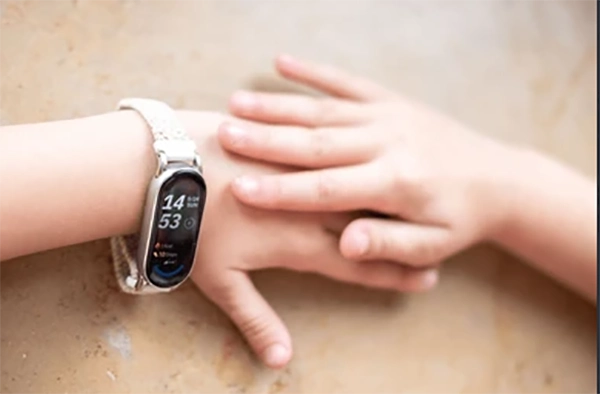
Every stat that you see, like six hours and twelve minutes of sleep, in which the deep sleep was forty-one minutes and the readiness score was 63. This might look like a fact, but most of it is just an estimate.
Things like screen time still get somewhat real because it counts something real like minutes, apps, and what time of day it was used. But the biofeedback data works differently. It takes the measurement of the internal states to produce data like movement and blood flow and then wraps the guess like it looks clinical.
Here’s what these signals actually measure, what they can’t tell you about a child, and why that gap matters more than the readings do.
Table of Contents:
What These Numbers Actually Are
If I have to be honest about this, I will bluntly say that the interface of the gadget works hard to understand the tasks going on, but the catch is that consumer wearable devices can’t measure the physiology of your child. The best thing it can do is estimate it and tell you.
The optical sensor on the underside of the strap shines light into the wrist and reads what comes back after the light bounces back. From that, plus an accelerometer tracking movement, the device produces everything else through calculation.
Sleep stages, stress levels, recovery scores, readiness: none of those are sensed directly. They’re outputs of proprietary formulas that each manufacturer builds differently and rarely publishes.
| Signal | What the device is actually doing | What it can’t tell you |
|---|---|---|
| Heart rate | Estimating pulse from light bounced off the wrist | Why the rate is where it is. |
| Sleep stages | Picking up the stages from movement and heart-rate patterns | Whether the sleep was actually good or not. |
| Stress or readiness score | Running a private formula across the other signals | Whether your child feels stressed or anxious or not. |
| Steps and activity | Counting motion, with the help of the speedometer fitted inside | Whether the activity was done or not, or was left in between. |
Look at the right-hand column. Every gap in it is the part a parent most wants answered.
The Gap Between a Signal and a Meaning
A raised resting heart rate over three nights is real data. It’s also completely unclear.
It could be anything; it can be a cold, a warm bedroom, anxiety about something that is about to happen, or some new medication. The app will never know about this, and it also doesn’t interpret these things.
The only thing that worries me is that the parents already see their child who is anxious and see the number that is going high, and they treat that number as evidence of something that is there to worry about.
Also Read: How Parental Controls Protect Kids on Social Media
Who Built the Dashboard, and What They Need From You
Here’s the part almost nobody mentions, and it changes how I read every wellness metric.
The apps that interpret this data are commercial products, engineered for retention. That isn’t a suspicion. It’s written down plainly in the guides developers follow when building them.
Krootl’s development guide for meditation apps, written by the agency’s own CEO, treats wearable integration as a standard feature, pulling stats from smartwatches and fitness trackers into the app’s progress screens.
The same guide recommends push notifications reminding users of their scores and upcoming activities, describing this explicitly as a way to enhance engagement.
It also walks through the monetization models the category runs on: subscription paywalls, freemium tiers, in-app purchases. Advanced tracking and deeper analytics sit behind the paywall. More than 2,500 meditation apps have launched since 2015, and they compete on exactly this.
None of that makes these apps dishonest. It does mean the notification telling you your child’s recovery score dropped was designed to bring you back into the app, and that’s a different purpose from telling you something you needed to know.
When the Data Becomes the Problem
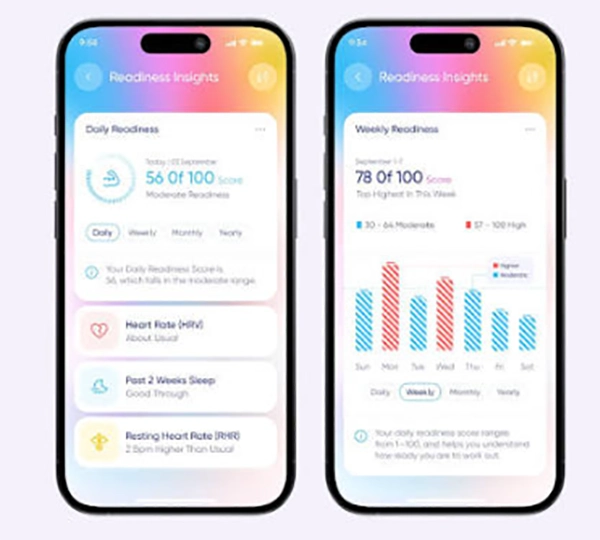
The major problem is that for some children and particularly teenagers, a daily number is not just a piece of information; it eventually becomes a target for them to achieve.
The tracking can quietly be reversed. A tool that was bought to reduce worry starts giving you more worry, and a child begins optimising a score rather than noticing how they actually feel. If that happens, adjusting the app’s settings is the wrong response. The best option would be to contact their doctor directly.
Worth Settling Before You Put a Tracker on a Child
Does the child know it’s there? Physiological monitoring they haven’t agreed to is a different thing from a location check-in, and it’s discovered eventually.
Who else sees the data? Check what the manufacturer and the connected app retain, and for how long.
What would you actually do differently? If no reading would change your behaviour, the device is decoration.
Can the child turn it off? An off switch they control changes how the whole arrangement feels to them.
Who reads it, and how often? Daily checking by a worried parent tends to produce more worry, not less.
What I’d Actually Do With It
The problem is not the data, but it is treating this data as an answer to your problems.
Used well, it does one useful thing: it surfaces changes worth asking about. A sleep pattern that shifts and stays shifted for a fortnight is a reasonable prompt for a conversation. It is not a diagnosis, and no consumer device is built to provide one.
So the sequence I’d follow is dull, and it works. Notice the change, then ask the child an open question. Compare what they say against what the device shows, and take both to a professional if the answers concern you.
And tell them the tracker is there. A child who discovers they’ve been monitored physiologically without knowing learns something about the relationship that no readiness score will fix.
Final Words
Biofeedback data can reveal so many things about your child’s wellbeing. It could also reveal a warm bedroom and a proprietary algorithm having a bad night.
The only thing that you have to think about is whether you should dismiss it or trust it. The best thing you can do is treat every reading as a question rather than treating it as a finding. The app that is telling you all this data is made for commercial purposes so that you keep using it, but if you have any clinical problem, then you should better go see a clinician who will handle everything.
The most useful thing any of this hardware does is prompt you to ask your child how they’re doing. You can do that without buying anything.
Frequently Asked Questions
Q1. Can a smartwatch tell if my child is stressed?
Q2. Are children’s sleep tracking numbers accurate?
Ans: Total sleep time tends to be the most reliable figure. Sleep stage breakdowns are inferred rather than measured, so treat the deep and REM splits as rough.
Q3. Should I tell my child they’re wearing a tracker?
Ans: Yes, always. Covert physiological monitoring damages trust considerably more than any reading it produces is likely to help.
Q4. When should I take this data to a doctor?
Ans: When a change persists for a couple of weeks, when it comes alongside something you’ve noticed in the child directly, or when the tracking itself seems to be causing distress.
Sources
Krootl — meditation app development
 Divya Kakkar
Internet Content Writer
About article
The author of this article Divya Kakkar, an Internet Content Writer at Saferloop, brings practical experience and industry knowledge to the subject.
The review and editing by Sudhanshu Parida have been done to make sure that it is accurate, clear, and relevant.
At Saferloop, we are determined to provide high-quality, well-researched, and updated content. To understand further how we produce and revise our articles, please refer to our Editorial Guidelines.
Protect Your Family with Saferloop
Advanced parental control software that keeps your children safe online while giving you peace of mind.
- Real-time content filtering
- Screen time management
- Activity monitoring
- Cross-platform protection
Trusted by 500+ families