

Its main purpose is to help parents protect children online by spotting risky activity, limiting unsafe access, and creating records when problems appear. It should support safety, not replace trust, conversation, or parental judgment.
×
Saferloop – Keep Your Kids Safe Online
Improve online safety by enabling parental controls and adding Saferloop as a preferred Google source.
How Parental Monitoring Software Serves as an Evidentiary Baseline

In this hyper-connected world, children are vulnerable to online risks more than ever. They often find them through gaming chats, social media, messaging apps, or even friend requests from complete strangers.
The challenge for parents isn’t just preventing those risks. It’s recognizing them before they become serious. A 2025 survey found 67% of parents use some form of parental monitoring software, reflecting a growing need for better visibility into children’s digital lives.
Traditional solutions filtered content or tracked screen time. But modern ones create a documented history of online activity that helps parents identify patterns, respond with evidence instead of assumptions, and preserve important records if schools, counselors, or legal professionals ever need to get involved.
Table of Contents:
- The Crucial Role of Digital Oversight in Modern Parenting
- Building an Evidentiary Baseline That Parents Can Use
- Essential Features That Make Records More Reliable
- Choosing Tools and Preserving Evidence the Right Way
- Legal Benefits and Future Trends for Families
- Final Thoughts on Protection, Proof, and Peace of Mind
- Frequently Asked Questions
The Crucial Role of Digital Oversight in Modern Parenting
As children’s social lives increasingly move online, parental monitoring software has become one of the most effective tools for identifying digital risks before they escalate. It gives parents visibility, yes, but it also creates documentation when something goes wrong. And when you are trying to protect your child, “I think something happened” is not nearly as useful as a clear timeline.
Why Families Think Differently About Protection
Many regions still have that close family-and-neighborhood feel. People know each other. Schools, sports, and community ties matter. But kids today are not only connected to the people down the street. They are connected to strangers, classmates, gaming circles, and online communities that may reach far outside their area.
When digital problems start affecting family stability, guardianship, custody discussions, or long-term planning, organized records can matter. Bringing complete digital documentation to a Tucson Trusts Attorney may be important when legal planning, child protection, or family decision-making overlap. Screenshots can help, sure. But fuller records often tell the real story.
Why Digital Parenting Can’t Be Occasional
A random phone check here and there might catch something. It might also miss everything important.
Online problems usually build over time. A weird message becomes a pattern. A joke turns into harassment. A new contact becomes a concern. Consistent monitoring helps you see what happened before, during, and after the moment that raised your alarm.
What Parents Are Really Watching For
Most parents are not trying to catch their kids being “bad.” They are trying to notice trouble early. That may include bullying, grooming, threats, harassment, self-harm signals, explicit messages, or contact from unsafe adults.
That daily visibility becomes even more useful when it forms an evidentiary baseline: a steady record that helps you understand patterns instead of reacting to one frightening moment.
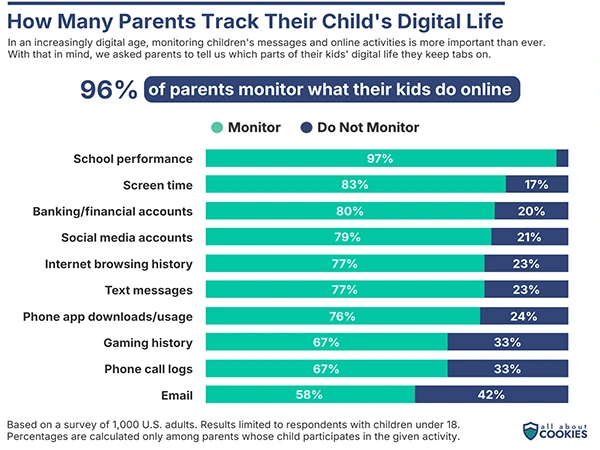
Here’s the breakdown of what aspects parents monitor and to what extent:
Building an Evidentiary Baseline That Parents Can Use
Think of an evidentiary baseline as the digital equivalent of keeping accurate records before a problem becomes a crisis. One ugly message may feel shocking. But compared against weeks of chats, alerts, app use, and contacts, it may reveal whether you are dealing with a one-time issue or a growing risk.
What an Evidentiary Baseline Means
Once records are consistent, the real value is clarity. Strong digital evidence for parents can show timelines, escalation, repeated contact, and intent. A baseline may include messages, browsing history, app activity, blocked contacts, flagged alerts, screenshots, reports, and time-stamped exports.
It is not about collecting everything forever. It is about having enough reliable information to understand what is happening.
Where Records Can Make a Difference
In a cyberbullying situation, logs may show repeated harassment instead of one isolated insult. In a custody conflict, records may show whether a child was exposed to inappropriate communication, ignored boundaries, or unsafe behavior.
Schools, counselors, attorneys, and co-parents often need specifics. Dates help. Repeated patterns help even more.
Why Timelines Matter
Memory gets messy when emotions run high. Any parent who has panicked over a message at 11:30 p.m. knows this. A clean timeline helps you explain what happened without guessing.
It also gives school leaders, mental health professionals, and legal advisors a clearer picture of risk. That makes the next step easier: using tools with features that create stronger, more reliable records.
Essential Features That Make Records More Reliable
Even the best tool is only useful if the information it captures is accurate, complete, and stored safely. If a record is incomplete or easy to challenge, it may not help much when the stakes rise.
Reliable Logs and Alerts
The strongest parental control apps create dated activity logs and send alerts when risky words, unknown contacts, suspicious links, or concerning behavior appear. With children spending an average of 7 1/2 hours a day on screens, continuous manual supervision simply isn’t realistic. Logs and alerts help narrow your attention to what actually needs review.
Secure Storage and Export Options
Good software does not just show you what happened. It helps preserve it.
Look for encrypted storage, downloadable reports, and export options that keep time stamps, message order, and context intact. If you ever need to share records with a school, counselor, or attorney, clean exports are easier to explain than a folder full of cropped screenshots.
Quick Comparison of Useful Features
Strong evidence depends on two things working together: responsible monitoring and careful preservation. That becomes especially important when legal questions may follow.
| Feature | Why It Helps Parents | Evidence Value |
| Activity logs | Shows patterns over time | Builds timelines |
| Real-time alerts | Flags urgent risks fast | Captures early warning signs |
| Secure exports | Makes sharing easier | Reduces claims of tampering |
| App coverage | Tracks chats, browsing, and social use | Gives fuller context |
Choosing Tools and Preserving Evidence the Right Way
Once you know what matters, the next step is choosing parental monitoring software that fits your actual family life. Not the perfect family in an ad. Your family. Busy mornings, forgotten chargers, school apps, gaming chats, and all.
A tool should support documentation without creating privacy or security problems of its own.
Keep Monitoring Ethical
Whenever safety allows, be honest with your child. A family tech agreement can explain what is monitored, why it matters, and what actions trigger closer review.
Children may not always welcome monitoring, but transparency often strengthens trust more than secret surveillance.
Preserve Records Carefully
Do not edit screenshots, crop messages, or copy text into a new document unless you also keep the original. Save exports in secure cloud storage. Keep simple notes about when you found each concern and what action you took.
Small habits like these can make records easier to understand later.
Pick Tools That Fit Real Life
The best online child safety tools are the ones you can actually use on a normal Tuesday night. Compare setup, reports, privacy controls, device coverage, app coverage, and customer support.
If a tool is too complicated, you will stop using it. And if it misses the apps your child uses most, it may leave major gaps.
When harassment, custody tension, or safety threats arise, organized records can move the discussion away from “he said, she said” and toward documented patterns.
Legal Benefits and Future Trends for Families
Monitoring tools are also changing. AI alerts, encrypted records, and validation methods are reshaping how digital evidence is captured and trusted.
How Legal Conversations Improve
When parents bring organized records to an attorney, the conversation becomes more focused. Instead of saying, “Something feels wrong,” you can show dates, messages, contacts, repeated behavior, and escalation.
While documentation alone won’t determine the outcome of a legal matter, it provides professionals with objective information instead of relying solely on recollections.
What New Technology Is Changing
Some apps now use AI-driven alerts to flag sudden changes in tone, secretive contacts, concerning searches, or unusual behavior patterns. Encrypted records and validation tools may also make reports harder to dispute.
The technology is getting smarter. Thankfully, so are parents.
Why Human Judgment Still Matters
Technology can flag danger, but it cannot replace you. Monitoring children’s online activity works best when it supports real conversations, calm follow-up, and thoughtful decisions.
A tool may point to a problem. You still have to listen, ask questions, and help your child feel safe enough to talk.
Final Thoughts on Protection, Proof, and Peace of Mind
Parental monitoring software is most valuable when it does more than notify parents of potential risks. At its best, it is protection plus documentation. The goal is not to spy on your child or hover over every tap. The goal is to keep them safer and preserve facts when trouble appears.
The right digital evidence for parents can show patterns, timing, and intent. That can make a difficult situation easier to understand and easier to address.
Choose trusted parental control apps, set clear family rules, and review reports carefully. If serious risks show up, get legal or professional guidance early.
Good records will not solve every problem by themselves. But they can help you act sooner, speak with confidence, and protect your child with a little more peace of mind.
Frequently Asked Questions
What is the primary purpose of parent control software?
What are three methods of parental monitoring?
Parents can use app-based monitoring, device-level settings, and router or network controls. Many families combine these with regular conversations, because software catches activity, but kids still need guidance, boundaries, and reassurance.
Can evidence collected by these apps be used in court?
Sometimes, yes, but rules vary by state and case type. Courts may consider whether records are authentic, relevant, and legally gathered. Parents should avoid altering files and ask a qualified attorney before relying on them.
 Neha Sharma
Parental Control & App Safety Writer
About article
The author of this article Neha Sharma, an Parental Control & App Safety Writer at Saferloop, brings practical experience and industry knowledge to the subject.
The review and editing by Evan Patterson have been done to make sure that it is accurate, clear, and relevant.
At Saferloop, we are determined to provide high-quality, well-researched, and updated content. To understand further how we produce and revise our articles, please refer to our Editorial Guidelines.
Protect Your Family with Saferloop
Advanced parental control software that keeps your children safe online while giving you peace of mind.
- Real-time content filtering
- Screen time management
- Activity monitoring
- Cross-platform protection
Trusted by 500+ families