

When children use the internet, digital devices, or apps, they may collect some personal information. Child data privacy protects this information from unauthorized access or misuse.
×
Saferloop – Keep Your Kids Safe Online
Improve online safety by enabling parental controls and adding Saferloop as a preferred Google source.
What Is Child Data Privacy? A Well-Architected Framework Guide for Parents (2026)
Keeping children’s personal information safe when they use websites, apps, or online services is called child data privacy. It makes sure their data is collected carefully, used properly, and not misused or shared without any protection.
A privacy research study conducted by SafetyDetectives found that around 70% of children’s apps collect personal data such as name, home address, phone number, and photos or videos. This information can be shared or misused, which is concerning for parents.
It highlights the importance of child data privacy, and this article provides a well-structured guideline for parents to understand how they can protect their children’s personal information, support safe online habits, and control the data shared by children online.
Table of Contents:
Types of Data Collected from Children Online
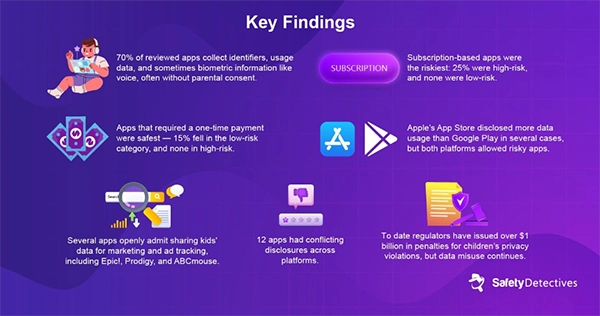
About Image – These are some key findings from privacy research by Safety Detectives.
Children use many apps, websites, or games in their daily lives, and these services may collect different types of data, such as basic information, location, device information, and activity history.
Here are some types of data these platforms can collect –
- Personal Information – Basic information such as name, age, email address, phone number, and home address is collected by most apps or websites. If the data isn’t protected properly, it can reveal the identity of the child.
- Location Data – Some apps may ask children to give permission to access their location. This data can reveal real-time location and is considered sensitive, and can make anyone track where a child is through location services or IP address.
- Device and Technical Data – Information such as the device name or type, IP address, browser details, and other technical identifiers is technical data. Although this seems harmless, it can be used to track a child’s online behavior and activity.
- Behavioral Data – Behavioral data shows how children interact with apps, websites, and online platforms, including what games they play, what videos they watch, and how long they use apps and websites.
- Media Data – Many apps or online platforms collect and store voice recordings, videos, and photos. This data is considered to be the most sensitive and can be misused for identity theft and exploitation if it is not properly protected.
Key Principles of a Child Data Privacy Framework
To keep children’s online data safe and secure, the child data privacy framework provides a set of rules. It helps parents to make sure that the websites and apps are responsibly using their child’s information and protecting it from misuse or data theft.
- Apps and websites should clearly explain how they collect data. They must show parents clearly what information they are taking from their children and how they will use it.
- Online platforms should use strong security methods to protect children’s personal information. This helps keep the information safe from hackers and data leaks.
- The personal data of children should not be kept forever, and digital services should safely delete information after a certain period of time to keep data secure.
- Apps and websites should have built-in safety settings and be turned on by default so children are protected from the start without needing to change any settings.
How Parental Control Tools Support Data Privacy
Around 70% of children spend at least 3 hours daily on their devices. This makes parents worried about their children’s online safety and mental well-being. Such issues make parental tools important.
Parental control tools are built-in phone features or apps that help parents protect their children while they use different online platforms. To store and manage the collected data securely, parental tools rely on experts in PostgreSQL infrastructure and operations.
Parental tools support data privacy in various ways –
- With the help of parental tools, guardians can view their children’s online activity, such as which apps they use or which websites they have visited.
- Parents are allowed to control data access, such as location, contacts, or photos, collected by different apps or websites to reduce unnecessary data sharing.
- Parental tools help parents in blocking harmful websites and inappropriate content to protect kids from online risks and exploitation.
- The time limit feature allows parents to set a specific limit on their child’s device and internet usage to prevent addiction.
- Parents get notifications and alerts if any suspicious or unsafe activity is detected by parental control apps.
Legal Regulations Parents Should Know (COPPA, GDPR-K, etc.)
When children use online games, apps, or websites, these platforms may collect some personal data, and to protect this information, different countries have made different rules according to their privacy standards.
Below are the main laws explained:
- COPPA – The full form of COPPA is the Children’s Online Privacy Protection Act. This law is from the United States, and it protects children under 13 years old. According to this law, websites and apps must take parents’ permission before collecting children’s data and cannot track or store personal information without consent.
- GDPR-K – GDPR-K is a part of the European privacy law called GDPR. It protects children’s personal information online.
It includes approval from parents to collect children’s data, and digital platforms have to make it clear what data they are collecting and why.
- Global Laws – Different countries around the world have created their own laws to protect children’s online privacy. These laws ensure that apps and websites handle children’s data safely and responsibly.
For example, the United Kingdom has the Age Appropriate Design Code, Canada has privacy laws to protect personal data, and Australia has the Privacy Act.
Conclusion
The issue of child data privacy has evolved as one of the biggest challenges, as children spend most of their time online. Some apps and websites collect and store basic information to provide services based on the child’s online activities, and also keep this data as backups.
This framework guide helps parents ensure that their children’s information is safely collected and used only for the right reasons. In addition to child data privacy, there are various parental control tools, such as SaferLoop, which help parents by giving them control over their child’s device.
In the future, child data privacy will continue to evolve with the help of AI and stronger laws. It won’t limit access to the internet, but it will help in creating a safe digital environment for both parents and children.
Frequently Asked Questions
What is child data privacy?
Why is child data privacy important?
The data collected by digital platforms can be misused if not protected, which can lead to risks such as identity theft or online harm.
What are COPPA and GDPR-K?
COPPA is a U.S. law that says apps must get parents’ permission before collecting data from children under 13, and GDPR-K is a European law that protects children’s data and also requires parental permission.
 Divya Kakkar
Internet Content Writer
About article
The author of this article Divya Kakkar, an Internet Content Writer at Saferloop, brings practical experience and industry knowledge to the subject.
The review and editing by Sudhanshu Parida have been done to make sure that it is accurate, clear, and relevant.
At Saferloop, we are determined to provide high-quality, well-researched, and updated content. To understand further how we produce and revise our articles, please refer to our Editorial Guidelines.
Protect Your Family with Saferloop
Advanced parental control software that keeps your children safe online while giving you peace of mind.
- Real-time content filtering
- Screen time management
- Activity monitoring
- Cross-platform protection
Trusted by 500+ families