
Yes, as the tracking feature on most of the apps does not depend upon the ringer being turned on.
×
Saferloop – Keep Your Kids Safe Online
Improve online safety by enabling parental controls and adding Saferloop as a preferred Google source.
Keep Your Kids Safe Online: Saferloop’s Interactive Online Safety Learning Guide for Parents
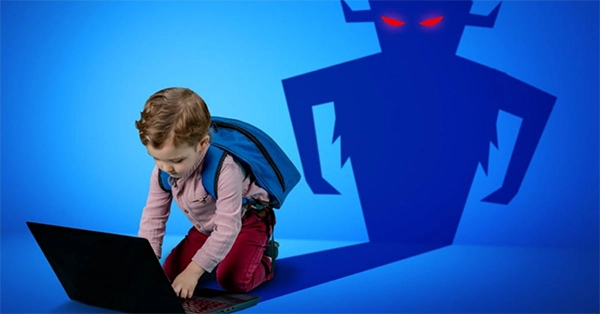
Although the internet provides a unique mechanism for educational and social growth, it is also associated with high-tech threats that go well beyond the traditional stranger danger.
UNICEF published a report stating that an estimated 1.2 million children around the world have reported their images being manipulated into deepfake images created using AI within the last year.
Unfortunately, the materials presented may be biased or harmful to children.
Child protection as they grow up online now involves developing a detailed plan that includes using preventative countermeasures. It requires monitoring activity at different levels, establishing strict boundaries, and providing children with open access to hands-on guidance.
Let’s move further to develop and build safe spaces for all families!
KEY TAKEAWAYS
- Modern safety requires tools capable of detecting AI-generated threats, such as deepfakes and sentiment-based grooming.
- Effective digital safety relies on guidance, not restriction, fostering trust rather than resentment.
- Centralizing device management into a single dashboard reduces technical friction and ensures consistent safety policies.
Why Online Safety Is More Important Than Ever in 2026
With AI companions and virtual learning becoming commonplace, digital threats have hit an all-time high. By the year 2026, businesses and governments will likely shift their focus toward digital protection and child safety. This is because
- Standalone AI chatbots can replicate human empathy with such high fidelity that children will often not know whether a bot is an honest resource or simply a manipulative agent.
- The metadata from today’s apps may use a child’s digital identity in the future.
- Modern-day predators are using behavior analytics to determine children’s emotional states and identify potential targets using social media and game-related content produced by children.
- With 11-15-year-olds averaging over 4 hours a day of screen time, it becomes almost impossible to avoid accidental exposure to inappropriate content.
Adopting a proactive approach towards safety to ensure that these digital tools are considered an asset and not a liability.
Understanding the Most Common Online Risks for Kids
To effectively protect a child, you need detailed insight into what is going on in their digital space or digital footprint. Online threats are evolving beyond accessing ‘bad websites’ and now include how children are influenced by algorithms and through social media manipulation.
| Threat Type | Safety Context |
| AI Deepfakes | 1 in 25 children in high-penetration markets face image manipulation. |
| Cyberbullying | YouTube and TikTok are the primary venues for digital harassment. |
| Inappropriate Content | Urban parents report accidental exposure to explicit material despite basic filters. |
| Predatory Grooming | Predators use AI to analyze behavioral patterns to tailor their approach to a child’s specific interests. |
Setting Up Strong Parental Controls on Devices
Digital parental controls serve as digital boundaries. They ensure a child’s natural curiosity will not lead them to find themselves in danger. These measures effectively manage the chaos of navigating multiple devices through a single, user-friendly interface by using digital rules.
With these qualities in tools, parents can do the following:
- Block access to inappropriate content
- Initiate an app approval process
- Create communication security
- Enhance privacy
Take a look at the infographic below to get a glimpse of these qualities.
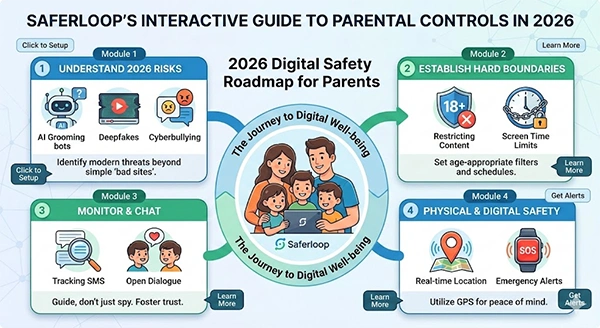
For a detailed guide on how to secure your family’s devices completely, you can read about the best web filtering app for Android to safeguard children from adult content.
Managing Screen Time and Building Healthy Digital Routines
The philosophy of 2026 safety is “Guidance, not Restrictions.” Trust is the most valuable currency in a parent-child relationship, and it must be preserved even while maintaining safety.
Successful digital safety strategies are transparent. Instead of employing covert monitoring, simple reports and alerts can help to explain the purpose of the software. It can monitor and help protect against outside threats.
Using the saying, “a forewarned person is of no interest,” to help create comfortability within children when they get themselves into an uncomfortable situation. They need to go to their caregiver for assistance.
Monitoring Online Activity Without Invading Privacy
When it comes to safety, there are two types: physical and digital. By 2026, with the benefit of GPS technology, parents will have an added layer of “peace of mind” from their children’s age-appropriate independence.
- Locate the Child: Whether at home or away from home, you can check their current location at all times.
- Use Digital “Panic Button”: This allows them to send you the real-time GPS location and audio clip when pressed.
- Check-in Alerts: Let the child check in, and an alert will notify you the minute that they arrive at school or leave a predetermined “safe location.”
- Review Historical: It verifies that they are not visiting previously identified off-limits or unsafe locations.
INTERESTING FACT According to the National Institute of Health, more than 85% of teenagers now access AI-based social media channels daily.
Using Location Tracking and Emergency Alerts for Family Safety
Physical and digital safety are two sides of the same coin. GPS technology provides a layer of security that allows for age-appropriate independence.
| Locate Family in Real-Time | Instantly see where your child is on a high-resolution map, whether they are at school or a friend’s house. |
| SOS Emergency Alerts | Provide your child with a digital panic button that sends their live location and an audio snippet to your device immediately. |
| Safe Zone Geofencing | Receive an alert the moment your child arrives at school or leaves a safe area. |
| Location History | Audit past routes to ensure your child isn’t frequenting areas that are off-limits or potentially hazardous. |
To develop a profound understanding, parents may use platforms such as ProProfs Quiz Maker, which offer customizable feedback, question banks, and analytics that emphasize the areas in which little learners experience the most difficulty.
Teaching Kids Safe Online Behavior and Digital Responsibility
Digital literacy is at the heart of every smart safety strategy. While technology can block a link, only one person can use that link for judgment, and that includes a child.
Children must consistently be informed that no content is specifically important to post. They should also understand that their name, address, and school are all “intellectual property” that should NEVER be exchanged for “free” gaming coupons.
Additionally, parents should teach children to ask, “Is this person who they say they are?” and “Why does this app need access to my camera?” Simply let them realize that “abuse is abusive” even when perpetrated through deepfake technology.
Fun FactA study found that educators who use active learning tools, like interactive quizzes, raised test scores by 54%.
At last, children need to learn empathy, whether through private meetings or on a playground. A child’s safety is a strategic issue. If parents invest in professional-quality tools, they can implement a true commitment to developing open mentorship, where children can grow freely.
FAQs
Can I track my child’s location if their phone is on silent?
Will my child know I am monitoring their SMS?
While the app runs quietly in the background, it is better to be open about this so you can build a foundation of trust between you and your child.
Can I block TikTok but leave other apps open for my child?
Yes. You can use the dashboard to manage apps separately by selecting the option to “Allow,” “Block,” or set time limits for each app on your child’s device.
Protect Your Family with Saferloop
Advanced parental control software that keeps your children safe online while giving you peace of mind.
- Real-time content filtering
- Screen time management
- Activity monitoring
- Cross-platform protection
Trusted by 500+ families