

Ans: Rage-baiting content looks like someone posted controversial content that sparked a long debate and inflammatory conflicts.
×
Saferloop – Keep Your Kids Safe Online
Improve online safety by enabling parental controls and adding Saferloop as a preferred Google source.
Rage Bait Meaning: What It Is, How It Works and Is It Safe for Kids?
Negative attention is the new method to increase engagement on social media for likes, comments, and shares. This raises a new Gen Z slang “rage bait.” Rage bait meaning describes a situation where someone deliberately says or does something controversial to trigger people’s emotions.
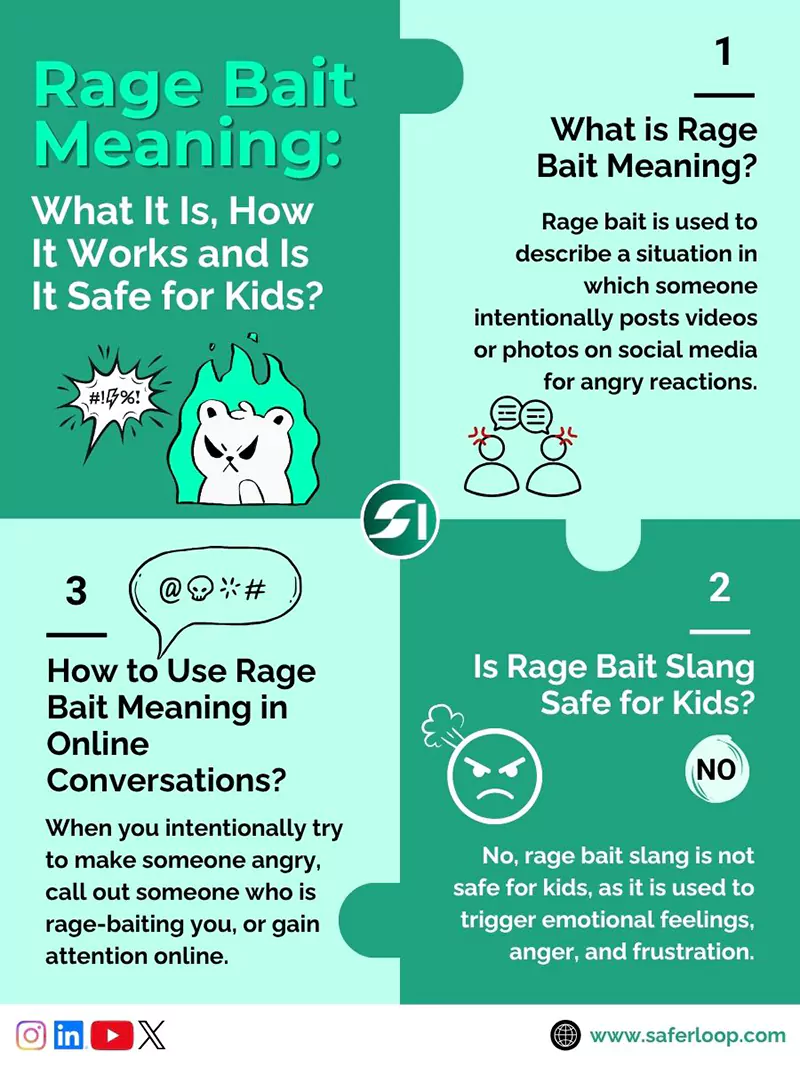
This abbreviation raises concerns regarding children’s mental and emotional health. So, you should stay adherent to this article to discover the definition, real-time examples, ways to stop rage baiting, and safety tips for parents.
Quick Answer:
Rage bait is a situation where an individual intentionally posts content that makes people angry and frustrated. Thus, as a concerned parent, you should keep your kids away from rage-baiting content.
Table of Contents:
What is Rage Bait Meaning?
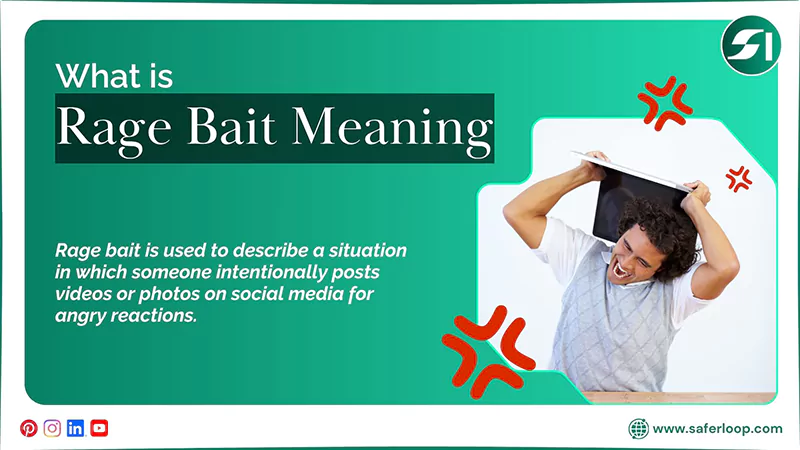
Rage bait is used to describe a situation in which someone intentionally posts videos or photos on social media for angry reactions. This can involve things that you can’t believe or misinformation that triggers your emotions.
People commonly use rage baiting to gain attention, engagement, views, and clicks on Instagram, TikTok, Facebook, Snapchat, and X to make money online.
For example, you can upload a cooking video with the wrong ingredients on purpose, prompting people to comment on your video to try to fix your recipe. As a result, you get engagement and views. This is how rage baiting works!
The term “rage bait” first appeared online in February 2016, used by Daniel Herborne in The Age (an Australian newspaper). Later, it gained popularity in 2020 on social media to take advantage of the rage bait meaning.
Oxford officially announces the word of the year 2025 is rage bait, highlighting its common usage
How to Use Rage Bait Meaning in Online Conversations?
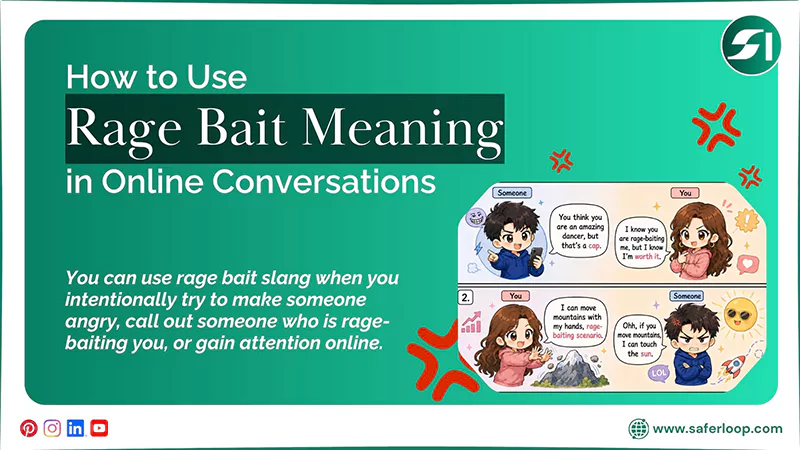
You can use rage bait slang when you intentionally try to make someone angry, call out someone who is rage-baiting you, or gain attention online.
Here are the following real-time examples that help you understand how to use rage baiting meaning in online conversations.
1. When You Intentionally Try to Anger Someone
The rage bait meaning is used when you want to annoy your friends and family members in a friendly way, or to create funny moments.
Example 1:
You: “Bro, chill. I was just rage-baiting you when I said I would steal your PS5 and run.”
Friend: “I thought you actually did, LOLL.”
Example 2:
You: “I spilled tea on your t-shirt because I was just rage baiting you. So, just relax!”
Friend: “You shouldn’t have done that. I have to wear that t-shirt.”
2. Call out Someone Who Rage Bait You
You can use the term when someone tries to get upset and angry purposely, call them out to tell you know that is rage baiting.
Example 1:
Someone: “You think you are an amazing dancer, but that’s a cap.”
You: “I know you are rage-baiting me, but I know I’m worth it.”
Example 2:
Someone: “I can call your bf anytime for a hangout, and he never says no.”
You: “I know you are rage-baiting. You should be more slick if you’re trying to make me angry.”
3. To Gain Attention Online
You can use the rage baiting meaning to gain attention through controversies and emotional phishing and to make people angry.
Example 1:
You: “I have architecture skills like the architect of Petra in 300 BC. It is my rebirth. Total rage baiting.”
Someone: “You are demeaning the architectural work of Petra, that’s wrong.”
Example 2:
You: “I can move mountains with my hands, rage-baiting scenario.”
Someone: “Ohh, if you move mountains, I can touch the sun.”
After acquiring knowledge of what does rage bait means and how to use it, you should dig deeper into the next section to determine whether it is safe for kids or not.
Is Rage Bait Slang Safe for Kids?
No, rage bait slang is not safe for kids, as it is used to trigger emotional feelings, anger, and frustration.
If children and minors engage with this slang, they might be exposed to toxic and inappropriate content and might end up in vicious arguments, causing online trolling and cyberbullying. That’s why I advise parents to prevent their kids from using rage baiting and other harmful slang terms like SYBAU and 420 friendly.
Additionally, I recommend that you install the Saferloop parental control software to protect your kids from explicit content and cyberattackers. It offers a wide range of safety features, such as:
- Monitor your children’s online activities to keep track of their digital behavior.
- Set screen time limits to encourage healthy and offline habits.
- Block unsafe websites and apps to prevent them from accessing dangerous sites.
- Restrict inappropriate and obscene content to create a safe digital environment.
- Track real-time location and create digital boundaries to get notified when your kids reach or exit the place.
- Send emergency alerts, SOS updates, and reports if something suspicious is detected.
- Provide the Saferloop safety checkup extension for Chrome to add an extra layer of security.
- Offer the Saferloop GPT to guide you about digital parenting and resolve all issues.
On the whole, the Saferloop parental control software gives you peace of mind by providing AI-powered solutions for children’s safety.
Also Read: What’s MB Mean in Text? Examples, Usgae, and Is It Safe for Kids?
How to Recognize a Rage Bait Situation?
As a concerned parent, you should recognize a rage bait situation by analyzing inflammatory content and conflict-driven comments to ensure kids’ online safety.
Let’s take a look at the following checklist to identify red flag content.
- Focus on videos, photos, and posts that purposely make you angry.
- Check whether the tone of the language is sarcastic, formal, or inflammatory.
- See if the post is getting a lot of angry comments and getting negative attention.
- Notice people who create drama and act like a victim after a spiky conflict.
- Identify conversations that personally attack you without a clear reason.
- Look for content that is posted to provoke outrage, not to inform.
If you recognize any of this rage-bait content, I advise you not to engage with it while doom-scrolling social media.
How to Stop Rage Bait Reactions?
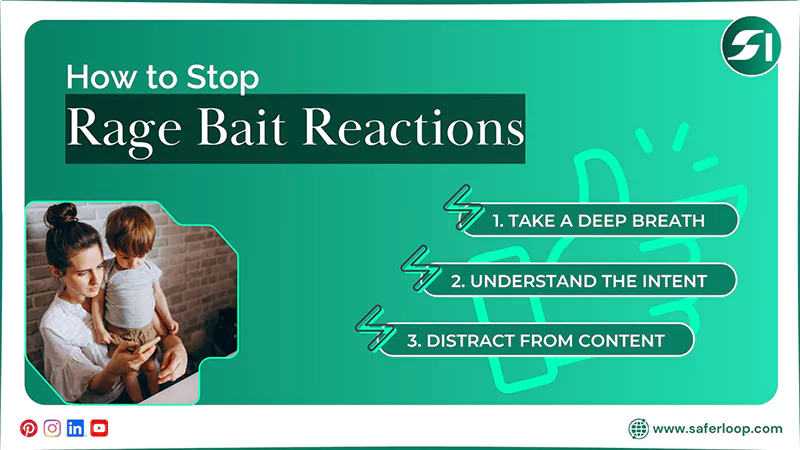
You can stop rage-bait reactions by taking a deep breath, understanding the intent, and distracting yourself from the content.
Let’s have a look at these tips to restrict yourself from engaging with rage baiting meaning slang.
1. Take a Deep Breath
When you identify rage bait content, you should stop what you’re doing and take a deep breath to clear your mind with good intentions. It helps you to stay safe from unnecessary conflicts.
2. Understand the Intent
If you feel the sudden urge to reply to such rage baiting posts, you shouldn’t do that. Instead, understand the intent of such posts and the thoughts racing through your mind. This moment of awareness is your power.
3. Distract from Content
Simply, you should ignore the red flag content and engage in activities that distract you effectively. Likewise, you can engage with mind-soothing videos, physical activities, or chit-chat with your friends.
How Can Parents Protect Kids’ Safety?
As a helicopter parent, you should understand the slang terms, install the parental control app, teach safety measures, set rules and regulations, and report to legal authorities to protect kids’ safety.
Here, I’ve mentioned some advanced tips for you to ensure that your innocent children are safe online.
1. Understand the Slang Terms
Firstly, you should understand modern internet language through a slang dictionary to have an idea of how your kids are engaging online. Also, you should discuss the dangers of digital platforms and explicit terms to spread awareness.
2. Install the Parental Control App
Make sure you install the best parental control app, like Saferloop, to monitor your children’s online activities, set screen time limits, filter harmful content, and track real-time location.
3. Teach Safety Measures
Remember to teach safety measures to your kids, such as never sharing personal information and passwords with anyone and how to block or report someone on social media. It empowers them to ensure their online safety when you are not around.
4. Set Rules and Regulations
You should establish clear rules and regulations regarding your kids’ screen time limits, when they use smart devices, with whom they can interact, and how they surf the internet. It helps you manage their online and offline lifestyles.
5. Report to Legal Authorities
In case your little ones become victims of cyberbullying and scams, you should report to the legal authorities to take immediate action. You can contact your nearby police station, the Federal Bureau of Investigation (FBI), and the National Center for Missing and Exploited Children (NCMEC) CyberTipline.
Wrapping Up!
Rage bait meaning is used to describe a situation in which someone intentionally posts to provoke anger or frustration. However, it is not safe for kids, so I advise you to prevent them from engaging in such rage-baiting content.
You should set up the Saferloop parental control software to enhance your children’s safety and privacy. Along with this, you should focus on gaining the trust of your little angels rather than heavily depending on technology.
Author’s Note:
As a cybersecurity and parental control expert, I discovered rage bait is the word of the year 2025. But it is not safe for kids, as it has resulted in cyberbullying and exploitation, making it concerning for parents.
I suggest you install the Saferloop parental control app to restrict rage baiting content from children’s social media feeds and block strangers from interacting with them.
IAI-powered safety features give you one-stop solutions to your digital parenting issues.
Frequently Asked Questions
Q: What is an example of rage baiting?
Q: How to tell if someone is rage-baiting?
Ans: You should look for content that is purposely posted to provoke a strong emotional reaction or to attack someone personally.
Q: Does rage baiting count as flirting?
Ans: No, rage baiting doesn’t count as flirting. It involves posting intentional provocation, extreme anger, and misinformation on social media platforms.
Q: Is rage baiting safe for kids?
Ans: No, rage baiting is not safe for kids because it is used to spread misinformation, gain negative attention, and engage in conflict-driven arguments.
 Neha Sharma
Parental Control & App Safety Writer
About article
The author of this article Neha Sharma, an Parental Control & App Safety Writer at Saferloop, brings practical experience and industry knowledge to the subject.
The review and editing by Vinithra Karunanidhi have been done to make sure that it is accurate, clear, and relevant.
At Saferloop, we are determined to provide high-quality, well-researched, and updated content. To understand further how we produce and revise our articles, please refer to our Editorial Guidelines.
Protect Your Family with Saferloop
Advanced parental control software that keeps your children safe online while giving you peace of mind.
- Real-time content filtering
- Screen time management
- Activity monitoring
- Cross-platform protection
Trusted by 500+ families