

Ans: Teens are more prone to getting distracted as their brains are wired to look for approval or connection, and social notification acts as a way to fuel that, making every message seem almost impossible to ignore.
×
Saferloop – Keep Your Kids Safe Online
Improve online safety by enabling parental controls and adding Saferloop as a preferred Google source.
Teen Distracted Driving: What Parents Need to Know
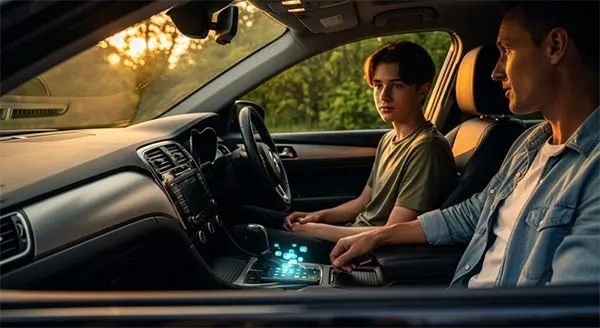
Although your teen might not actively interact with their device during driving, they still may get distracted, even for a split-second, by notifications, sounds, map directions, playlist changes, and social media alerts.
This micro loss of focus might end up costing them a lot as the road leaves almost no room for error. This is why parents must stay vigilant and have an amicable discussion with their children about screen habits when the stakes are high.
This article shows how notifications pull their attention off the road and how you can help guide them toward safer choices without turning every car ride into a full-blown argument.
Key Takeaways
- Teen drivers face higher crash risks because inexperience, digital distraction, and impulsive decisions often occur simultaneously.
- Smartphone distractions go well beyond texting. They include changing music, checking maps, swiping away lock-screen alerts, and engaging with social media notifications.
- Because fatal traffic accidents involving adolescent motorists surge dramatically over the warmer months, the window stretching from late May to early September is widely designated as the 100 Deadliest Days of Summer.
- Having a calm, clear conversation with your teen to establish a shared phone policy builds safer habits while keeping your relationship strong and supportive.
Why Are Teens Especially Vulnerable to Distracted Driving?
Firstly, let’s understand how teens, out of all other age groups, are most affected by these things when they take their car out for a ride.
Inexperience Changes How Distraction Hits the Brain
As adults have been driving for decades, most of the mechanical skills (steering, braking, checking mirrors) happen almost automatically. This frees up mental energy to scan for unexpected hazards.
Inexperienced drivers don’t have these skills just yet, so even small distractions drive too much attention away from the road. Think of it like the difference between a seasoned chef who can hold a conversation while sauteing and a beginner who requires total focus just to keep from burning dinner.
Public health tracking data from 2023 shows that traffic accidents are the primary threat to life for young females between 13 and 19 years old.
For teenage males of a similar age group, vehicular incidents remain near the top of the list for fatal events. That lack of experience means that an experienced driver could promptly correct what often becomes unmanageable for a beginner.
The numbers are sobering. When looking at mileage, motorists aged 20 and up experience a fatal collision frequency that is roughly one-third of the rate seen among younger drivers aged 16 to 19.
On top of that, NHTSA reported that in 2023, 7% of teen drivers ages 15 to 19 involved in fatal traffic crashes were distracted at the time of the crash. Because distraction is notoriously difficult to confirm after a crash has already happened, safety experts widely consider that percentage an undercount of the real problem.
It’s Not Just Texting
You might feel reassured knowing your child doesn’t actively text while on the road, but micro-distractions are equally unsafe. Having a quick peek at a notification, skipping a song, checking navigation, or reading a message at a stoplight can all pull eyes off the road.
Almost one-third of Gen Z drivers admit to checking phone notifications within minutes of receiving them while driving, even while being aware of the dangers involved.
These rapid interactions foster a false sense of security among young drivers, who believe a quick glance is harmless.
Research indicates that nearly two-thirds of Gen Z drivers and over half of Millennials admitted to glancing at texts at red lights, and many even admitted to taking pictures behind the wheel.
So the issue that parents must address isn’t just for traditional texting. It’s about the entirety of digital distraction, from Snapchat streaks to swiping at a lock-screen alert.
What Makes the 100 Deadliest Days of Summer More Dangerous?
Summer brings an exciting sense of freedom for teenagers, but the lack of structure creates a much tougher driving environment. School is out; teens drive more miles for social reasons, stay out later, and frequently have friends in the car.
More Freedom, More Driving, More Passengers
If you’ve ever watched your teen go out with friends into the backseat for a Saturday trip to the lake, you already know the vibe. According to recent safety reporting, more than 30% of teenage driving deaths occur between Memorial Day and Labor Day, a period that concerns safety advocates immensely.
The massive volume of novice drivers on the road at different hours creates a huge spike in serious accidents. Nearly 30% of the fatalities tied to collisions involving adolescent motorists occur during the summer. This seasonal spike displays a significant portion of the toll from 2019 through 2023, during which traffic accidents involving young drivers claimed more than 13,000 lives.
Community safety groups are urging families to stay focused and slow down as summer begins, reminding parents that involvement doesn’t end once the permit turns into a license.
Peer Passengers and Digital Pressure Stack Together
Crash risk multiplies fast when a teen adds noisy passengers and digital pressure to the mix. A car full of friends means multiple conversations, arguments over who gets the aux cord, and intense social pressure to respond to incoming messages or post updates online.
When these distractions accumulate all at once, an inexperienced individual can easily miss a braking car ahead or a changing traffic signal.
Here’s a breakdown of the biggest risk factors, why they matter, and what you can do about each one:
| Smartphone notifications | Pull visual and mental attention from the road | Turn on Do Not Disturb While Driving |
| Texting or reading messages at lights | Encourages continued phone engagement once the car moves | Create a no-phone-in-hand rule for the entire trip |
| Peer passengers | Increase noise, pressure, and split attention | Limit teen passengers, especially early on |
| Speeding | Reduces reaction time and increases crash severity; in 2020, 35% of male drivers and 18% of female drivers ages 15 to 20 in fatal crashes were speeding | Tie driving privileges to consistent safe-speed habits |
| No seat belt use | Raises risk of severe injury or death; 56% of teen occupants ages 16 to 19 who died in 2020 crashes weren’t wearing a seat belt | Make buckling up non-negotiable before the car moves |
How Do Phones and Social Media Notifications Affect Teen Decision-Making?
Our devices are one of the major reasons why incidents occur on the road. Let’s take a look at how they affect a teen’s decision-making while driving.
Notifications Are Designed to Interrupt
Apps are designed to pull users back in, using bright appearances, vibrations, custom sounds, and social streaks that develop a sense of urgency. Teens often feel strong social pressure to respond to their peers almost immediately, treating an ignored alert as a genuine social misstep.
This creates a habit loop that’s very tough to break through with willpower alone. A young person’s brain is naturally wired to seek approval and connection, making a buzzing phone almost impossible to ignore.
Once you grasp that the technology is actively working against their focus, you can approach the issue as a team rather than pointing fingers.
A Quick Glance Can Become a Long Distraction
Wondering how much a quick glance really matters? The data paints a stark picture. Looking at a phone at highway speed can spike crash risk up to 23x because the car covers massive distances while the driver’s attention is entirely inside the cabin.
When your teen looks down for even a moment at 55 mph, they’re essentially driving the length of a football field blindfolded. Let that image sit for a second.
This danger gets worse when you factor in the reality that young drivers frequently multitask while driving fast. Recent telematics data shows that phone handling increases by 12 percent for every 5 miles per hour a driver exceeds the speed limit on highways. When speed and digital distraction occur simultaneously, the margin for error shrinks to almost nothing.
5 Phone Rules That Are Easier for Teens to Follow
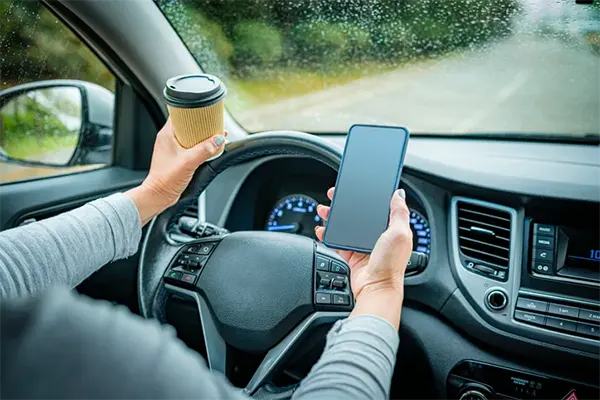
You don’t need a complicated contract. These five rules are simple enough that your teen can actually stick with them:
- Put the phone on Do Not Disturb While Driving before the car starts.
- Place the phone somewhere out of reach, such as the glove box, center console, or back seat.
- Set music, maps, and playlists before leaving the driveway.
- If a message feels urgent, pull over somewhere safe before checking it.
- Ask passengers not to hand over phones, record videos, or pressure the driver to respond.
What Can Parents Say Without Starting a Fight?
Helpful solutions can only be reached through coordinated measures, as arguments never result in anything good.
Start with Curiosity, Not Accusations
Teens respond much better when parents talk about building systems rather than attacking their character. Ask any therapist, and they’ll convey the same thing. Replace phrases like “You’re irresponsible with your phone” with something like “I know notifications are difficult to ignore, so let’s figure out how to make driving easier”.
The goal is never to scare your child. It’s to make safe choices, the path of least resistance.
You might inquire what feels most distracting when driving, whether it’s texts, music, talkative passengers, or glancing at directions. Ask what would make it simpler not to check their device in the car, or whether a standard rule, such as putting the phone in the middle console for every trip, would actually help.
It’s also worth asking if they want their friends to know about their no-phone boundaries (sometimes teens are relieved to have a “my parents are strict” excuse they can lean on).
Set a Family Tech Curfew for the Car
A “tech curfew” for the vehicle simply means there’s absolutely no handheld phone use anytime the car is moving or stopped in traffic. This includes texting at stops, sending a “quick reply”, or posting a social update while driving. Tying this to habit-building rather than punishment makes the transition smooth and a lot more logical for a young driver.
Families looking for more structured guidance on protecting teen drivers can find practical information covering the 100 Deadliest Days of Summer, distracted driving, peer passenger risks, and why parent involvement still matters long after a teen gets their license.
The resource also comprises a free Teen Driver Protection Guide that parents can utilize to begin clear, practical conversations at home. That makes it a solid option if you require something more concrete than a one-time lecture, especially when you’re trying to create shared rules around devices, passengers, speed, and emotional readiness behind the wheel.
This kind of viewpoint carries a lot of weight, as it builds on decades of analyzing collision trends and tracking how small decisions can result in life-changing consequences. In a topic like teen distracted driving, that practical safety lens helps you move from worry to a clear, actionable plan.
Fun Fact
A University of Utah study reported that a teen driver who is using a cell phone has the same reaction time as a 70-year-old driver who isn’t using a device.
Safer Habits Start Before the Key Turns
So far, we’ve covered the science behind teen distractions, the summer danger zone, how notifications affect focus, and conversation methods that won’t backfire.
Here’s the bottom line: constant notifications, the freedom of summer, and inexperienced driving create a perfect storm for today’s teens.
It can be tricky to tell the difference between a harmless digital habit and a high-risk action, but managing phone placement in the care removes all the guesswork.
Small, consistent routines create a foundation at home, making a meaningful difference on the road, too.
You still hold significant influence over the choices your teen makes when they pull out of the driveway. This week, ask your teen one question: what makes it hardest to ignore their phone in the car? Then build one shared rule together that makes driving feel simpler and safer. That single conversation might be the most important one you have all summer.
Frequently Asked Questions
Why are teens more prone to getting distracted?
How do experienced drivers not get distracted?
Ans: Experienced individuals have driven a lot, and the basic mechanical aspects of operating a car are engraved into their brains, making almost every process feel automatic. This frees up mental energy for them to look for unexpected hazards.
What are the recommended phone rules teens should follow?
Ans: The following are the phone rules teens must follow:
- Put the phone on Do Not Disturb While Driving before the car starts.
- Place the phone somewhere out of reach, such as the glove box, center console, or back seat.
- Set music, maps, and playlists before leaving the driveway.
- If a message feels urgent, pull over somewhere safe before checking it.
How can parents teach their kids about such dangers?
Ans: The conversation must remain amicable, as arguments lead to no solutions. Parents should teach their kids about the dangers and results of distracted driving instead of instilling fear into them.
 Divya Kakkar
Internet Content Writer
About article
The author of this article Divya Kakkar, an Internet Content Writer at Saferloop, brings practical experience and industry knowledge to the subject.
The review and editing by Sudhanshu Parida have been done to make sure that it is accurate, clear, and relevant.
At Saferloop, we are determined to provide high-quality, well-researched, and updated content. To understand further how we produce and revise our articles, please refer to our Editorial Guidelines.
Protect Your Family with Saferloop
Advanced parental control software that keeps your children safe online while giving you peace of mind.
- Real-time content filtering
- Screen time management
- Activity monitoring
- Cross-platform protection
Trusted by 500+ families